Aeolidia papillosa (Linnaeus, 1761)
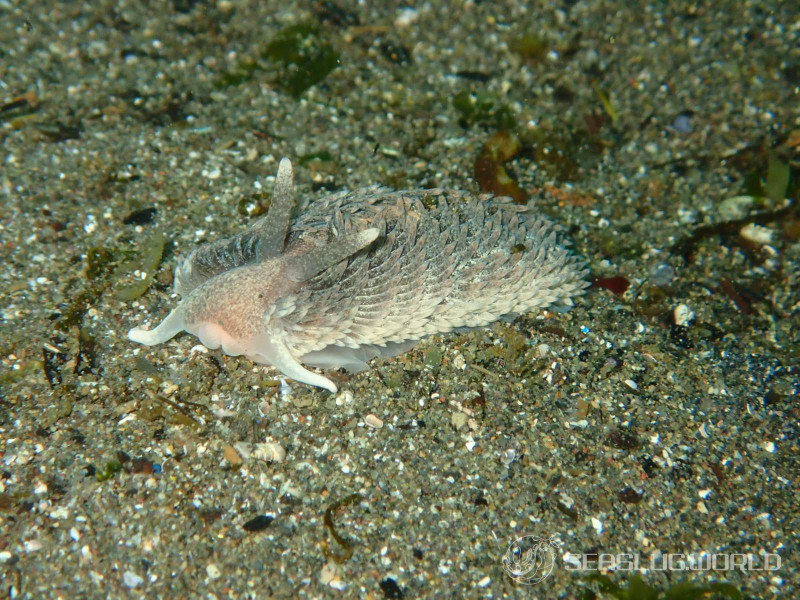
Description
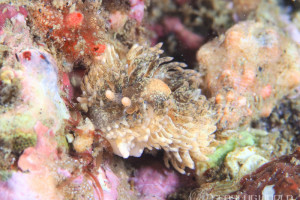
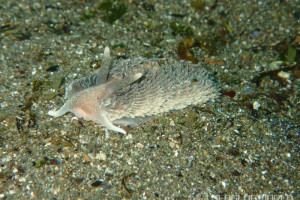
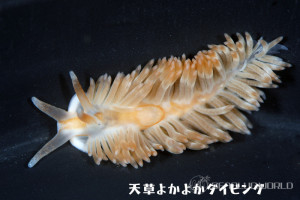
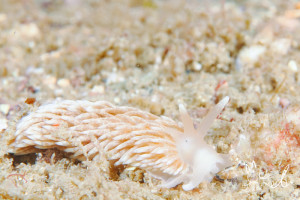
A large aeolid reaching up to 120 mm in length, although Japanese specimens are typically recorded at 15-25 mm. Body colour is variable, ranging from pale grey to greyish brown with scattered dark blackish-brown blotches dorsally. The cerata are fusiform, set on the dorso-lateral margins in about 17 oblique rows of 12 to 25 each, leaving the anterior half of the mid-dorsal region bare. This bare median strip is a useful diagnostic character. The oral tentacles are long and pointed, projecting from the antero-lateral corners of the head, with smooth conical rhinophores set just behind them.Distribution
A cold-temperate species widely distributed in the North Atlantic (Norway to the British Isles and to Maryland on the eastern North American coast) and in the North Pacific. In Japan it has been recorded from Akkeshi Bay (Akkeshi, Daikokujima), Muroran, Shirikishinai, Osyoro and Asamushi, and also from Sakhalin. Type locality: Norway Sea.Etymology
From the Latin papilla (nipple, small protuberance) plus the adjectival suffix -osus, meaning "bearing many papillae", in reference to the dense cerata covering the dorsum. Linnaeus described the species in the second edition of Fauna Suecica (1761) as Limax papillosus; it was subsequently transferred to Aeolidia, yielding the current combination.Remarks
A specialist predator of sea anemones. Like other aeolids, it sequesters undischarged nematocysts from its prey into the cnidosacs at the tips of the cerata for use in its own defence. Kienberger et al. 2016 demonstrated that Aeolidia papillosa sensu lato is a cryptic species complex, and split off the NE Pacific (California-Oregon) populations as Aeolidia loui. Northwest Pacific and Japanese populations were not included in that study, so the genetic identity of the Japanese material remains to be verified.References
- Aeolidia papillosa (LINNE, 1761), Baba, K. 1935c. The fauna of Akkeshi Bay. I. Opisthobranchia. Journal of the Faculty of Science, Hokkaido Imperial University, series 6, Zoology 4(3):115-125, pls. 7-8.
- Oh-minoumiushi, Baba, K. 1957. A revised list of the species of Opisthobranchia from the northern part of Japan, with some additional descriptions. J. Fac. Sci., Hokkaido Univ.,ser. 6, Zool. 13(1-4):8-14.
- 高岡生物研究会. (2002). 日本海のウミウシ. 第2版.
- オオミノウミウシ, 中野理枝. (2004). 本州のウミウシ. ラトルズ.
A Kindle field guide by the site author
Kimoto N. (2026). Sea Slugs of Japan & the Indo-Pacific, 2nd Edition.
Kindle Edition
View on Amazon PR (Amazon Associates)Seasonality
Shooting Locations
Loading shooting locations...
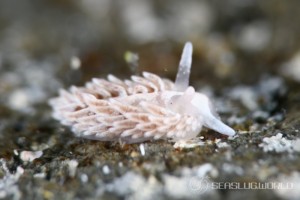
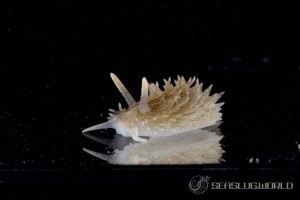
Photos of Aeolidia papillosa


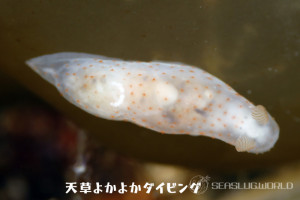
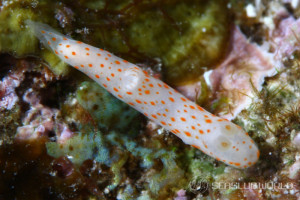
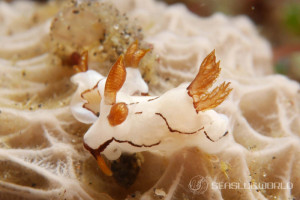
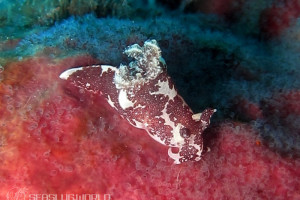
Similar Colors Nudibranchs

Academic Database
Sea slug observation data is available in international marine biodiversity databases.