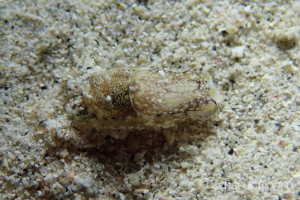
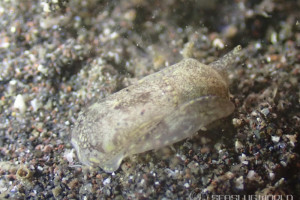
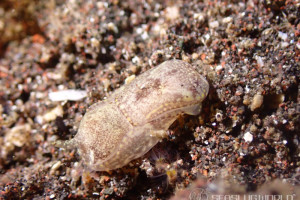
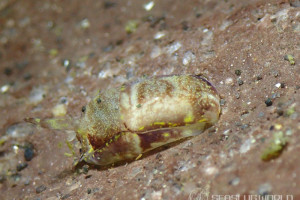
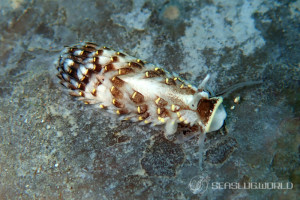
Philinopsis buntot Gosliner, 2015
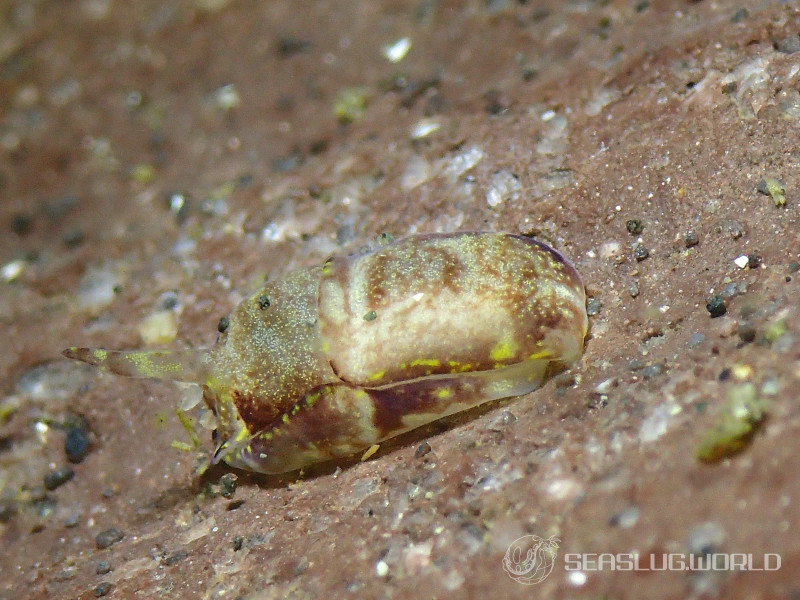
- Location
- Kajinohama, Jogashima, Kanagawa, Japan
- Date
- 2022/06/25
- Length
- 4mm
- Depth
- 4.0m
- Water temperature
- 20.0℃
Description
A streamlined aglajid distinguished by an elongate, tail-like posterior appendage that gives the species its name. Specimens crawl on clean sandy substrates and are nocturnally active, often remaining buried in the sand during the day.Distribution
Type locality: southern Luzon Island, Philippines. So far known only from waters around southern Luzon.Etymology
The specific epithet buntot is the Tagalog word for "tail", in reference to the distinctive elongate posterior appendage of this species.Remarks
The Japanese vernacular "オノアルキセワタ" is used in Japanese field guides treating this species.References
- Philinopsis buntot sp. nov., Gosliner T.M. (2015). The new species of aglajid cephalaspidean mollusks from the tropical Indo-Pacific of the Verde Island Passage. Proceedings of the California Academy of Sciences, ser. 4, 62(6): 191-205.
- Philinopsis buntot, Terrence Gosliner, Ángel Valdés and David Behrens. (2018). Nudibranch and Sea Slug Identification Indo-Pacific 2nd Edition. New World Pubns Inc.
- オノアルキセワタ, 中野理枝. (2019). 日本のウミウシ. 第二版. 文一総合出版.
Featured in this book

Terrence Gosliner, Ángel Valdés and David Behrens. (2018). Nudibranch and Sea Slug Identification Indo-Pacific 2nd Edition. New World Pubns Inc.
New World Publications
This species, Philinopsis buntot, is included in the book.
View on Amazon PR (Amazon Associates)Seasonality
Shooting Locations
Loading shooting locations...
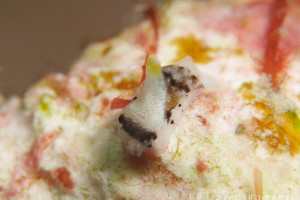
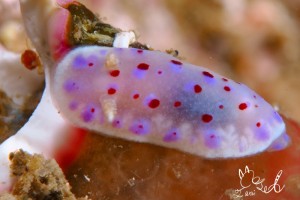
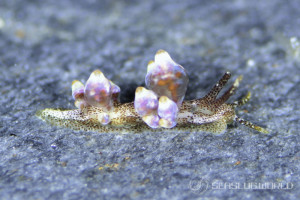
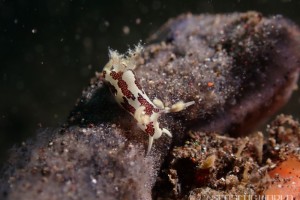
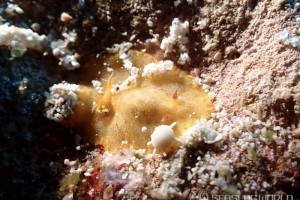
Photos of Philinopsis buntot






Same Genus Nudibranchs
Similar Colors Nudibranchs

Academic Database
Sea slug observation data is available in international marine biodiversity databases.