Creatures Often Mistaken for Nudibranchs
We receive daily sea slug photo submissions to SEASLUG.WORLD, but every so often something gets uploaded that isn't actually a nudibranch. We can't publish them on the main catalogue, so here's a small gallery of the most common imposters we've collected over the years.
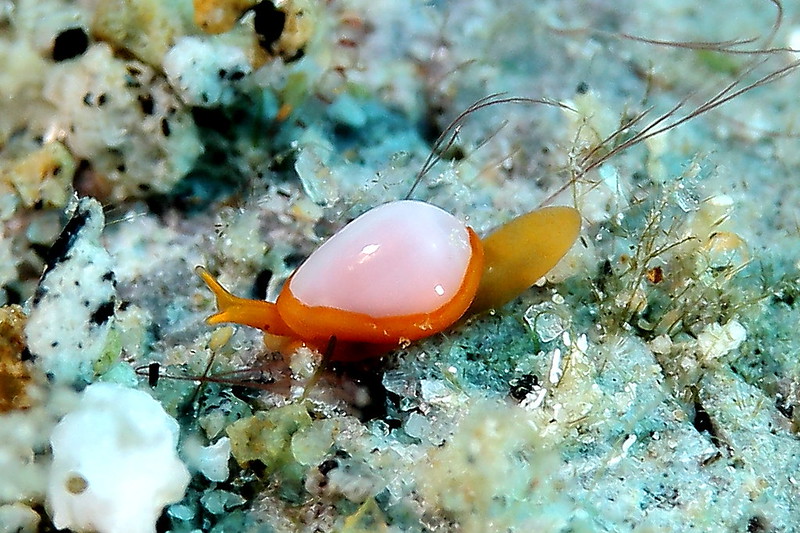
Tsuyu-dama-gai (Crithe nipponica) — a small shelled gastropod. Very common around Izu — Osezaki in particular — and probably the single most-mistaken-for-a-nudibranch animal in Japanese waters. It looks much like Thompson awatsubu-gai (Colpodaspis thompsoni, a true sea slug), but it is a shelled snail. When disturbed, the mantle retracts and the shell underneath becomes visible — that's the diagnostic moment.
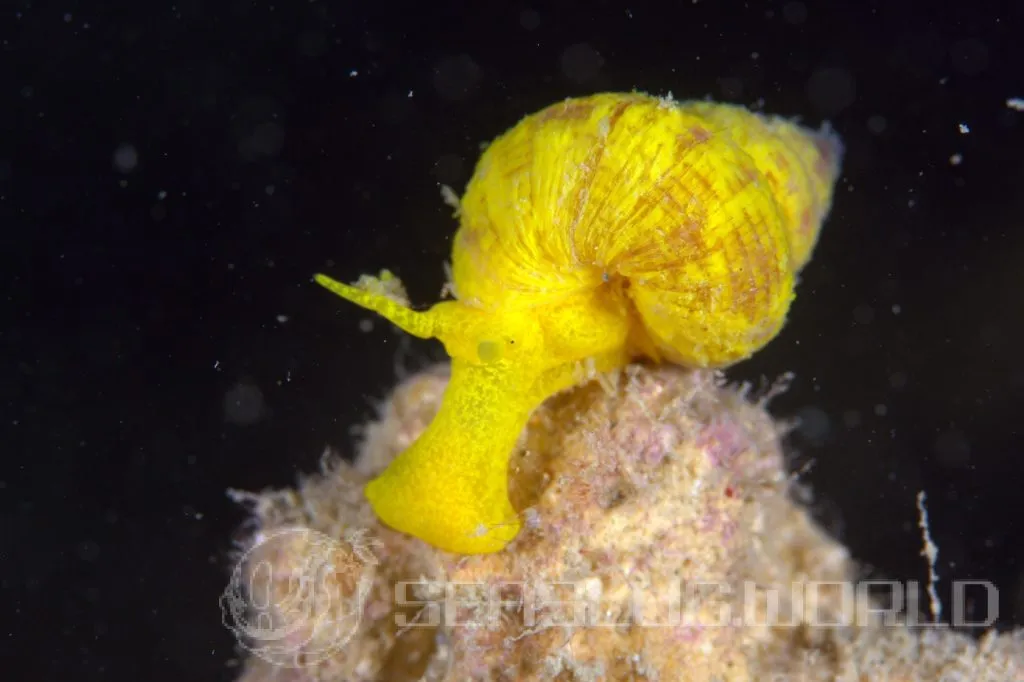
Iboyagi-yadori-itokake (Epidendrium billeeanum) — a wentletrap snail (Epitoniidae) that lives commensally on Tubastraea corals. It has tentacle-like projections that make it look strikingly nudibranch-like, and it lays bright yellow egg clusters on the host coral, which adds to the confusion. Umi-usagi-gai (ovulids — "egg cowries") and ibobekko-tamagai (a velutinid) frequently get mistaken in this same category.
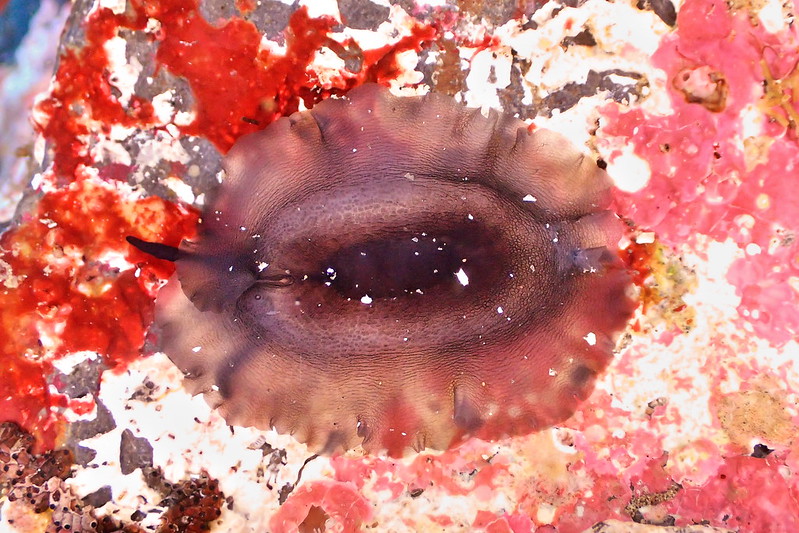
The image shows two different animals: a flatworm (Platyhelminthes) of the kuro-shitanashi-mimicking type, plus otomegasa (Scutus sinensis). Otomegasa is not a sea slug — it's a true gastropod with a low, flat shell that the mantle almost fully overgrows, so at a glance the animal looks shell-less and slug-like. The flatworm, on the other hand, has no circulatory system and no gills, and being completely flat, the moment it starts to glide you can tell it isn't a nudibranch.
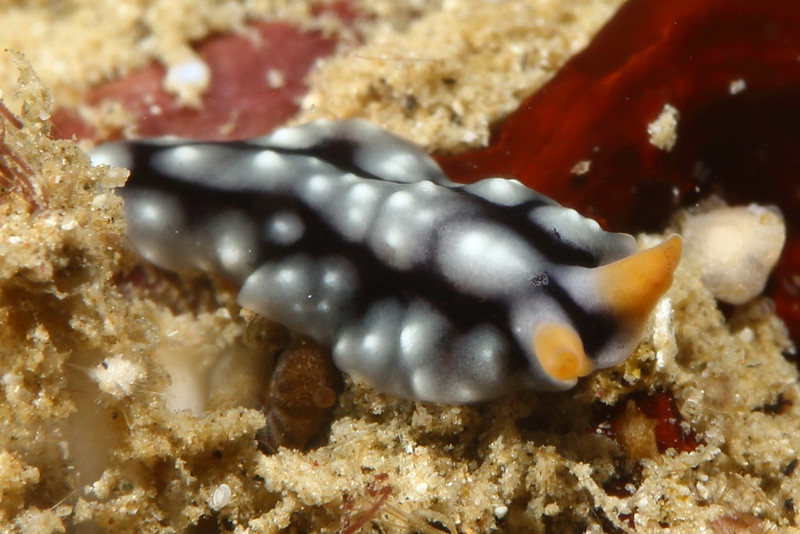
Some flatworms have rhinophore-like projections at the front, and many carry colour patterns that mimic specific nudibranchs — in this case the ibo-umiushi (Phyllidiidae) style. These are among the easiest impostors to fall for in a photo.
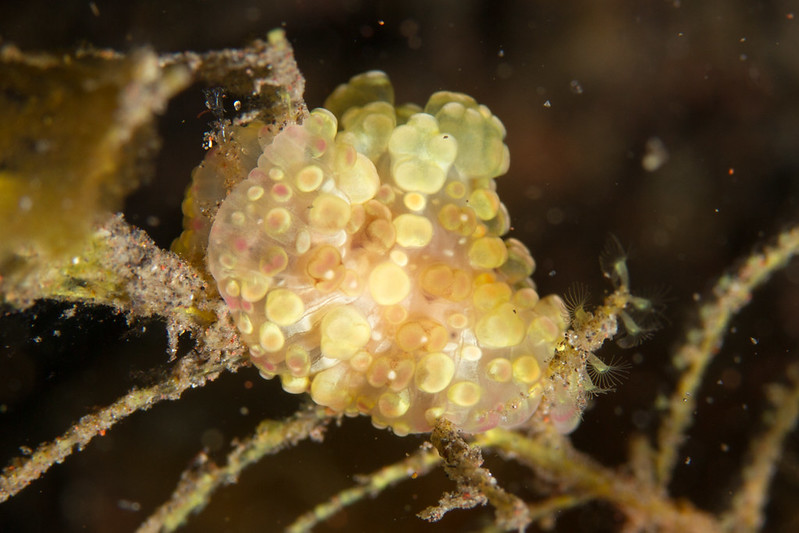
Kazari-isoginchaku — a "decorated" sea anemone. During the day it keeps its tentacles fully retracted and balls up into a shape that genuinely looks like a small nudibranch. The only reliable field clue is that it doesn't move — which sounds easier to use as a diagnostic than it actually is underwater.
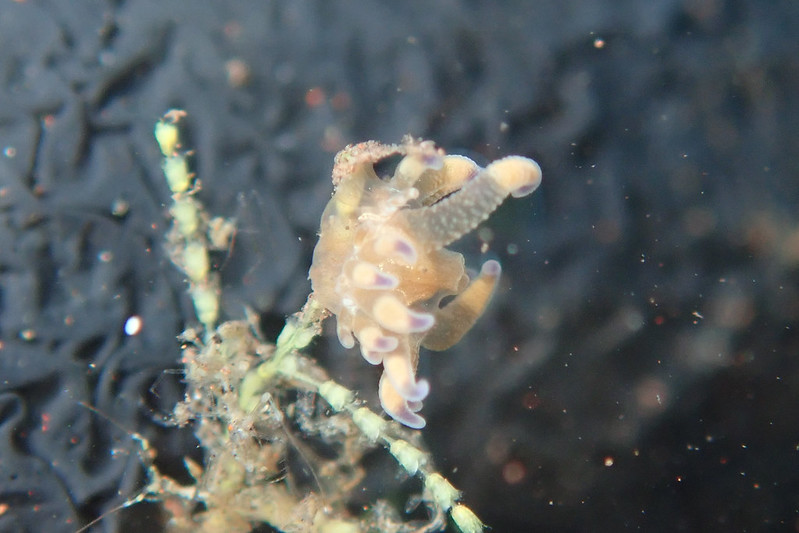
Another anemone — a juvenile, this time with tentacles extended. The extended tentacles actually make it look more nudibranch-like than the retracted adult version above. As before, total absence of movement is the diagnostic.
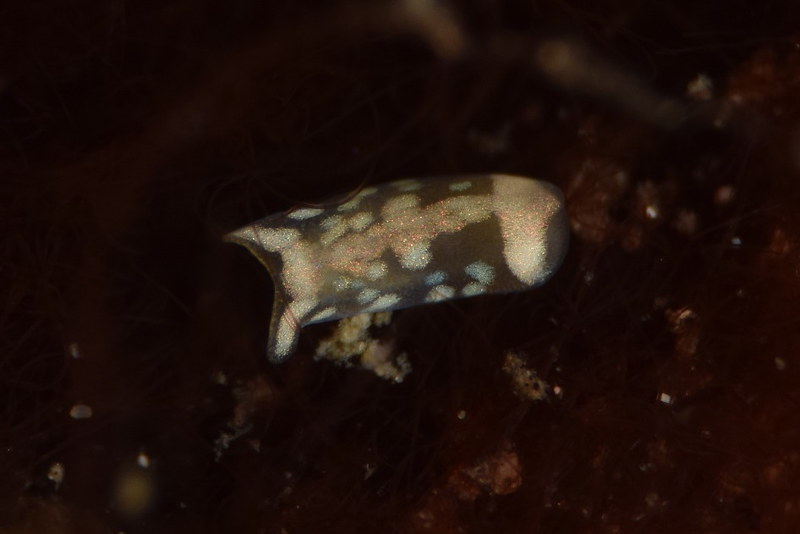
An acoel flatworm, possibly Hofstenia or an allied genus. Visually indistinguishable from kisewata (Aglajidae, headshield slugs), but it belongs to a completely different group (Acoelomorpha) — not a mollusc at all. These keep turning up when I'm searching for kisewata records.

Another acoel. This one tends to appear from under rocks when you flip them, gliding smoothly across the substrate. I've had this introduced as a "rare nudibranch" by a dive guide before — but no, it's an acoel.
There are other groups that frequently get mistaken — small isopod crustaceans (mizumushi) being a typical example — but I don't have a submitted photo of those to include, so the gallery ends here.
Enjoyed this post? You can tip the author directly —
Tip this post