Kotohime-umiushi, globally treated as one species, is at least five
Kotohime-umiushi is a familiar animal in Japan — found pretty much anywhere on Honshū and also in Okinawa. It also shows up overseas, but every time I'd look at an overseas record I'd think "isn't this slightly different?" Now a DNA paper has formally split it into at least four species (plus a fifth previously described).
1. Goniodoridella borealis Martynov, Sanamyan & Korshunova, 2015
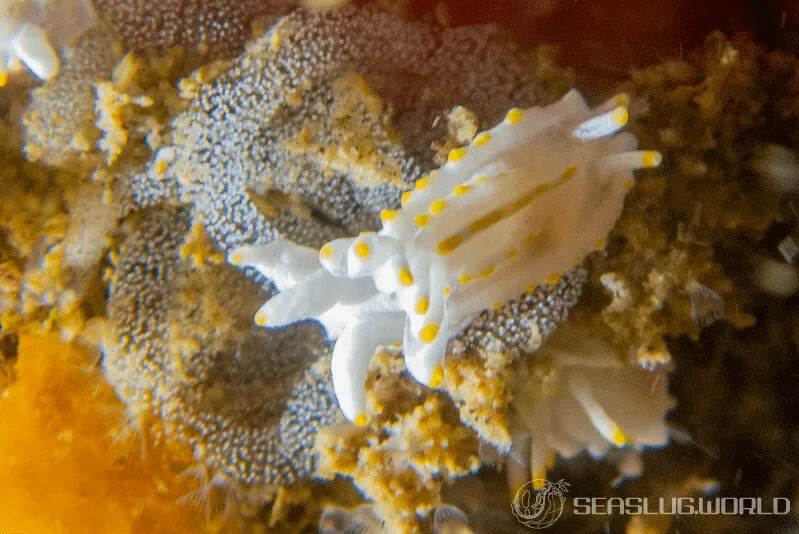
This species is from a separate, earlier paper, but I'd never been able to access it (Russian-language).
Described from the Russian Sea of Japan. Characters:
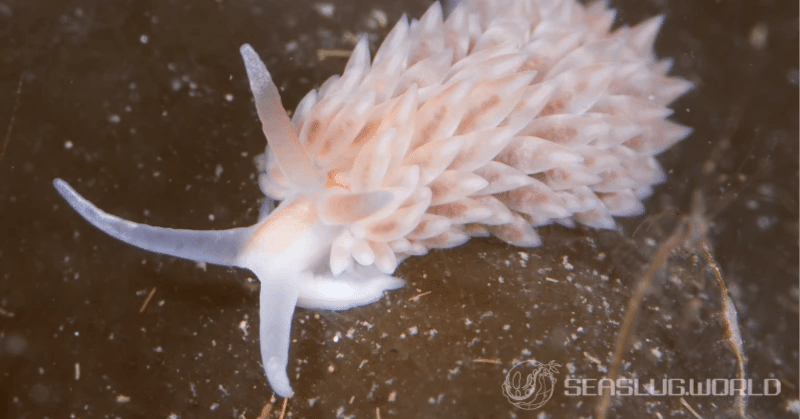
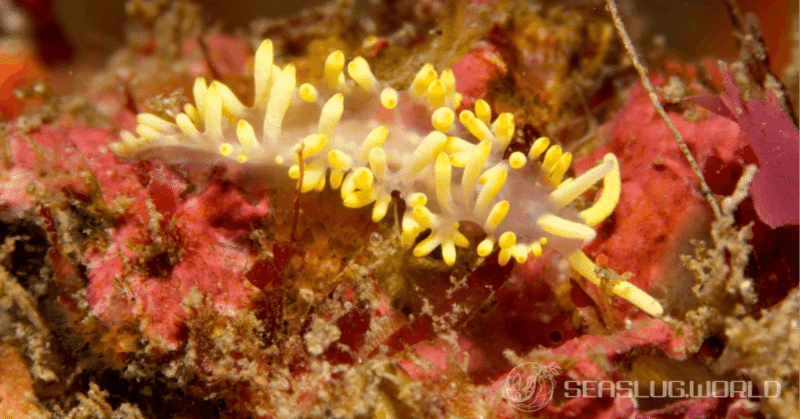
Three longitudinal rows of raised tubercles on the dorsum. The middle row is the longest, extending nearly the full body length; the lateral rows reach only about half that. Body translucent whitish. Tubercles along the notum margin, dorsal ridges, the upper third of the gills, the front sail-like flap, the tips of the posterior protuberance, and the tip of the foot are pale to deep yellow. White dust-like spots and patches scattered over the dorsum and the foot tip.
— Martynov A.V., Sanamyan N.P., Korshunova T. A. (2015). [in Russian] New data on the opisthobranch molluscs (Gastropoda: Opisthobranchia) of waters of Commander Islands and Far-Eastern seas of Russia. In: Conservation of biodiversity of Kamchatka and coastal waters. Proceedings of XV international scientific conference Petropavlovsk-Kamchatsky. Kamchat Press: Petropavlovsk-Kamchatsky, Russia. pp. 55-69, pl. 2-6.
The Pacific-coast Japanese kotohime-umiushi that the current paper cites is described as:
The dorsum has a midline ridge similar to Goniodoris. There may also be short lateral ridges flanking the midline. Body colour is whitish. The dorsal midline ridge (and the lateral ridges if present), tips of the rhinophores and the posterior branched protuberance, and sometimes the gill tips, are tinged yellow. Tubercle-like papillae along the mantle margin are also yellow.
Three dorsal lines and yellow protrusion tips line up between the two descriptions, so I think we can fairly safely treat Goniodoridella borealis = kotohime-umiushi. Whether the three-line Japanese animals are actually the same species or further split will need DNA.
2. Goniodoridella serrata Paz-Sedano, Ekimova, Smirnoff, Gosliner & Pola, 2023
An all-white kotohime, apparently this animal photographed in Australia. No other reports, so details are limited.
The rest of this article is for Premium members
This is one of our in-depth member articles — new species reports, paper walkthroughs, and taxonomy deep-dives. Members read them all. Free for your first month, then USD 3.00/month, cancel anytime.
- New species reports, paper walkthroughs, and taxonomy deep-dives — members only
- No ads (AdSense) across the entire site
- Priority handling of your observations (Premium uploads are identified and published first when the moderation queue is backed up)
- Priority access to the AI identification feature
Already a member? Please log in.
Enjoyed this post? You can tip the author directly —
Tip this post