The Spanish dancer (Hexabranchus) is now six species
The Spanish dancer is found worldwide, with more than 30 names associated with it through history, but until now everyone has been treating it as a single species. A new DNA-based paper splits it into six.
https://link.springer.com/article/10.1007/s13127-023-00611-0#Abs1
Oh — and the paper also cites seaslug.world. Thank you.
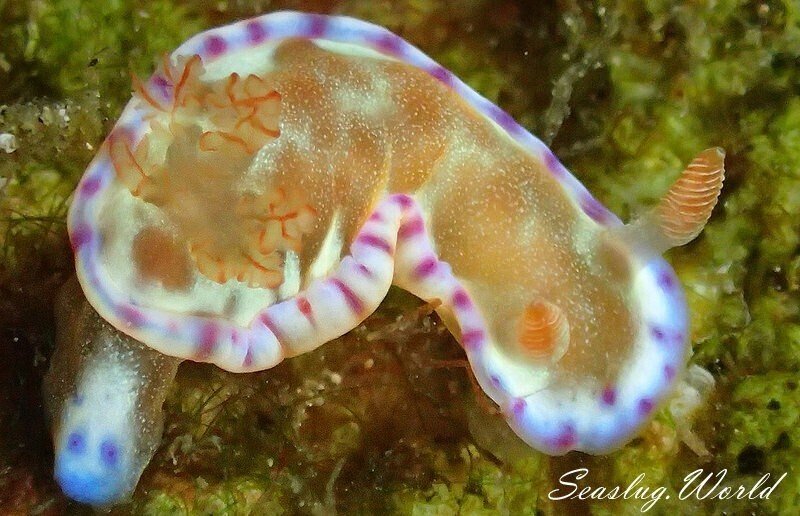
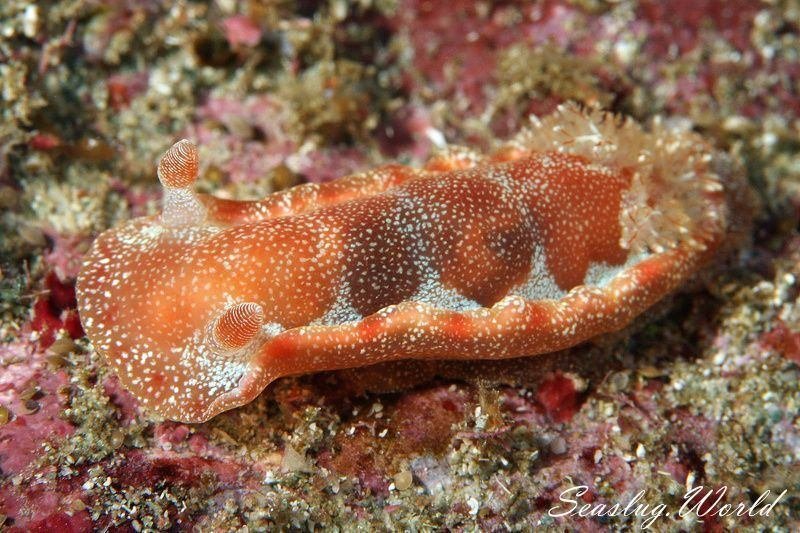
1. Hexabranchus lacer (Cuvier, 1804)
Widely distributed and highly variable. The detail of the dorsal bands varies — white margin band, red margin band, transverse banding, breaks in the red band, purple pigmentation — these elements are "mixed together". In mature individuals the innermost dorsal band is sharply outlined on its inner edge and strongly scalloped. Diffuse white pigment is often present on and around the rhinophores (conspicuous in large individuals); the rhinophore lamellae are typically white-edged. There is a red line outside the rhinophores. The overall colour pattern in mature animals is "mottled".
This is presumably the species named mikado-umiushi in Japanese, and probably the most common one in Japan.
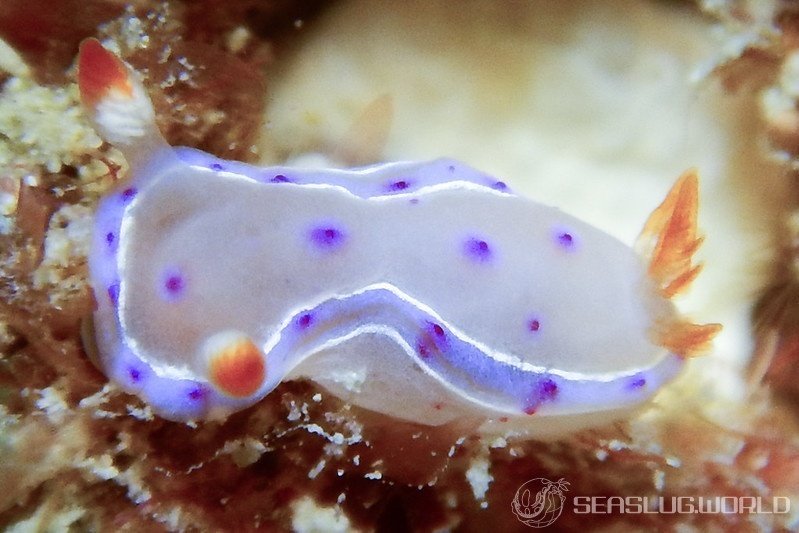
2. Hexabranchus sanguineus (Rüppell & Leuckart, 1830)
Note: at first glance variable, but the paper identifies four ontogenetic lineages.
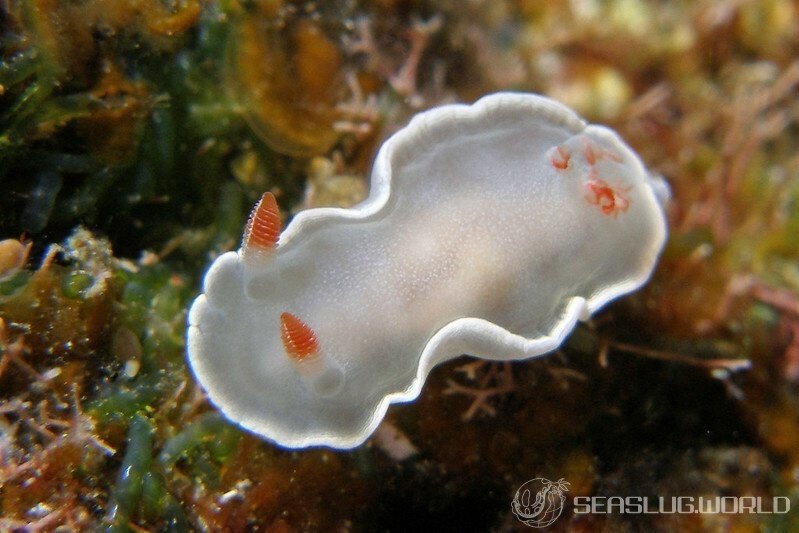
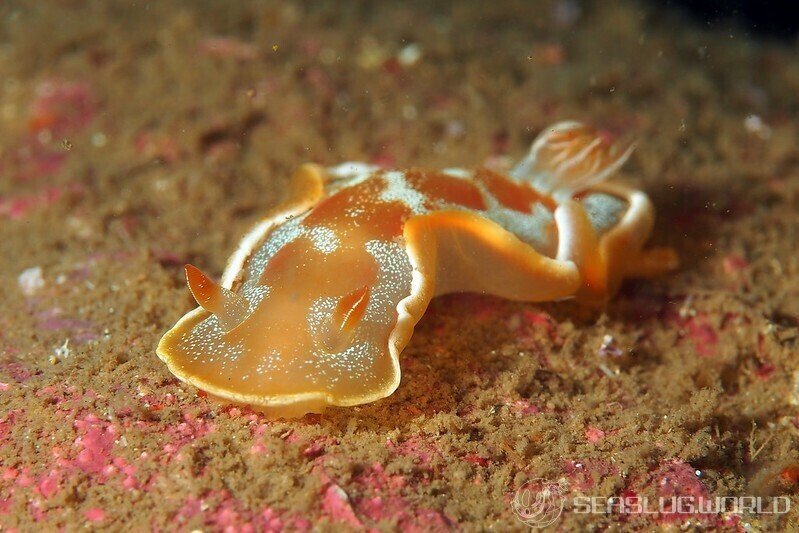
Western Pacific. The authors regret not having a specimen of this form for DNA, but extensive photo review suggests there is likely a fourth distinct lineage of H. sanguineus in this region. This lineage shows an intermediate pattern between Indian Ocean and French Polynesia material. Juveniles vary from translucent grey to yellow, with a white marginal band and white spots scattered on the rhinophores. As they grow, red lateral patches develop along with a red sub-marginal band; white pigment appears on the foot and lobes; white spots collect on the notum. White spots are present in almost all mature individuals, but lateral patches vary more than in the Indian Ocean form. Some animals are deep red, but these seem restricted to the northern and southern limits of the range (southern Japan and Lord Howe Island, respectively). A white line typically appears in front of the rhinophores. White spots often occur on the rhinophore lamellae. Pale animals appear rare. The margin in mature animals is either a red band or a white band; the red band occasionally has breaks (transversely striped).
The pure-white juveniles seen at Hachijō are probably this species. But as the paper notes, DNA was not run on this particular form, so confidence is limited.
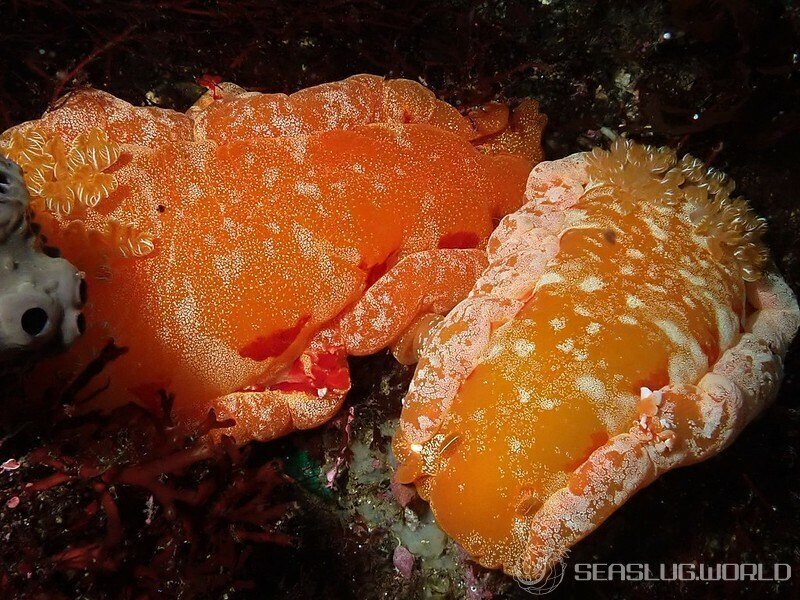
3. Hexabranchus sandwichensis (Gray, 1850)
Hawaiian Islands only.
http://seaslugsofhawaii.com/species/Hexabranchus-sandwichensis-a.html
This is what it looks like. We'd really like photos of this.
The rest of this article is for Premium members
This is one of our in-depth member articles — new species reports, paper walkthroughs, and taxonomy deep-dives. Members read them all. Free for your first month, then USD 3.00/month, cancel anytime.
- New species reports, paper walkthroughs, and taxonomy deep-dives — members only
- No ads (AdSense) across the entire site
- Priority handling of your observations (Premium uploads are identified and published first when the moderation queue is backed up)
- Priority access to the AI identification feature
Already a member? Please log in.
Enjoyed this post? You can tip the author directly —
Tip this post