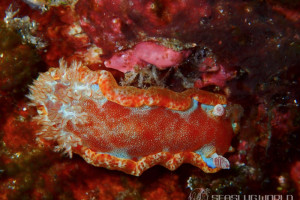
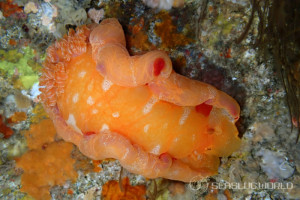
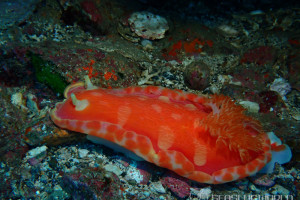
Hexabranchus lacer (Cuvier, 1804)
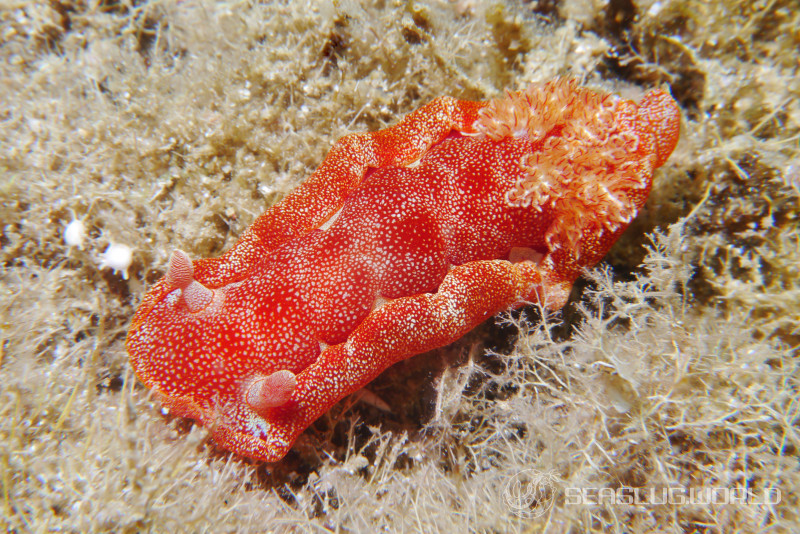
- Location
- Ishikiri(Awa), Okinawa Island (Motobu and Northern area), Okinawa, Japan
- Date
- 2015/05/05
- Length
- 60mm
- Depth
- 3.0m
- Water temperature
- 23.0℃
Description
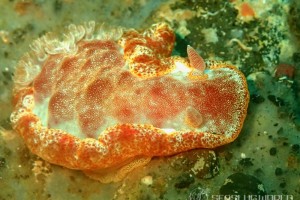
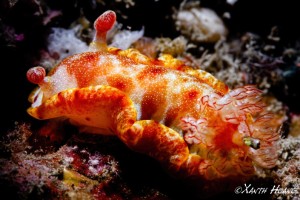
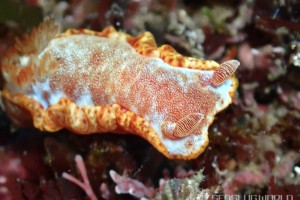
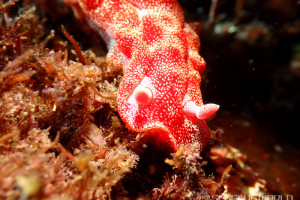
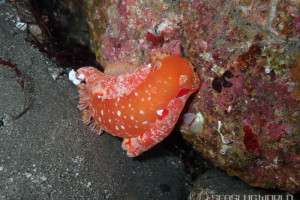
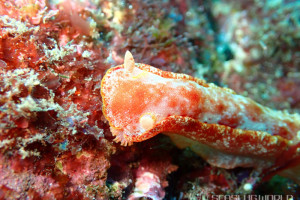
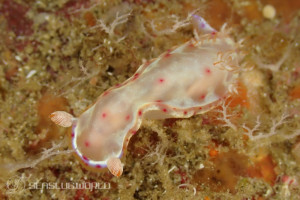
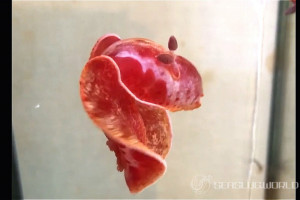
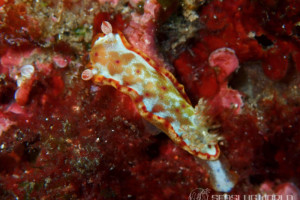
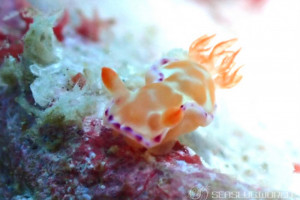
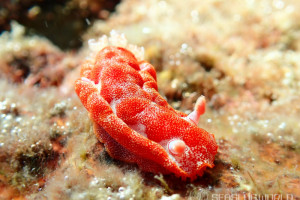
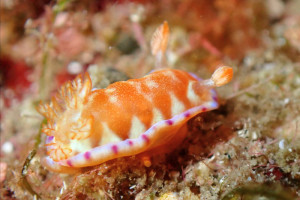
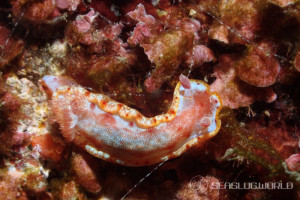
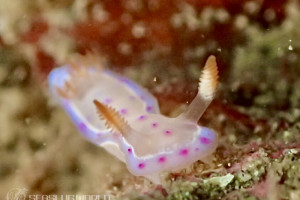
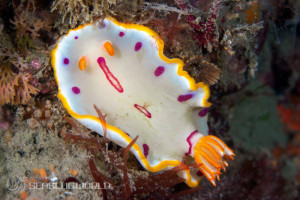
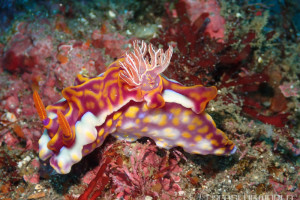
Body color is highly variable, ranging from pale yellow through red to reddish-purple. The dorsum typically bears irregular red and white blotches, although some individuals lack the pattern. Rhinophores are red with white-edged lamellae, and the gills are white with red rachis and venation. Six gill plumes radiate around the anus. The mantle is large and usually held curled inward, but when disturbed the animal unfurls it dramatically and undulates through the water — a swimming display that earned it the nickname "Spanish Dancer" for its resemblance to a flamenco dancer's flowing skirt. A large species, reaching up to 600 mm in length.Distribution
Type locality is Timor Island. Widely distributed across the Indo-West Pacific, including Japan, with records from the Red Sea, Hawaii, the Society Islands, and other locations in the central and South Pacific.Etymology
The specific epithet lacer is a Latin adjective meaning "torn" or "ragged," likely referring to the irregularly notched margin of the mantle. The original description used the feminine form lacera to agree with the genus Doris.Remarks
Feeds on sponges.References
- Doris lacera n. sp., Cuvier G.L. (1804). Mémoire sur le genre Doris. Annales du Muséum d'Histoire Naturelle, Paris. 4: 447-473.
- ミカドウミウシ(新称), 滝巌. (1933). 貝類雜記(5). ヴヰナス. 3(6).
- ミカドウミウシ, 益田一. (1999). 海洋生物ガイドブック. 東海大学出版会.
- ミカドウミウシ, 益田一. (1999). 海洋生物ガイドブック. 第2刷. 東海大学出版会.
- ミカドウミウシ, 小野篤司. (1999). ウミウシガイドブック. TBSブリタニカ.
- ミカドウミウシ, 鈴木敬宇. (2000). ウミウシガイドブック〈2〉. TBSブリタニカ.
- ミカドウミウシ, 殿塚孝昌. (2003). ウミウシガイドブック〈3〉. TBSブリタニカ.
- ミカドウミウシ, 中野理枝. (2004). 本州のウミウシ. ラトルズ.
- ミカドウミウシ, 小野篤司. (2004). 沖縄のウミウシ. ラトルズ.
- ミカドウミウシ, 小野篤司 & 加藤昌一. (2009). ウミウシ. 誠文堂新光社.
- Hexabranchus sanguineus, Terrence Gosliner, Ángel Valdés and David Behrens. (2015). Nudibranch and Sea Slug Identification Indo-Pacific. New World Pubns Inc.
- Hexabranchus lacer (Cuvier, 1804), Tibiriçá Y., Pola M., Pittman C., Gosliner T.M., Malaquias M.A. & Cervera J.L. (2023). A Spanish dancer? No! A troupe of dancers: a review of the family Hexabranchidae Bergh, 1891 (Gastropoda, Heterobranchia, Nudibranchia). Organisms Diversity & Evolution. 23(4): 697-742. https://doi.org/10.1007/s13127-023-00611-0
Featured in this book

Terrence Gosliner, Ángel Valdés and David Behrens. (2018). Nudibranch and Sea Slug Identification Indo-Pacific 2nd Edition. New World Pubns Inc.
New World Publications
This species, Hexabranchus lacer, is included in the book.
View on Amazon PR (Amazon Associates)Seasonality
Shooting Locations
Loading shooting locations...
Photos of Hexabranchus lacer
Tag:




















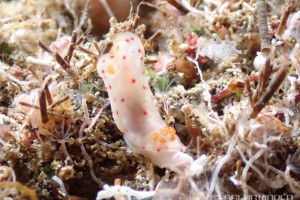
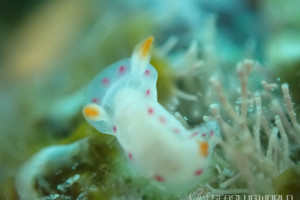
Same Genus Nudibranchs
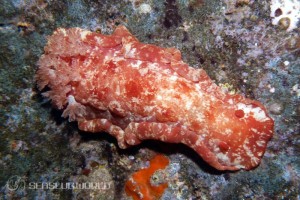

Similar Colors Nudibranchs

Academic Database
Sea slug observation data is available in international marine biodiversity databases.