Coryphellina pseudolotos Ekimova, Deart, Antokhina, Mikhlina & Schepetov, 2022
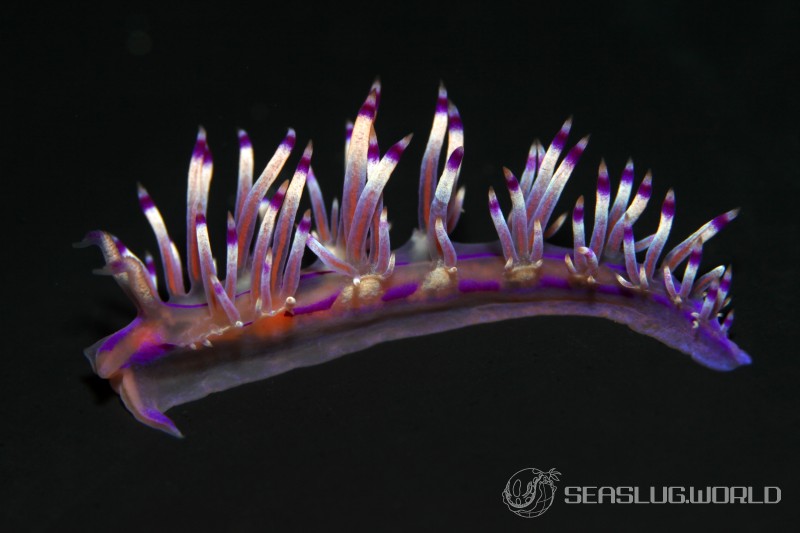
- Location
- Tengan(Kombu), Okinawa Island (East coast), Okinawa, Japan
- Date
- 2024/04/07
- Length
- 25mm
- Depth
- 5.0m
- Water temperature
- 22.0℃
Description
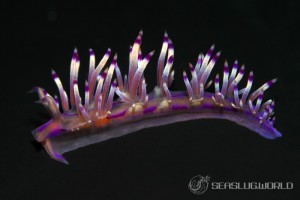
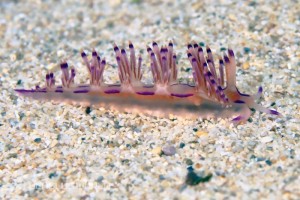
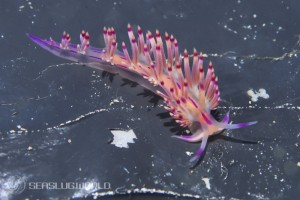
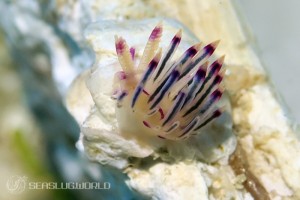
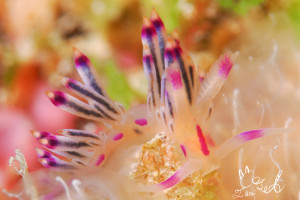
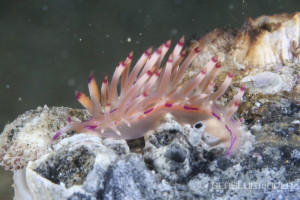
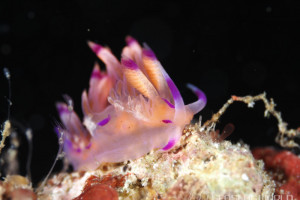
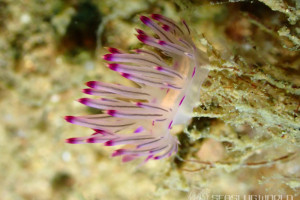
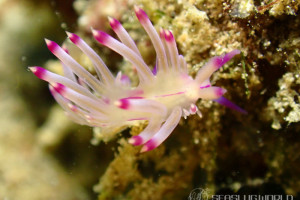
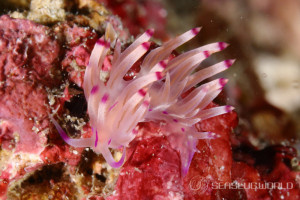
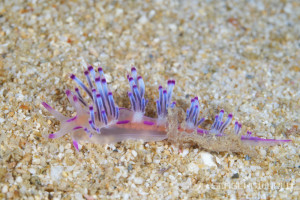
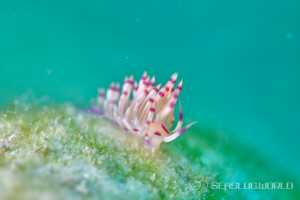
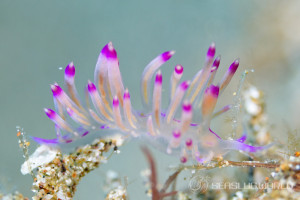
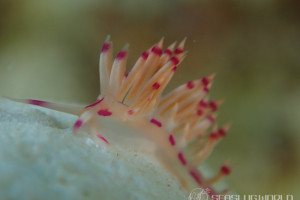
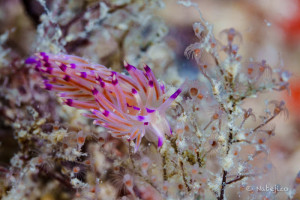
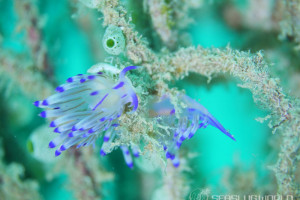
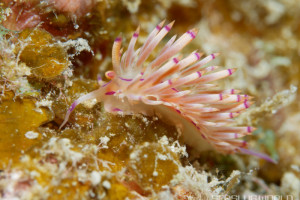
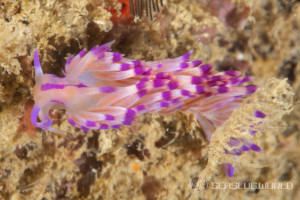
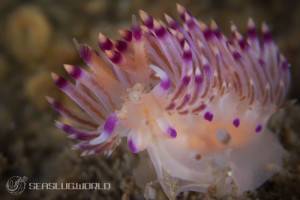
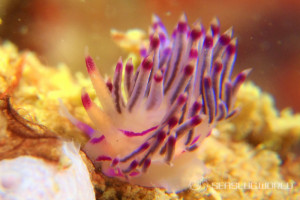
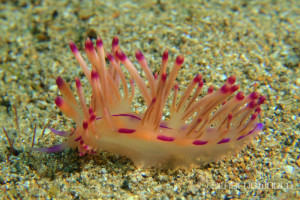
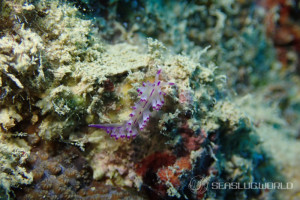
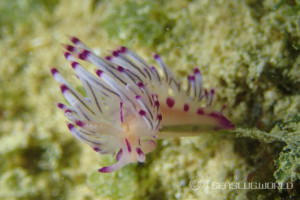
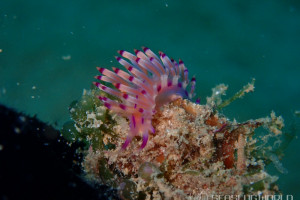
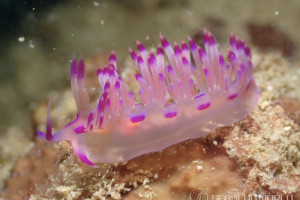
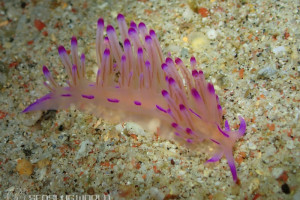
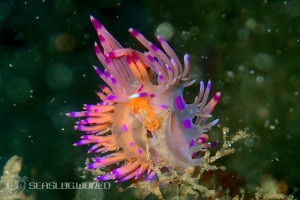
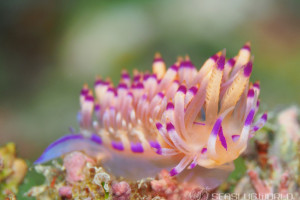
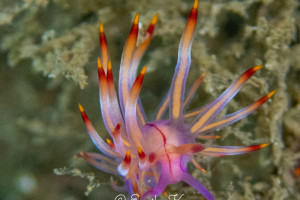
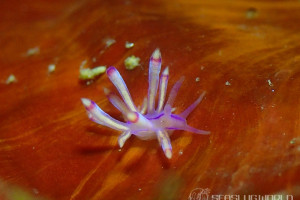
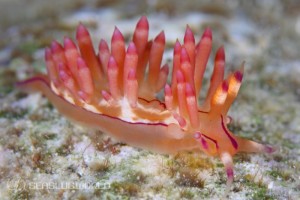
Reaching about 15 mm in length (preserved). The most distinctive trait is that the body remains translucent throughout life, never developing the iridescent pigmented background typical of its sister species C. lotos. Foot slender with long anterior corners. Rhinophores densely papillated, about half the length of the oral tentacles. Cerata finger-shaped, pointed distally, with digestive gland diverticula filling about one-third to one-half of the ceratal volume, arranged in up to six distinct groups per side; the first group with 9-12 cerata, the second with 3-5. The cnidosac area of each ceras is white to peachy, with strong red to violet subapical rings underlain by sparse white opalescent speckling. Three pink to lilac longitudinal lines (one dorsal, two dorsolateral) are all discontinuous; the dorsolateral lines appear as broken segments in the intervals between ceratal groups, and the dorsal line is faint along the body. Rhinophores the same color as the body, or light yellow to violet, with subapical rings and a white to translucent tip. Oral tentacles pink to violet, more intensive in the middle, with a white or translucent tip.Distribution
The type locality is Phu Quoc Island, southern Vietnam, at 10 m depth on stones with soft bottom. The species is also recorded from Nha Trang Bay (Hon Mot, Hon Tre) in Central Vietnam. A genetically similar specimen from Queensland, Australia, suggests possibly wider distribution, but its species-level identity has not been confirmed.Etymology
The specific epithet pseudolotos means "false lotos", reflecting the close external and internal resemblance of this species to its sister, Coryphellina lotos.Remarks
In Nha Trang Bay, C. pseudolotos occurs sympatrically with C. lotos, but the two are clearly separated genetically (about 10% p-distance in mitochondrial COI, with stable differentiation in nuclear 28S). Externally, C. pseudolotos can usually be told from C. lotos by its translucent adult body, but coloration is variable in both species and reliable separation generally requires DNA barcoding.References
- Coryphellina pseudolotos sp. nov., Ekimova I., Deart Y., Antokhina T., Mikhlina A. & Schepetov D. (2022). Stripes Matter: Integrative Systematics of Coryphellina rubrolineata Species Complex (Gastropoda: Nudibranchia) from Vietnam. Diversity. 14(4): 294. https://doi.org/10.3390/d14040294
- オオセミノウミウシ(新称), 今川郁. (2026). 沖縄のウミウシ: DNA解析による最新の分類図鑑1089種. 誠文堂新光社.
Related articles

Is the Okinawan animal Coryphellina pseudolotos?
A Kindle field guide by the site author
Kimoto N. (2026). Sea Slugs of Japan & the Indo-Pacific, 2nd Edition.
Kindle Edition
View on Amazon PR (Amazon Associates)Seasonality
Shooting Locations
Loading shooting locations...
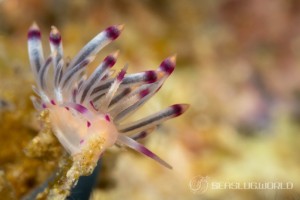
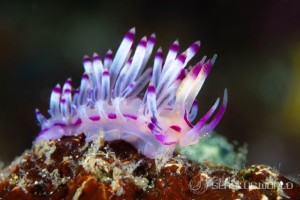
Photos of Coryphellina pseudolotos
Tag:





















Specimen & DNA
| Observation | Database | COI | 16S | H3 |
|---|---|---|---|---|
| #53980 | BOLD Systems | SSWBP188-25 |
Same Genus Nudibranchs



Similar Colors Nudibranchs

Academic Database
Sea slug observation data is available in international marine biodiversity databases.