Coryphellina flamma Ekimova, Deart, Antokhina, Mikhlina & Schepetov, 2022
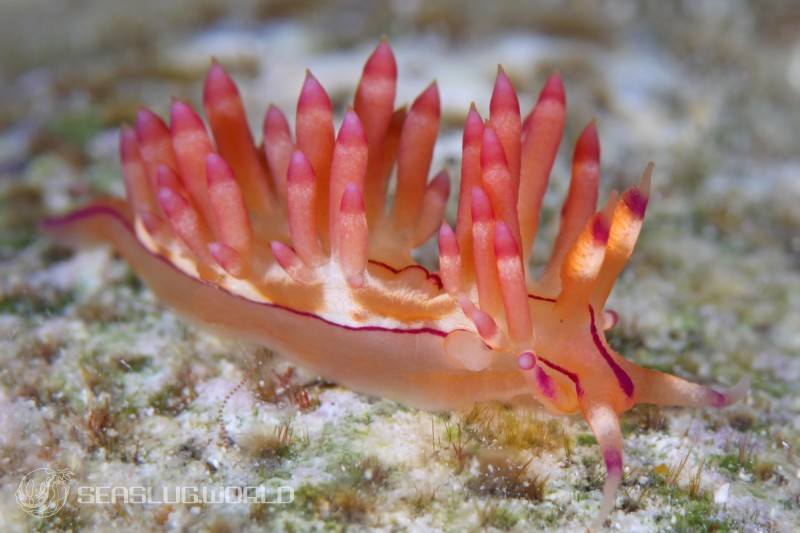
- Location
- Nashiro, Okinawa Island (Chatan and Southern area), Okinawa, Japan
- Date
- 2022/05/02
- Length
- 15mm
- Depth
- 8.0m
- Water temperature
- 24.0℃
Description
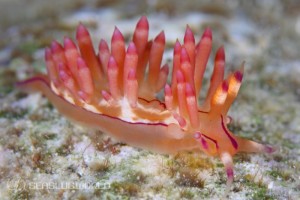
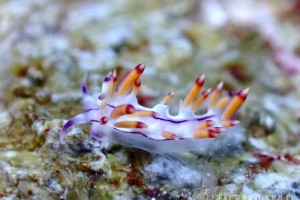
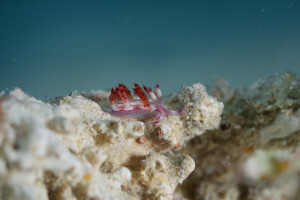
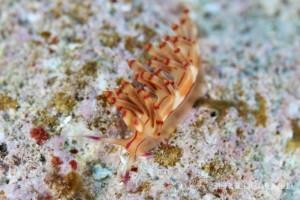
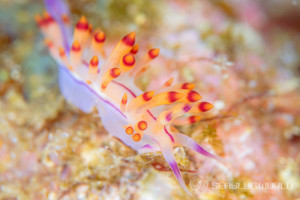
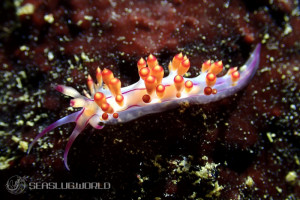
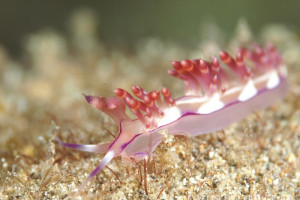
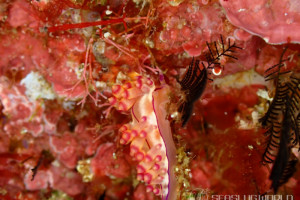
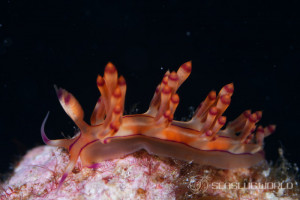
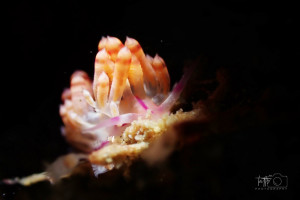
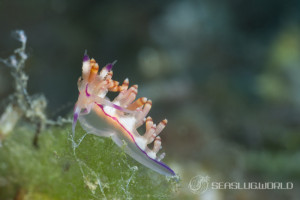
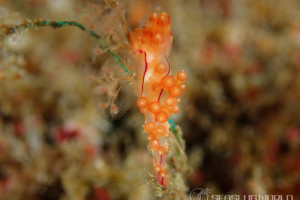
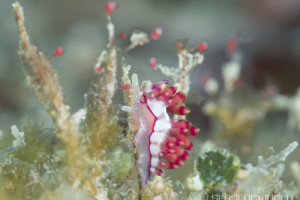
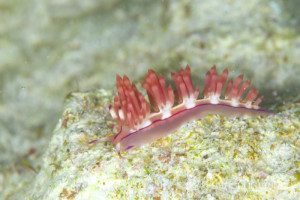
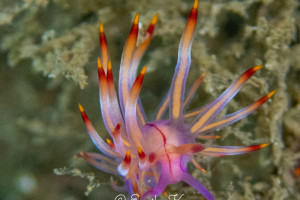
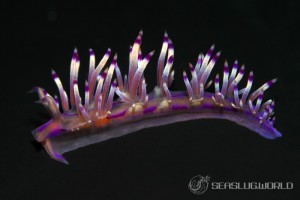
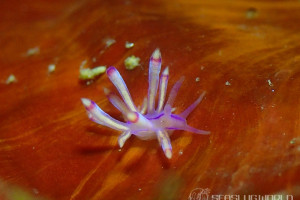
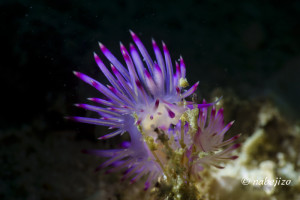
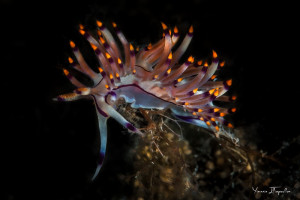
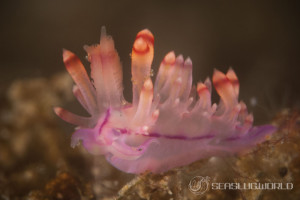
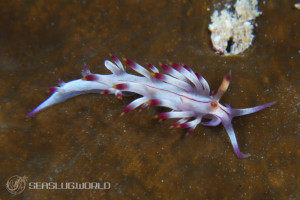
Reaching about 13 mm in length (preserved). Background color translucent white, with opaque white opalescent patches on the dorsum and lateral sides just beneath the ceratal groups. Foot slender with long anterior corners. Rhinophores densely papillated, about 1.5 times shorter than the oral tentacles, translucent white with orange papillae, violet-red subapical rings, and translucent tips. Oral tentacles covered with sparse white opalescent powder in the middle, with lilac subapical rings and translucent tips. Cerata finger-shaped, pointed distally, with brownish digestive gland diverticula filling about one-half to one-third of the ceratal volume, arranged in up to seven distinct groups per side; the first group with 8-10 cerata, the second with about five. Each ceras bears two rings of salmon-pink pigment alternating with peachy-orange or reddish-brown pigment, recalling a flame; the tips are light pink. The dorsal pink line is prominent and broadens between the oral tentacles, remaining continuous for about two-thirds of the body length before narrowing and becoming discontinuous posteriorly. The two dorsolateral pink lines are continuous from head to tail, and all three lines merge dorsally at the tail.Distribution
The type locality is Hon Nok, in the outer part of Nha Trang Bay, Central Vietnam, at 10 m depth on hydroids growing on rocks and vertical walls in exposed conditions. The original description reports the species from Central (Hon Nok) and Southern (Tho Chu Islands) Vietnam.Etymology
The specific epithet flamma is Latin for "flame", referring to the salmon-pink to reddish-orange coloration of the cerata.Remarks
Within the family Flabellinidae, the combination of orange-red to reddish-brown cerata, opaque white patches beneath the ceratal groups, and rhinophores bearing orange papillae is unique to this species and is a useful field identification cue. Specimens with very similar coloration have been recorded from the Philippines, the Great Barrier Reef (Australia), and New Caledonia, suggesting a possibly wider distribution in the tropical Indo-West Pacific.References
- セスジミノウミウシ, 益田一. (1999). 海洋生物ガイドブック. 第2刷. 東海大学出版会.
- セスジミノウミウシ, 鈴木敬宇. (2000). ウミウシガイドブック〈2〉. TBSブリタニカ.
- フラベリナ・ルブロリネアタ, 殿塚孝昌. (2003). ウミウシガイドブック〈3〉. TBSブリタニカ.
- セスジミノウミウシ, 中野理枝. (2004). 本州のウミウシ. ラトルズ.
- セスジミノウミウシ, 小野篤司. (2004). 沖縄のウミウシ. ラトルズ.
- Flabellina rubrolineata, Terrence Gosliner, Ángel Valdés and David Behrens. (2015). Nudibranch and Sea Slug Identification Indo-Pacific. New World Pubns Inc.
- セスジミノウミウシ, 中野理枝. (2018). 日本のウミウシ. 文一総合出版.
- Flabellina sp. 1, Terrence Gosliner, Ángel Valdés and David Behrens. (2018). Nudibranch and Sea Slug Identification Indo-Pacific 2nd Edition. New World Pubns Inc.
- Coryphellina flamma sp. nov., Ekimova I., Deart Y., Antokhina T., Mikhlina A. & Schepetov D. (2022). Stripes Matter: Integrative Systematics of Coryphellina rubrolineata Species Complex (Gastropoda: Nudibranchia) from Vietnam. Diversity. 14(4): 294. https://doi.org/10.3390/d14040294
- ホムラミノウミウシ(新称), 今川郁. (2026). 沖縄のウミウシ: DNA解析による最新の分類図鑑1089種. 誠文堂新光社.
Related articles
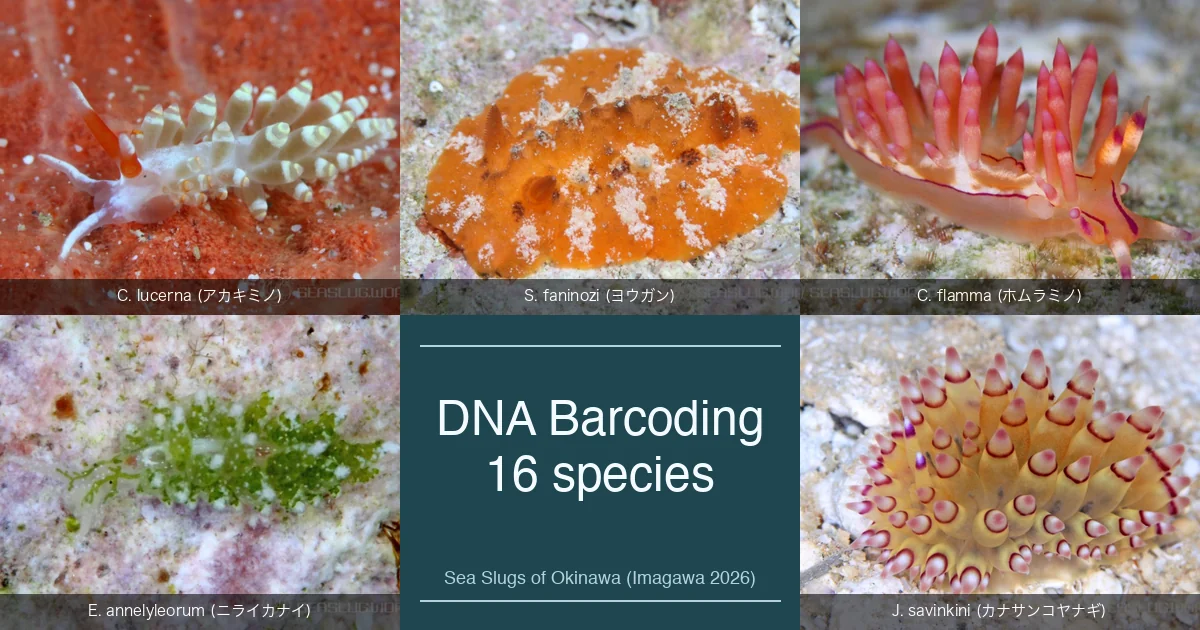
Sea Slugs of Okinawa (Imagawa 2026): 16 species with DNA-confirmed identity
Featured in this book

Terrence Gosliner, Ángel Valdés and David Behrens. (2018). Nudibranch and Sea Slug Identification Indo-Pacific 2nd Edition. New World Pubns Inc.
New World Publications
This species, Coryphellina flamma, is included in the book.
View on Amazon PR (Amazon Associates)Seasonality
Shooting Locations
Loading shooting locations...
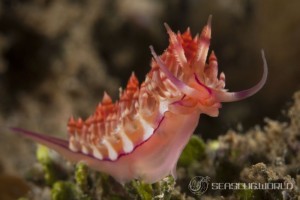
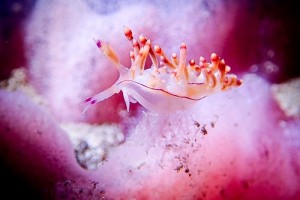
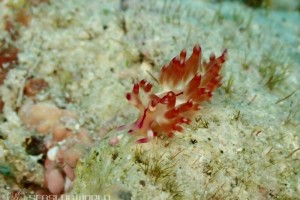
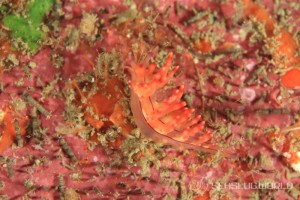
Photos of Coryphellina flamma






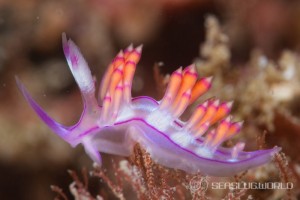

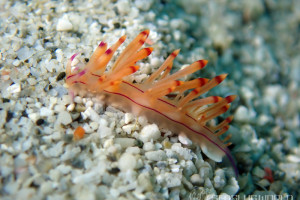

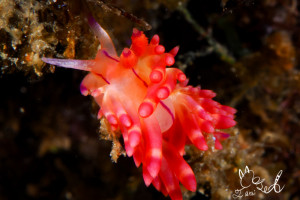

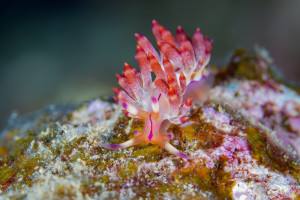





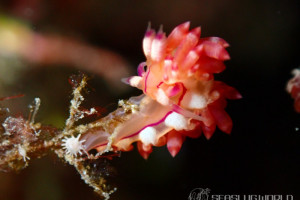

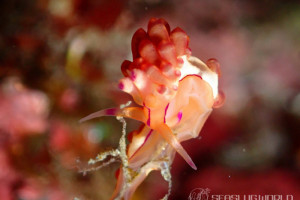
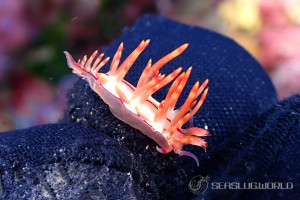

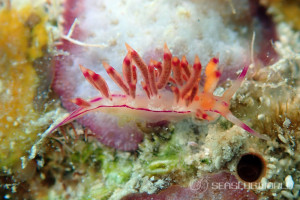



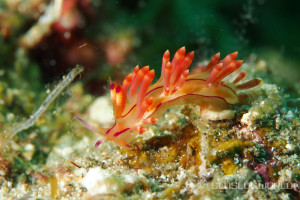

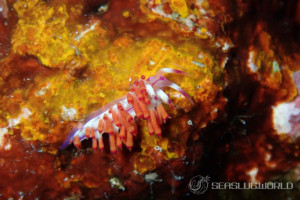

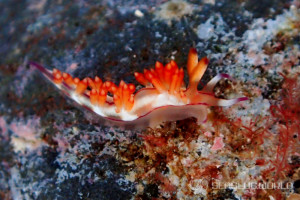
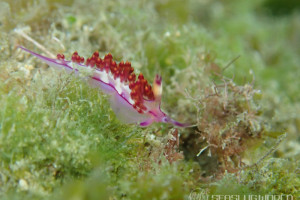
Specimen & DNA
| Observation | Database | COI | 16S | H3 |
|---|---|---|---|---|
| #53979 | BOLD Systems | SSWBP077-25 |
Same Genus Nudibranchs



Academic Database
Sea slug observation data is available in international marine biodiversity databases.