Coryphellina poenicia (Burn, 1957)
Coryphellina poenicia
No field photograph submitted for this species yet
Have you photographed this species?Description
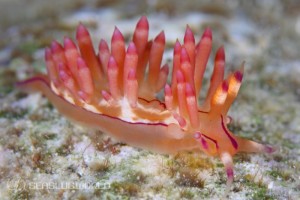
A narrow, slender aeolid reaching up to 23 mm in length. Body pale mauve, with two bright purple patches in front of the rhinophores. Rhinophores are smooth on the leading edge and bear 8-12 rows of small nodules on the posterior edge; the rhinophore base is mauve, the nodular surface light green, and the apex yellow. Cephalic tentacles extremely long and slender. The cerata are arranged in seven groups along each side (4-4-3-3-3-2-1 from anterior to posterior, each group in a single row); each ceras is long and slender with an acutely pointed, nearly transparent apex, the cerata bright transparent red tipped with yellow. The foot is narrow with very short tentaculiform anterior corners.Distribution
Southeast Australia. The type locality is Breamlea, Victoria (October 1956).Etymology
The specific epithet poenicia is the feminine form of the Latin adjective poenicius, meaning "Phoenician purple" or "scarlet", in reference to the bright transparent red colour of the cerata.Remarks
The original spelling "peonicia" appears in Burn's description; modern usage follows the standard Latin form poenicia, which is the form currently accepted on WoRMS.References
- (?) Hervia peonicia, Burn R. (1957). On some Opisthobranchia from Victoria. Journal of the Malacological Society of Australia, 1(1): 11-29, pls. 1-3.
- Coryphellina poenicia, Burn R. (1962). Descriptions of Victorian nudibranchiate Mollusca, with a comprehensive review of the Eolidacea. Memoirs of the National Museum of Victoria, 25: 95-128, text figs. 1-26. https://www.biodiversitylibrary.org/item/120188
- Coryphellina (?) poenicia (Burn, 1957), comb. n., Korshunova T., Martynov A., Bakken T., Evertsen J., Fletcher K., Mudianta I.W., Saito H., Lundin K., Schrödl M. & Picton B. (2017). Polyphyly of the traditional family Flabellinidae affects a major group of Nudibranchia: aeolidacean taxonomic reassessment with descriptions of several new families, genera, and species (Mollusca, Gastropoda). ZooKeys. 717: 1-139. https://doi.org/10.3897/zookeys.717.21885
A Kindle field guide by the site author
Kimoto N. (2026). Sea Slugs of Japan & the Indo-Pacific, 2nd Edition.
Kindle Edition
View on Amazon PR (Amazon Associates)Seasonality
Shooting Locations
Loading shooting locations...
Photos of Coryphellina poenicia


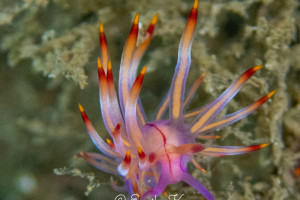
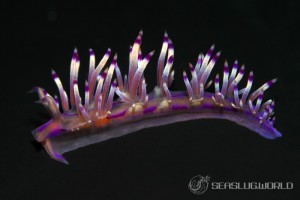
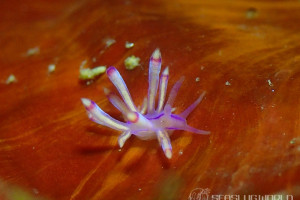
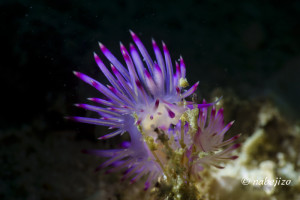
Same Genus Nudibranchs



Academic Database
Sea slug observation data is available in international marine biodiversity databases.