Verconia purpurea (Baba, 1949)
Description
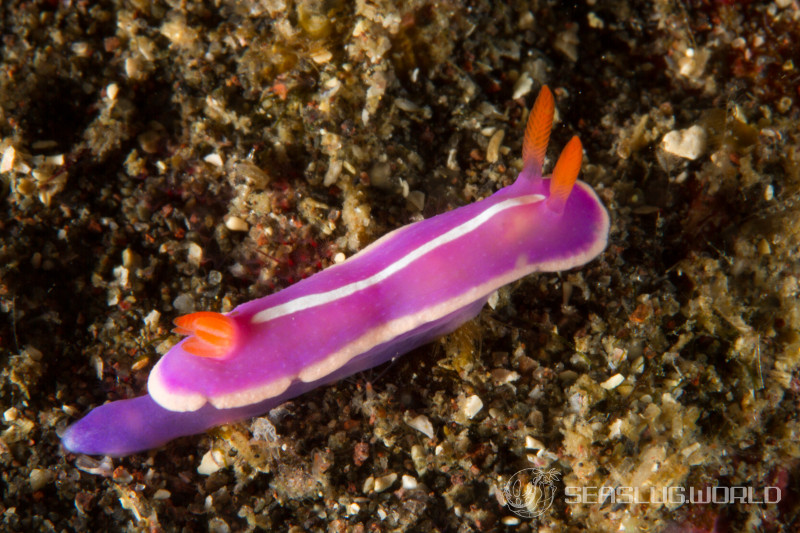
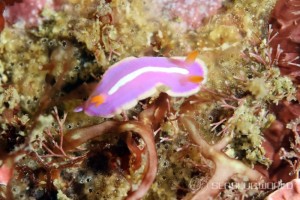
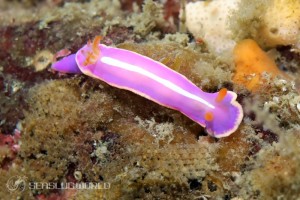
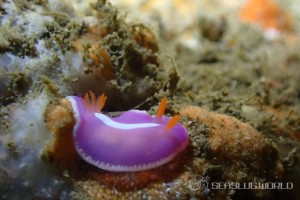
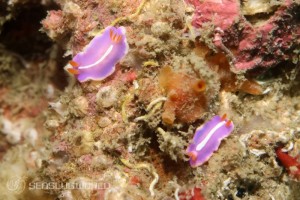
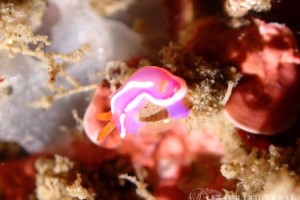
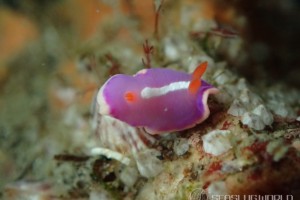
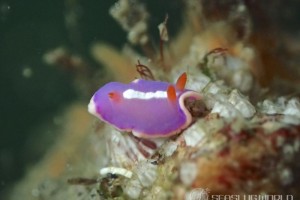
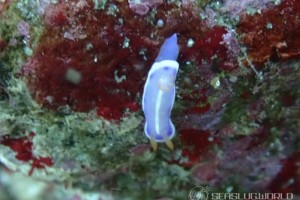
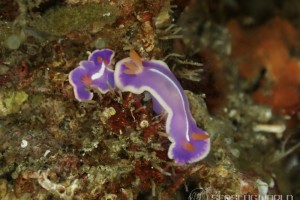
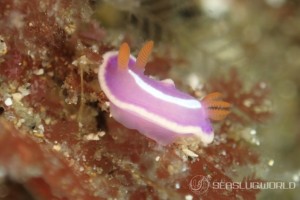
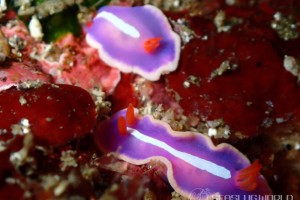
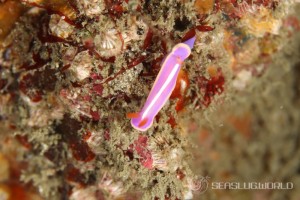
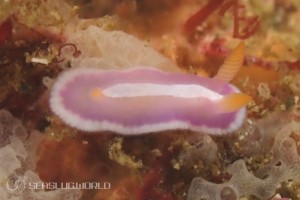
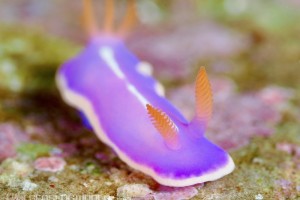
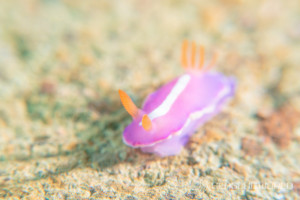
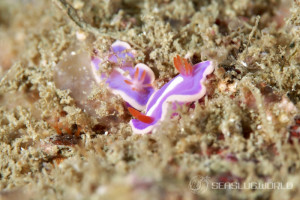
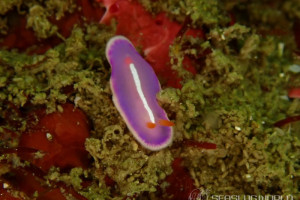
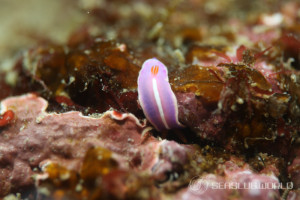
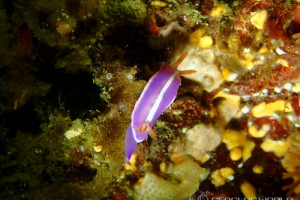
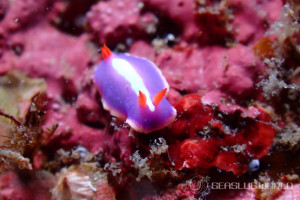
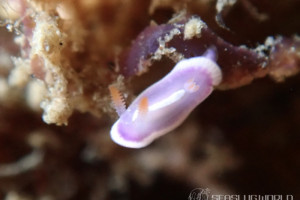
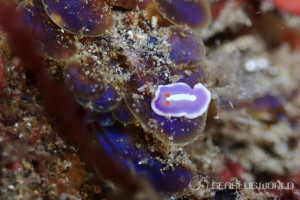
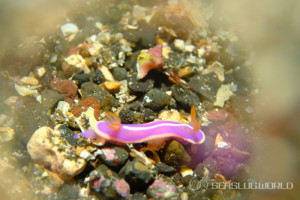
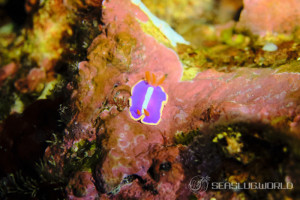
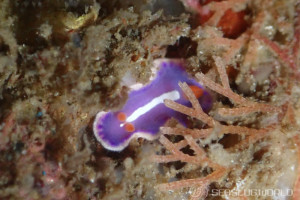
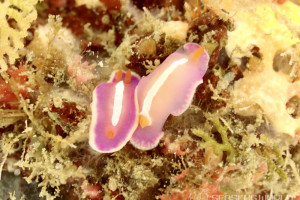
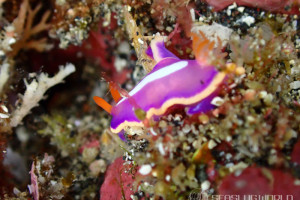
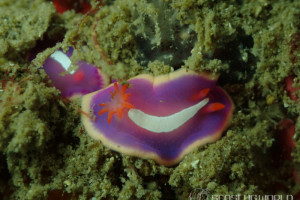
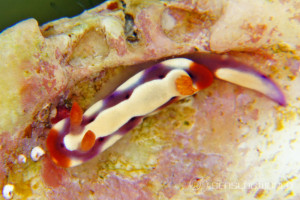
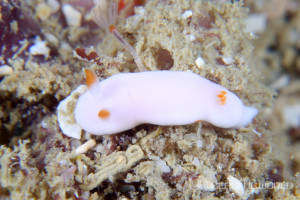
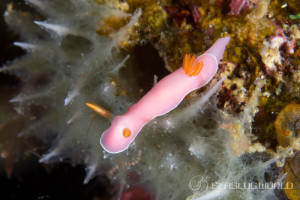
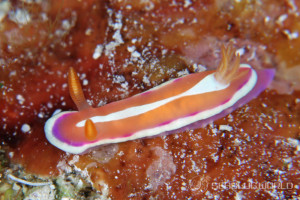
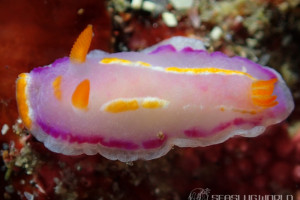
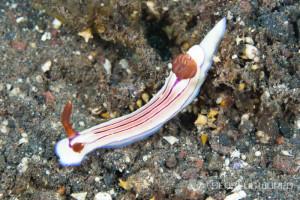
A small chromodorid, 8-13 mm in length. The oval mantle is dorsoventrally flattened, and the ground colour varies from pale pink and pinkish-orange through reddish-pink to purplish-red. A cream to white longitudinal band runs along the dorsal midline from behind the rhinophores to in front of the gill pocket; in many specimens the band is broken at the midpoint into two elongate cream patches. The mantle margin is bordered by a broad cream to pale yellow band, on whose inner edge runs an irregular series of smudged reddish-purple marks. The foot is uniformly pinkish-purple. The rhinophore stalk is translucent with a watery orange club, and the simple gills are translucent white with orange edging on the outer leaves.Distribution
Type locality: Hayama Islands, Sagami Bay, Japan. The four original specimens were collected from the intertidal in August and September 1940. The original description recorded the species only from Sagami Bay. Since then it has been documented from the Great Barrier Reef (Australia), the Philippines, Indonesia, East Africa, and the Red Sea, ranging widely across the tropical and subtropical Indo-West Pacific.Etymology
The specific epithet purpurea is Latin for "purple", in reference to the purplish-red body colour. The Japanese vernacular name "Fuji-iro-umiushi" ("wisteria-colour sea slug") likewise alludes to the violet ground colour.Remarks
A representative member of the so-called Noumea purpurea colour group, which also includes Pectenodoris trilineata and several species of Durvilledoris characterised by a pink to reddish-purple background with a median cream or white line. Noumea norba Marcus & Marcus, 1970, described from the Caribbean for animals with the cream midline broken into two ovate patches, is now treated as a junior synonym of the present species and reflects the wide range of colour variation within the group. Reports of Chromodoris gloriosa in Japan (Abe 1964) and Thorunna gloriosa in Hawaii (Bertsch & Johnson 1981) are also referable to this species. The species was originally placed in the genus Noumea; current usage treats it under Verconia.References
- Noumea purpurea n. sp.; フジイロウミウシ(新稱), Baba K. (1949). Opisthobranchia of Sagami Bay collected by His Majesty the Emperor of Japan (相模湾産後鰓類図譜). Iwanami Shoten, Tokyo. 4+2+194+7 pp., pls. 1-50.
- Noumea norba (= Noumea purpurea), Marcus Er. & Marcus Ev. (1970). Opisthobranchs from Curaçao and faunistically related regions. Studies on the Fauna of Curaçao and Other Caribbean Islands. 33(122): 1-129.
- Noumea purpurea Baba, 1949, Rudman W.B. (1986). The Chromodorididae (Opisthobranchia: Mollusca) of the Indo-West Pacific: Noumea purpurea and Chromodoris decora colour groups. Zoological Journal of the Linnean Society. 86(4): 309-353.
- フジイロウミウシ, 鈴木敬宇. (2000). ウミウシガイドブック〈2〉. TBSブリタニカ.
- 高岡生物研究会. (2002). 日本海のウミウシ. 第2版.
- フジイロウミウシ, 中野理枝. (2004). 本州のウミウシ. ラトルズ.
- フジイロウミウシ, 小野篤司 & 加藤昌一. (2009). ウミウシ. 誠文堂新光社.
- Verconia purpurea, Johnson R.F. & Gosliner T.M. (2012). Traditional taxonomic groupings mask evolutionary history: a molecular phylogeny and new classification of the chromodorid nudibranchs. PLoS ONE 7(4): e33479.
A Kindle field guide by the site author
Kimoto N. (2026). Sea Slugs of Japan & the Indo-Pacific, 2nd Edition.
Kindle Edition
View on Amazon PR (Amazon Associates)Seasonality
Shooting Locations
Loading shooting locations...
Photos of Verconia purpurea
Tag:




















Same Genus Nudibranchs
Similar Colors Nudibranchs

Academic Database
Sea slug observation data is available in international marine biodiversity databases.