Verconia subnivalis (Baba, 1987)
Description
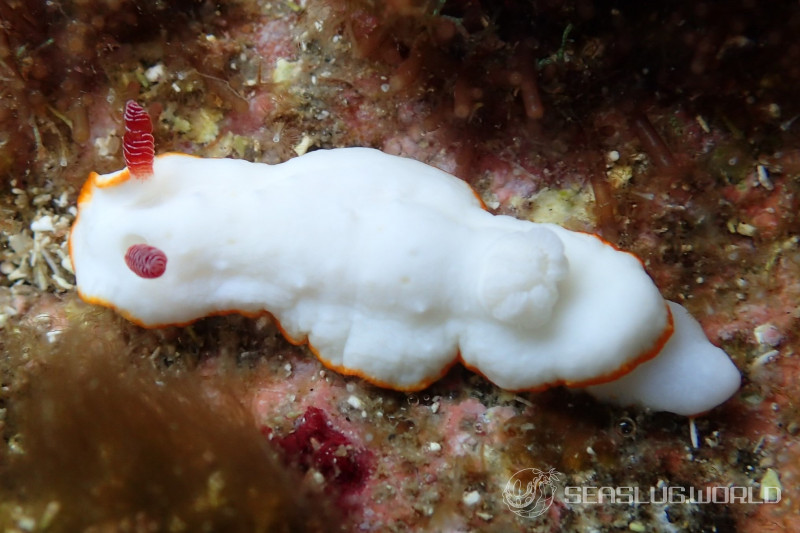
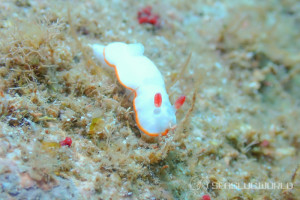
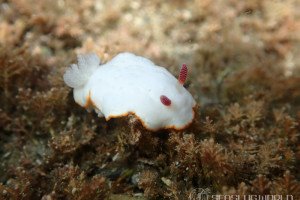
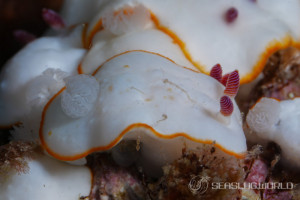
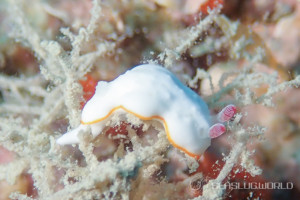
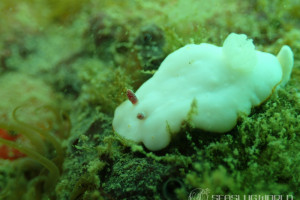
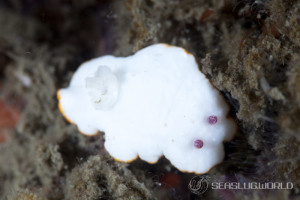
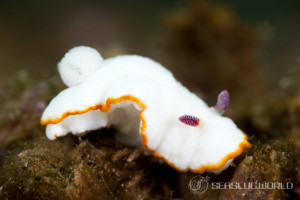
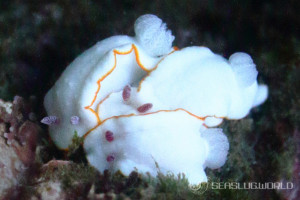
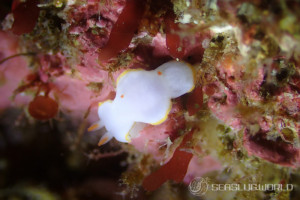
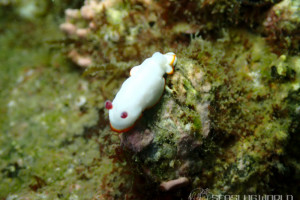
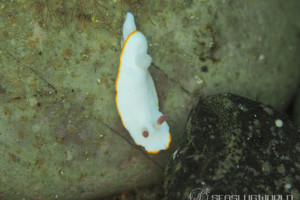
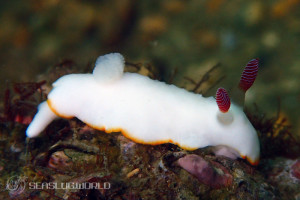
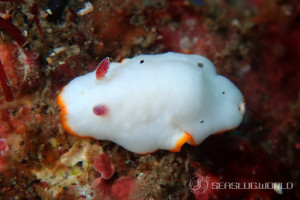
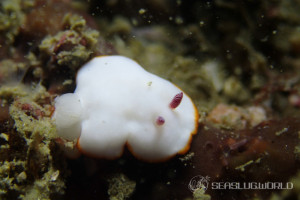
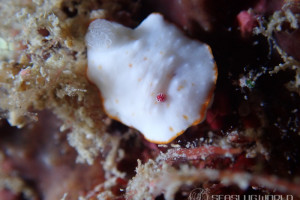
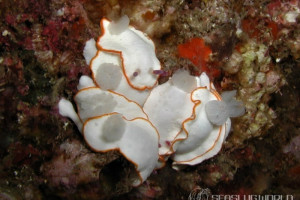
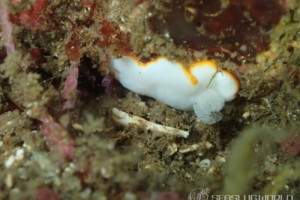
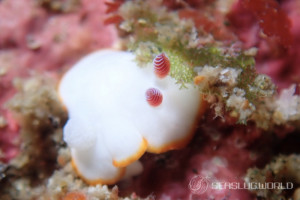
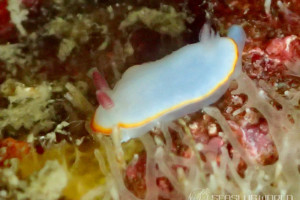
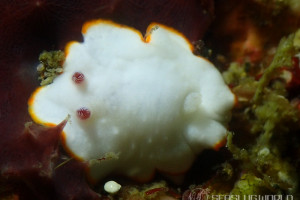
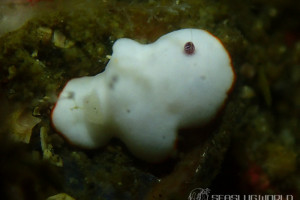
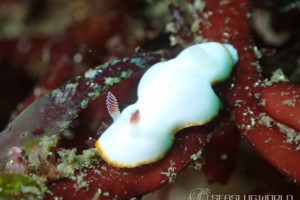
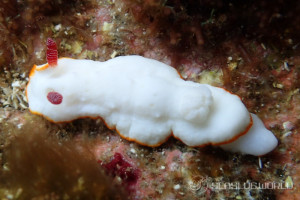
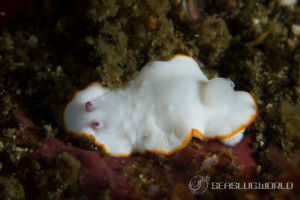
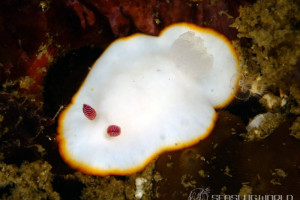
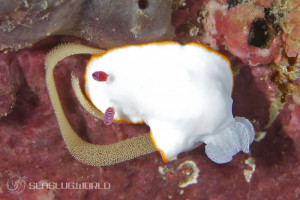
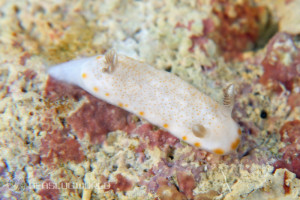
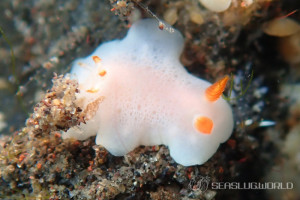
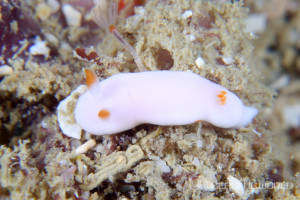
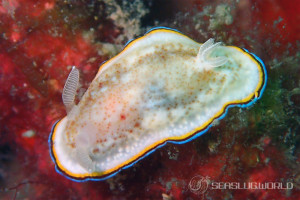
A small Chromodorididae, body length 15-20 mm alive. Back pure snow white, without any sign of yellow or orange-yellow spots — a key diagnostic difference from the sister species Verconia nivalis. The mantle margin has a double border: orange-yellow on the outside and yellow on the inside (V. nivalis has only a single yellow line). The mantle glands inside the mantle margin are opaque white. Rhinophores reddish purple above (V. nivalis has orange-yellow / vermilion clubs) and colourless below. Branchial plumes 10-12, simply pinnate, almost entirely pure white (occasional individuals show a single yellow-tipped plume). Underside pure white. The dorsum bears scattered minute conical tubercles.Distribution
Type locality: Ogi, Toyama Bay, Japan. Type-series localities also at Fukuura on the west coast of the Noto Peninsula and along the Echizen Coast.Etymology
The specific epithet subnivalis is a Latin compound of sub- (near, similar to) and nivalis (snowy), meaning "near-snowy" or "resembling nivalis". The Japanese name "Shirayuki-modoki" (literally "false snow-white") parallels the Latin construction directly, with "modoki" ("resembling / mimicking") corresponding to sub-.Remarks
Originally described as Noumea subnivalis. Noumea was subsequently sunk into Verconia, giving the current combination. Distinguished from V. nivalis by five characters: (1) absence of yellow / orange-yellow spots on the back, (2) the double mantle border (orange-yellow outside, yellow inside), (3) reddish-purple rhinophore clubs, (4) white branchial plumes, and (5) details of the first lateral radular tooth.References
- シラユキウミウシ(新称), Baba K. (1949). Opisthobranchia of Sagami Bay collected by His Majesty the Emperor of Japan (相模湾産後鰓類図譜). Iwanami Shoten, Tokyo. 4+2+194+7 pp., pls. 1-50.
- 馬場菊太郎. (1987). 富山湾小木及び隣接海域産シラユキウミウシ属1新種. 貝類学雑誌. 46(1): 19-24. https://doi.org/10.18941/venusjjm.46.1_19
- 高岡生物研究会. (2002). 日本海のウミウシ. 第2版.
- Verconia subnivalis, Johnson R.F. & Gosliner T.M. (2012). Traditional taxonomic groupings mask evolutionary history: a molecular phylogeny and new classification of the chromodorid nudibranchs. PLoS ONE 7(4): e33479.
- シラユキモドキ, 中野理枝. (2018). 日本のウミウシ. 文一総合出版.
Featured in this book
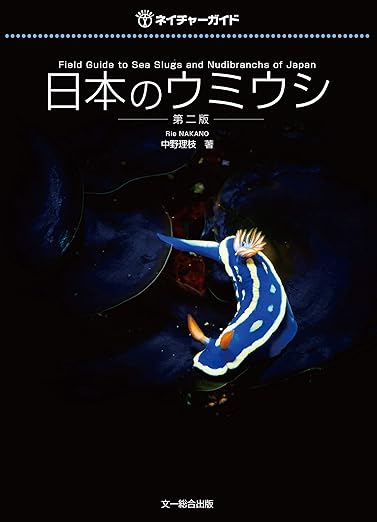
中野理枝. (2019). 日本のウミウシ. 第二版. 文一総合出版.
文一総合出版
This species, Verconia subnivalis, is included in the book.
View on Amazon PR (Amazon Associates)Seasonality
Shooting Locations
Loading shooting locations...
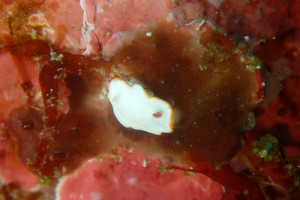
Photos of Verconia subnivalis
Tag:

























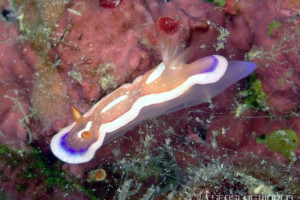
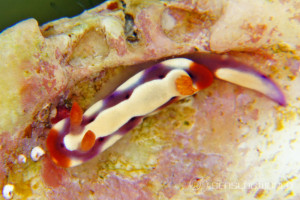
Same Genus Nudibranchs
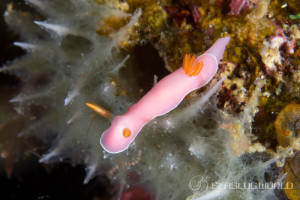
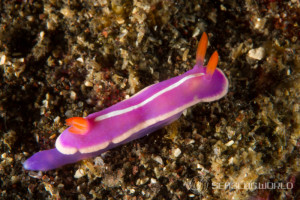
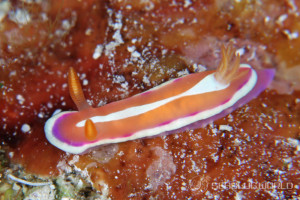
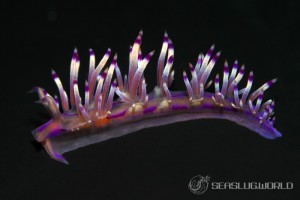
Similar Colors Nudibranchs

Academic Database
Sea slug observation data is available in international marine biodiversity databases.