Hypselodoris kanga Rudman, 1977
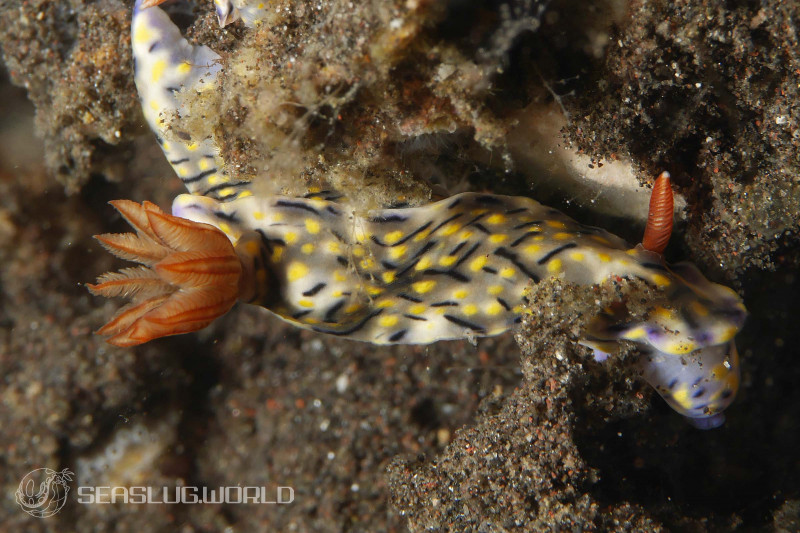
- Location
- USAT Liberty Shipwreck, Tulamben, Pulau Bali, Indonesia
- Date
- 2016/11/18
- Length
- 35mm
- Depth
- 20.0m
- Water temperature
- 28.0℃
Description
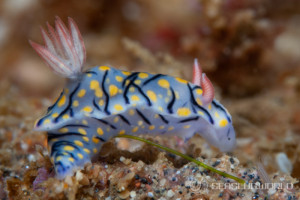
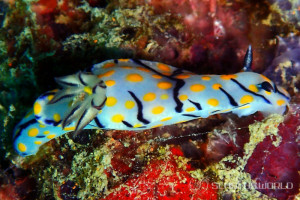
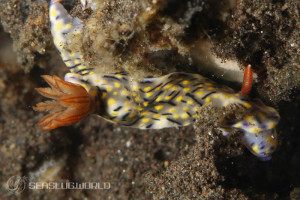
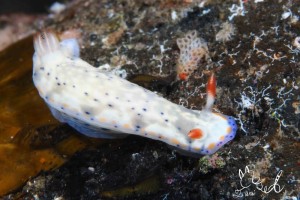
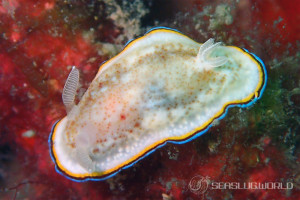
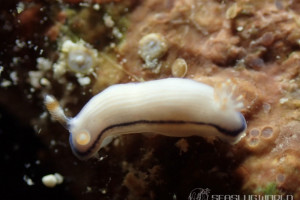
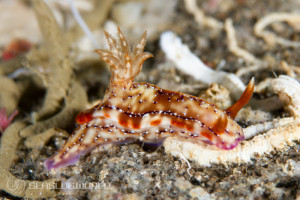
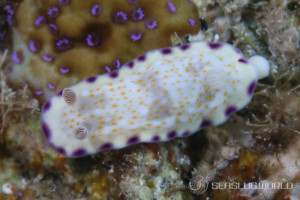
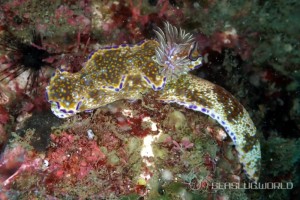
Body light watery blue overall, with a distinctive pattern of scattered markings. The mantle bears short dark-blue streaks running from the midline toward the edge, and large yellow spots scattered along and inside the mantle margin. Along the dorsal midline runs a row of elongate yellow marks bordered by thin dark-blue lines. The underside of the mantle is translucent bluish. Rhinophores red with deep blue stalks; a wedge-shaped blue region lies between the red lamellae on the posterior side. Seven gills form a complete circle and are triangular in cross-section; the gill pinnules are white, the inner edge of each gill bears a tricolor band (upper quarter reddish-orange, middle deep blue, basal quarter white), and the outer side is orange-red apically with light blue and large yellow spots, with deep blue at the corners. Sides of the foot light blue with large yellow spots and short dark-blue streaks; the sole is light blue with three yellow spots anteriorly. Mantle spatula-shaped. Holotype 42 mm long (the only specimen).Distribution
Type locality is Kunduchi, Dar es Salaam, Tanzania (July 1973, on a blue sponge growing on a concrete block at extreme low water spring tide). Originally also recorded by Rudman 1977 from Pakistan (Karachi, reported by Eliot 1905 as H. semperi) and India (Bombay, reported by Winckworth 1946 as H. nigrostriata, 62 specimens), giving the species an Indo-West Pacific distribution.Etymology
The specific epithet kanga is a simplified spelling of the Swahili word khanga, a locally produced, brightly patterned cotton cloth worn by many Tanzanian women (verbatim from the original description). The reference is to the species' bright and complex colour pattern; this is a cultural, not a personal, eponym.Remarks
A member of the Hypselodoris infucata - semperi group (bluish-bodied species with yellow and dark blue markings). The combination of bright yellow spots and short dark-blue streaks on a light watery blue ground makes it easily recognisable within the genus. Distinguished from the closely related Hypselodoris nigrostriata, which has a milky violet ground with continuous yellow lines and yellow rings around the rhinophore pockets. Chromodoris semperi Bergh sensu Eliot, 1905 and Glossodoris nigrostriata Eliot sensu Winckworth, 1946 are synonyms.References
- Hypselodoris kanga Rudman, 1977, Gosliner T.M. & Johnson R.F. (1999). Phylogeny of Hypselodoris (Nudibranchia: Chromodorididae) with a review of the monophyletic clade of Indo-Pacific species, including descriptions of twelve new species. Zoological Journal of the Linnean Society. 125: 1-114. https://doi.org/10.1111/j.1096-3642.1999.tb00585.x
- Hypselodoris kanga, Johnson R.F. & Gosliner T.M. (2012). Traditional taxonomic groupings mask evolutionary history: a molecular phylogeny and new classification of the chromodorid nudibranchs. PLoS ONE 7(4): e33479.
- Hypselodoris kanga, Terrence Gosliner, Ángel Valdés and David Behrens. (2015). Nudibranch and Sea Slug Identification Indo-Pacific. New World Pubns Inc.
Featured in this book

Terrence Gosliner, Ángel Valdés and David Behrens. (2018). Nudibranch and Sea Slug Identification Indo-Pacific 2nd Edition. New World Pubns Inc.
New World Publications
This species, Hypselodoris kanga, is included in the book.
View on Amazon PR (Amazon Associates)Seasonality
Shooting Locations
Loading shooting locations...
Photos of Hypselodoris kanga



Same Genus Nudibranchs
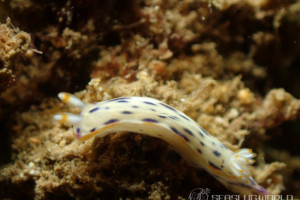
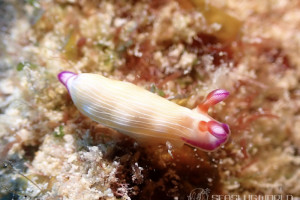
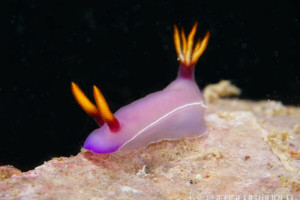
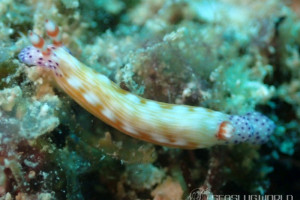
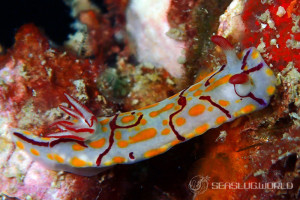
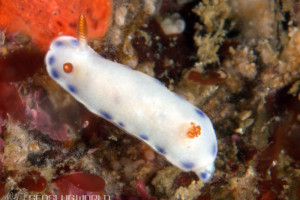
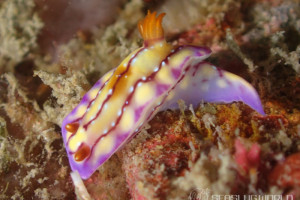

Similar Colors Nudibranchs

Academic Database
Sea slug observation data is available in international marine biodiversity databases.