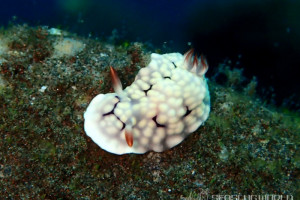
Goniobranchus rufomaculatus (Pease, 1871)
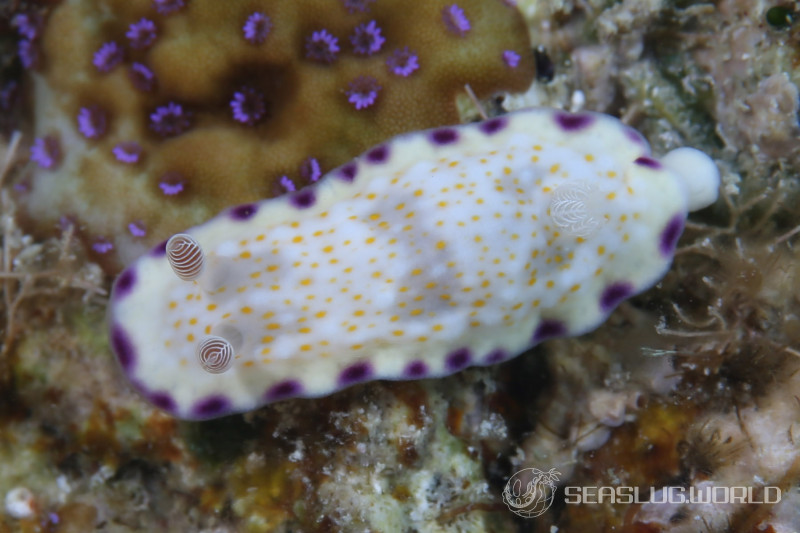
- Location
- Horse Shoes, Okinawa Island (Onna and Yomitan area), Okinawa, Japan
- Date
- 2015/05/14
- Length
- 12mm
- Depth
- 7.0m
- Water temperature
- 25.0℃
Description
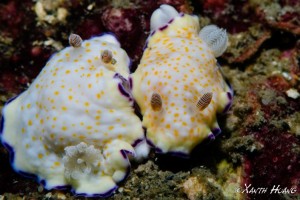
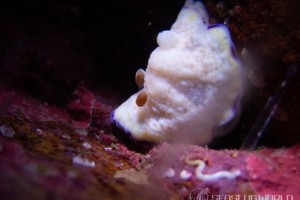
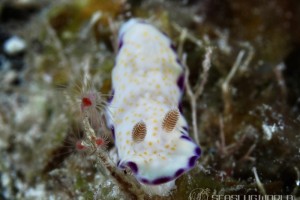
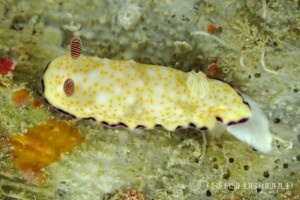
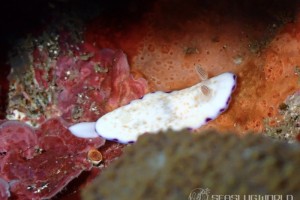
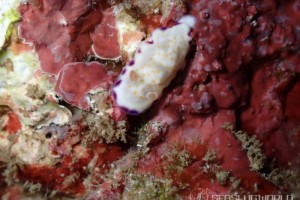
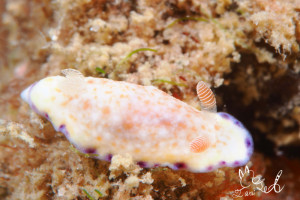
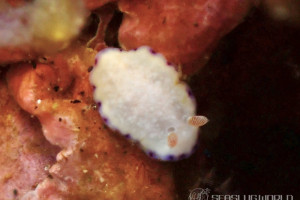
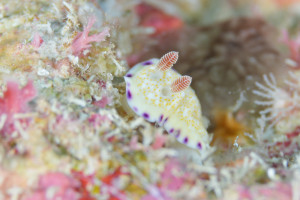
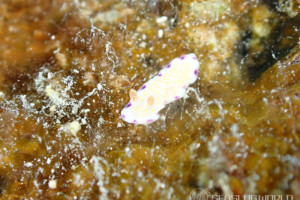
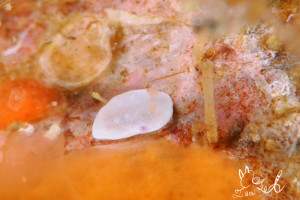
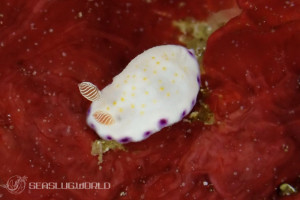
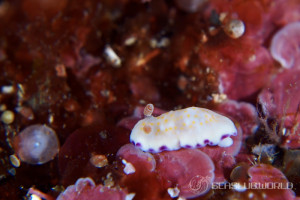
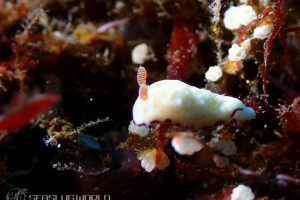
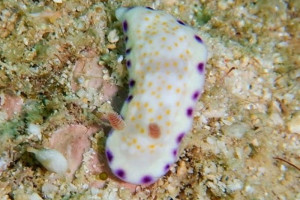
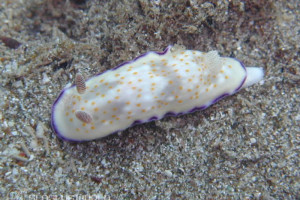
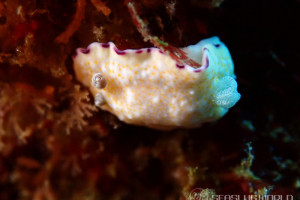
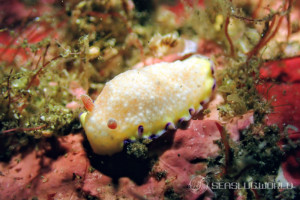
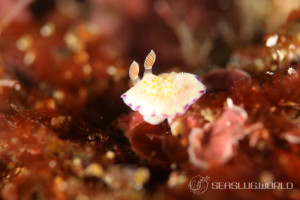
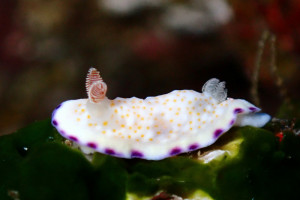
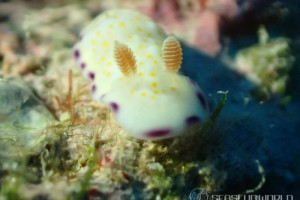
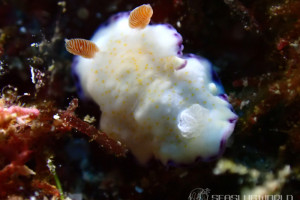
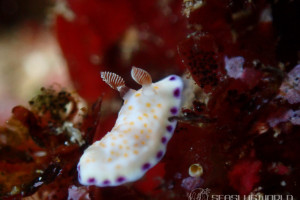
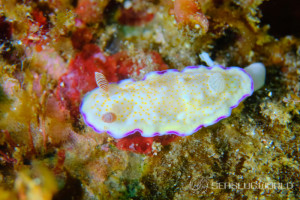
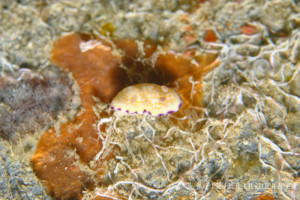
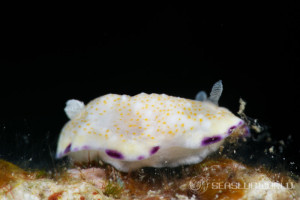
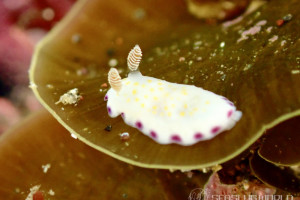
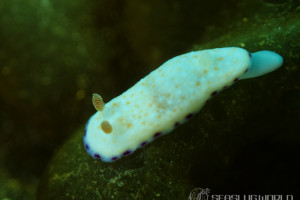
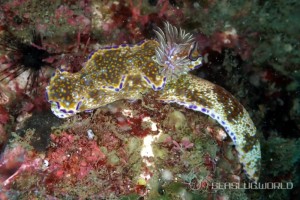
A small chromodorid reaching about 25 mm in body length. The body is oblong, flaccid, smooth, pellucid, rounded above, slightly dilated anteriorly, obtusely rounded in front, and slightly undulated along the margin, rounded behind. The rhinophores are well developed, erect, oblong-ovate, mucronate, finely lamellate, on stout peduncles, retractile into tubular cavities. The oral tentacles are small and finger-shaped. The gill is small, rather remote from the hinder end of the body, composed of nine lanceolate pinnate plumules which are incurved and retractile into a common cavity. The anal papilla is prominent. The foot is elongate, fissured and truncately rounded in front, tapering behind to an acutely rounded point projecting considerably beyond the mantle. In life the ground colour is cream white, passing into cream yellow toward the margins, which are ornamented with a series of oblong violet spots. The central portion of the mantle is studded with numerous slightly elevated orange dots. The gill is colourless. The rhinophores are chocolate brown with white lamellae. The under surface is colourless except for a slight tinge of the dorsal colours transmitted through the pellucid mantle. Pease's type was about 1 inch (≈ 2.5 cm) long, found under stones at low water mark on Huahine.Distribution
Indo-West Pacific to the central Pacific. Type locality: Huahine, Society Islands, based on a specimen collected by Andrew Garrett and described by Pease. Subsequently recorded from the Hawaiian Islands, southern Japan, Taiwan, the Philippines, Indonesia, Guam, New Caledonia and elsewhere.Etymology
The specific epithet combines Latin rufus ("red, reddish") with maculatus ("spotted"), meaning "red-spotted", in reference to the numerous slightly elevated orange dots on the central portion of the mantle. Pease did not state an etymology, but the meaning is consistent with his "the central portion of the mantle is studded with numerous slightly elevated orange dots".Remarks
Originally placed by Pease in Chromodoris. Later transferred to Goniobranchus; the parentheses in the author citation reflect this generic transfer. The Japanese name "ヒメコモンウミウシ" ("small komon slug") refers to the species being a smaller, "hime" (princess-like) counterpart to the related larger Goniobranchus species.References
- Chromodoris rufomaculata Pease n. sp., Pease W.H. (1871). Descriptions of new species of Nudibranchiate Mollusca inhabiting Polynesia. No. 2. American Journal of Conchology. 7(1): 11-19, pls. III-IX.
- Goniobranchus rufomaculatus, Johnson R.F. & Gosliner T.M. (2012). Traditional taxonomic groupings mask evolutionary history: a molecular phylogeny and new classification of the chromodorid nudibranchs. PLoS ONE 7(4): e33479.
A Kindle field guide by the site author
Kimoto N. (2026). Sea Slugs of Japan & the Indo-Pacific, 2nd Edition.
Kindle Edition
View on Amazon PR (Amazon Associates)Seasonality
Shooting Locations
Loading shooting locations...
Photos of Goniobranchus rufomaculatus
Tag:



















Same Genus Nudibranchs

Similar Colors Nudibranchs
Academic Database
Sea slug observation data is available in international marine biodiversity databases.