Ceratosoma tenue Abraham, 1876
Description
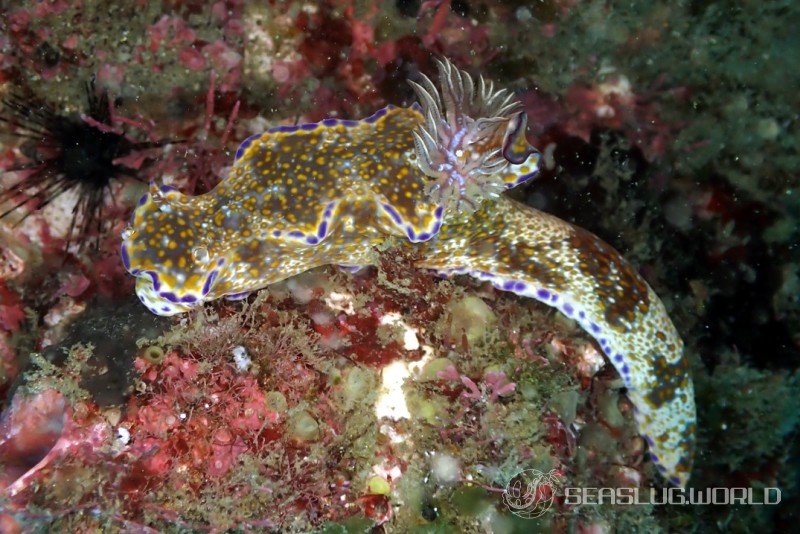
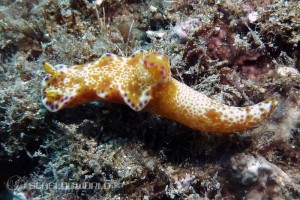
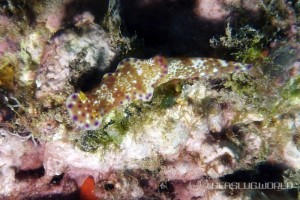
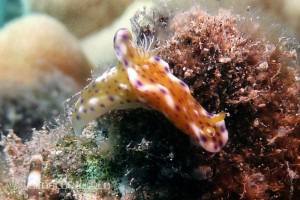
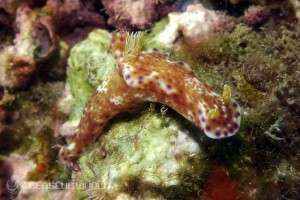
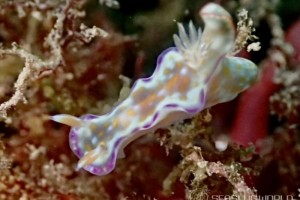
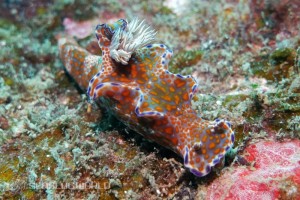
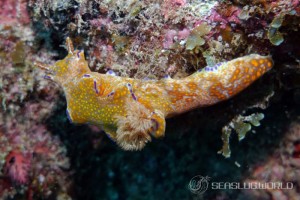
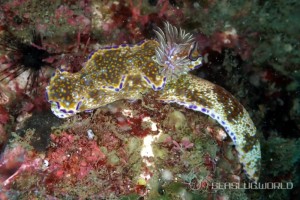
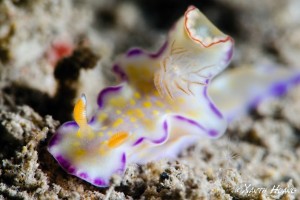
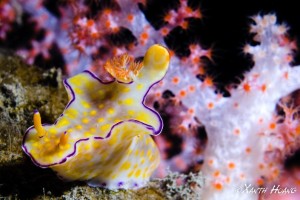
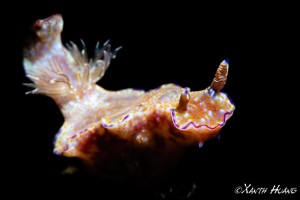
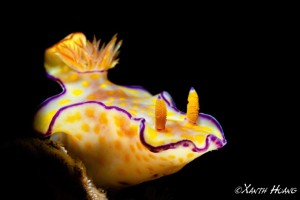
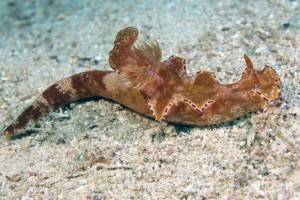
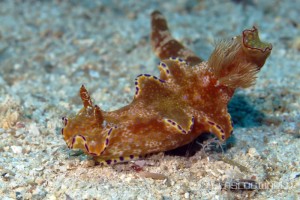
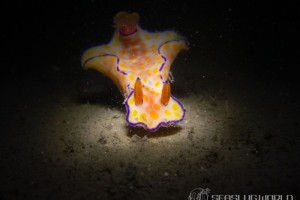
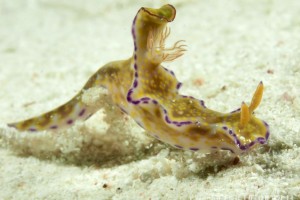
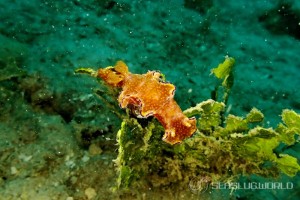
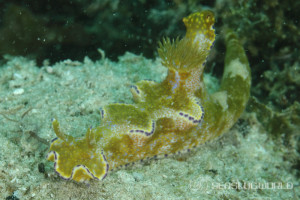
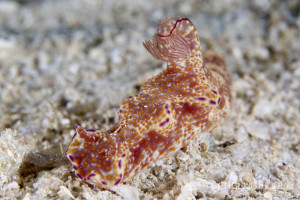
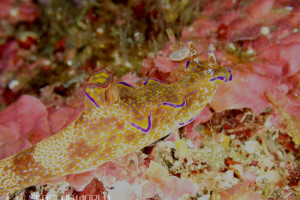
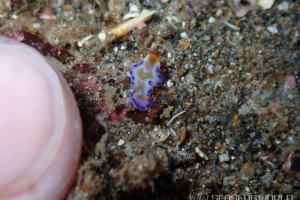
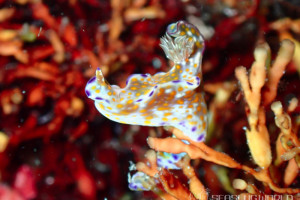
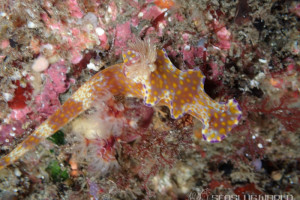
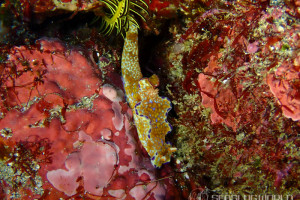
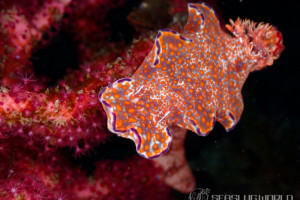
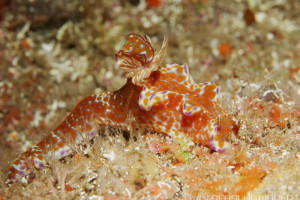
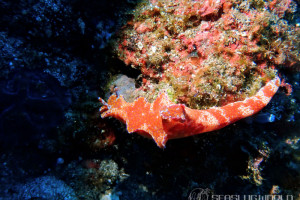
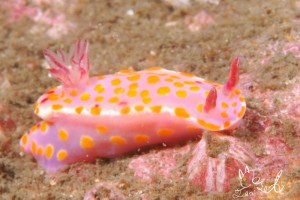
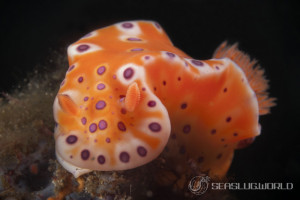
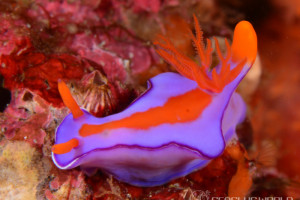
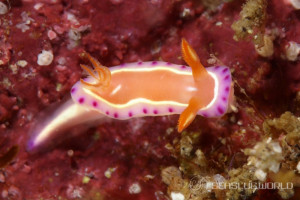
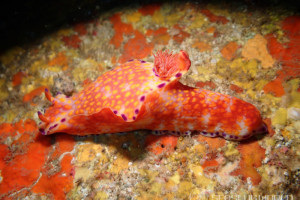
The body is relatively tall and elongate with a greatly enlarged foot. The posterior end of the mantle is situated slightly less than halfway down the body and is produced into a prominent recurved horn that, like that of Ceratosoma trilobatum, is often held vertically but can also be carried horizontally. Around the head the mantle skirt forms a narrow rigid ledge, but in a 'neck' region behind the rhinophores the mantle edge is absent before reappearing as a small lobe on each side, midway between the rhinophores and the gills. Behind this lobe the mantle edge narrows again before widening into a second, larger lateral lobe in front of the gills; behind the gills the lobes join in the posterior midline as the dorsal horn. The gills and rhinophores resemble those of C. trilobatum; mantle glands form a tightly packed row around the edge of the dorsal horn. In two Tanzanian specimens the dorsal horn was absent but a scar suggested it had been bitten off.The colour pattern is variable. North-western Australian animals have a whitish background with large diffuse light purple patches, many bright orange spots of two sizes, a broken purple line around the mantle edge, and a row of purple spots along the foot edge; the rhinophores are orange tipped with purple, and the gills bicoloured with the basal half of each rachis orange and the upper half white. Tanzanian specimens are yellowish-green shading to khaki yellow at the foot edge, with many small yellow spots, scattered turquoise blue-green spots, a yellowish purple-bordered mantle, and a wine-red gill axis. Specimens from Lizard Island, Queensland and northern New South Wales are dull orange-brown with an irregular white border to the foot, large white patches along the posterior dorsal midline, and densely packed yellow-orange spots within the white regions. The species reaches at least 130 mm alive.
Distribution
Widely distributed in the Indo-West Pacific, with records from the Red Sea, East Africa (Tanzania), the Indonesian Archipelago, the Philippines, tropical Australia, New Caledonia, Japan and Norfolk Island. Two specimens recovered from the stomachs of the lethrinid fish Lethrinus chrysostomus off Norfolk Island provide the first clear evidence of fish predation on a species of Ceratosoma.Etymology
The specific name tenue is from Latin meaning thin or slender, presumably in reference to the elongate body form.Remarks
This species has long been confused with Ceratosoma trilobatum. The two are similar in the strong development of the posterior dorsal horn but differ in that Ceratosoma tenue has a small secondary lateral lobe between the rhinophores and the gills, whereas in C. trilobatum the mantle edge runs as a continuous ridge from the head to the wing-like lobe in front of the gills. Ceratosoma ornatum Bergh, 1890, Ceratosoma francoisi Rochebrune, 1894, Ceratosoma jousseaumi Rochebrune, 1894, Ceratosoma rhopalicum Rochebrune, 1894, and Ceratosoma bicorne Bergh, 1905a are all considered synonyms of C. tenue. The radula lacks a central tooth, and the inner laterals carry several denticles, in contrast to the more hamate inner laterals of C. trilobatum.References
- Ceratosoma tenue Abraham, 1876, Rudman W.B. (1988). The Chromodorididae (Opisthobranchia: Mollusca) of the Indo-West Pacific: the genus Ceratosoma J. E. Gray. Zoological Journal of the Linnean Society. 93(2): 133-185. https://doi.org/10.1111/j.1096-3642.1988.tb01532.x
- テヌウニシキウミウシ(新称), 小野篤司. (2000). ウミウシガイドブック. 第2版. TBSブリタニカ.
- ケラトソマ・テヌウ, 殿塚孝昌. (2003). ウミウシガイドブック〈3〉. TBSブリタニカ.
- Ceratosoma tenue, Johnson R.F. & Gosliner T.M. (2012). Traditional taxonomic groupings mask evolutionary history: a molecular phylogeny and new classification of the chromodorid nudibranchs. PLoS ONE 7(4): e33479.
A Kindle field guide by the site author
Kimoto N. (2026). Sea Slugs of Japan & the Indo-Pacific, 2nd Edition.
Kindle Edition
View on Amazon PR (Amazon Associates)Seasonality
Shooting Locations
Loading shooting locations...
Photos of Ceratosoma tenue
Tag:















Same Genus Nudibranchs

Academic Database
Sea slug observation data is available in international marine biodiversity databases.