Ceratosoma gracillimum C. Semper, 1876
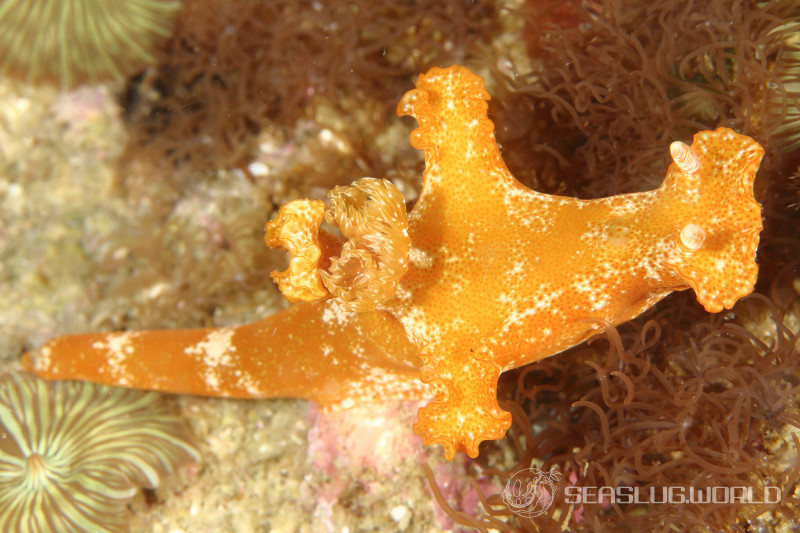
- Location
- Gato Island, Malapascua, Philippines
- Date
- 2018/11/29
- Length
- 30mm
- Depth
- 20.0m
- Water temperature
- 27.0℃
Description
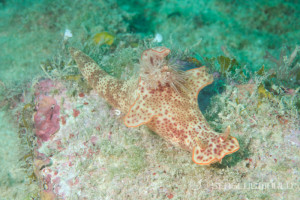
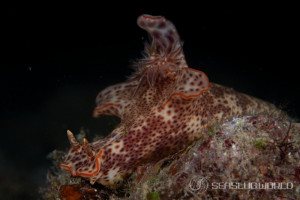
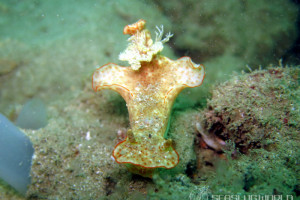
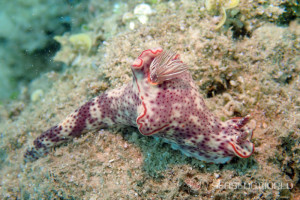
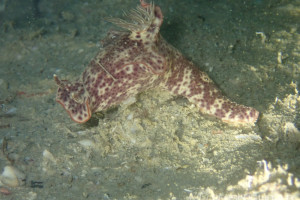
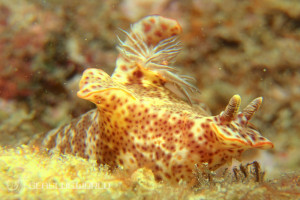
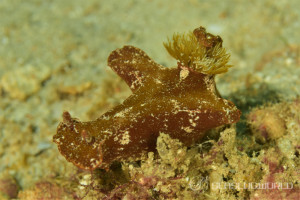
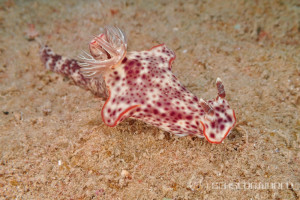
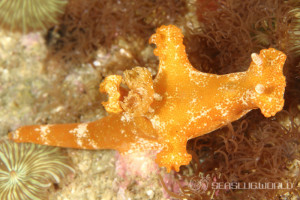
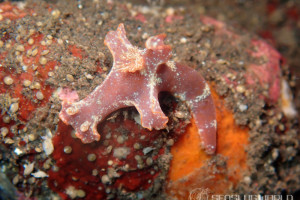
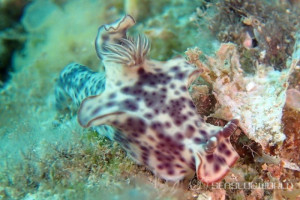
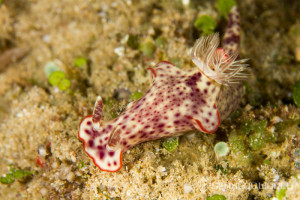
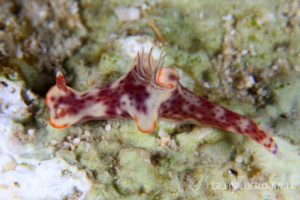
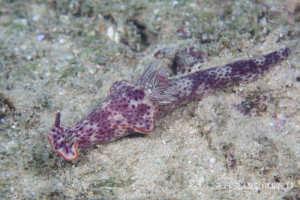
A large Ceratosoma; the living animal reaches 14 cm in length, with body height to the apex of the dorsal horn nearly 5 cm, the frontal veil about 2 cm wide and the distance between the lateral-lobe tips about 4 cm. The ground colour is pale greenish-grey, largely replaced on the upper surface and sides by large greenish-olive-grey blotches with somewhat diffuse margins, forming 4-5 broad transverse bands on the tail. Innumerable red or red-brown dots are scattered over the whole animal; the rims of the frontal veil and of the dorsal lobes are edged with a narrow red or red-brown line. Rhinophores and gill take the ground colour. Alcohol-preserved animals lose all colour, becoming uniformly pale yellowish-grey or whitish-yellow. Rhinophore club about 2.25 mm tall with 21-25 lamellae. Compared to C. cornigerum the form is overall slightly more slender.Distribution
Type locality: Mare philippinense, Lapinig Channel near Bohol, Philippines. The species is now also known from Vietnam, the Great Barrier Reef, and Japan, broadly across the Indo-West Pacific.Etymology
The specific epithet gracillimum is the neuter superlative of Latin gracilis ("slender, slim, graceful") — "the slenderest" — referring to the more slender body form of this species compared to its congeners C. cornigerum and C. trilobatum.Remarks
The name gracillimum was a manuscript name written on the original specimen label and formally published in the species description.References
- Ceratosoma gracillimum Semper in Bergh, 1876, Rudman W.B. (1988). The Chromodorididae (Opisthobranchia: Mollusca) of the Indo-West Pacific: the genus Ceratosoma J. E. Gray. Zoological Journal of the Linnean Society. 93(2): 133-185. https://doi.org/10.1111/j.1096-3642.1988.tb01532.x
- ケラトソマ・グラキリムン, 殿塚孝昌. (2003). ウミウシガイドブック〈3〉. TBSブリタニカ.
- ミナミニシキウミウシ(新称), 小野篤司. (2004). 沖縄のウミウシ. ラトルズ.
- Ceratosoma gracillimum, Johnson R.F. & Gosliner T.M. (2012). Traditional taxonomic groupings mask evolutionary history: a molecular phylogeny and new classification of the chromodorid nudibranchs. PLoS ONE 7(4): e33479.
A Kindle field guide by the site author
Kimoto N. (2026). Sea Slugs of Japan & the Indo-Pacific, 2nd Edition.
Kindle Edition
View on Amazon PR (Amazon Associates)Seasonality
Shooting Locations
Loading shooting locations...
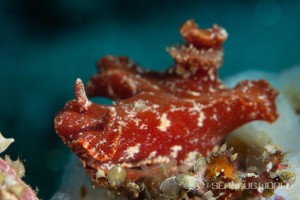
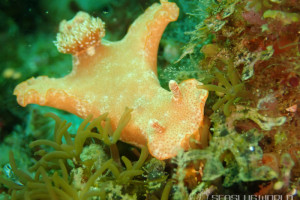
Photos of Ceratosoma gracillimum





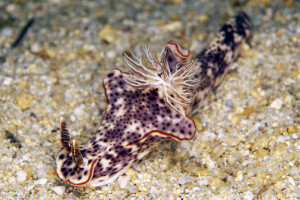

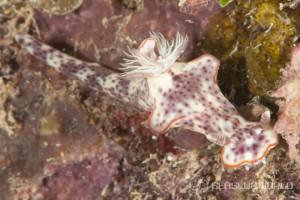

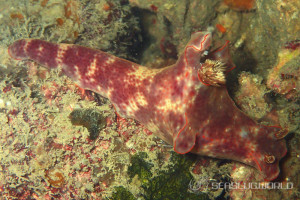

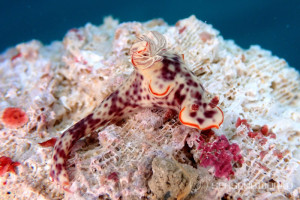







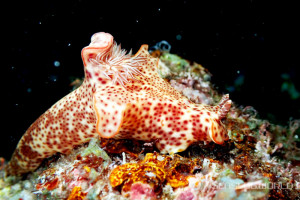
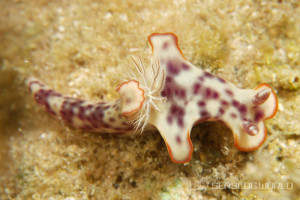

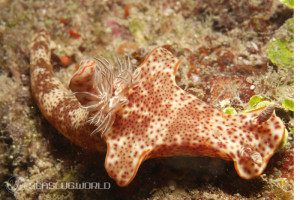
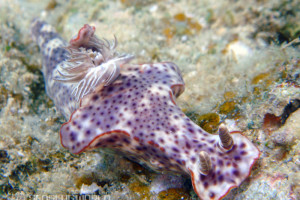

Same Genus Nudibranchs

Similar Colors Nudibranchs
Academic Database
Sea slug observation data is available in international marine biodiversity databases.