Miamira flavicostata Baba, 1940
Description
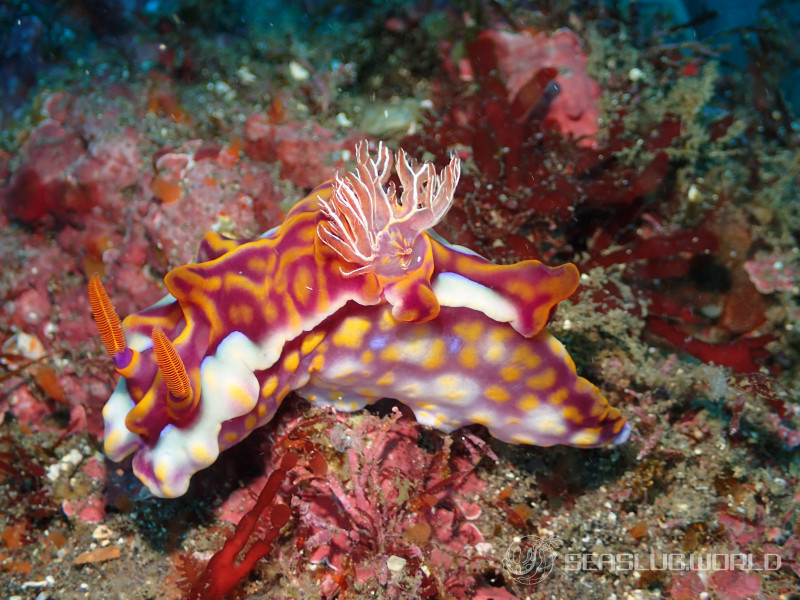
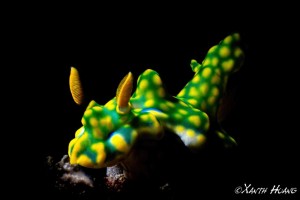
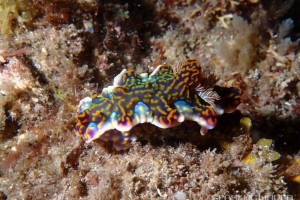
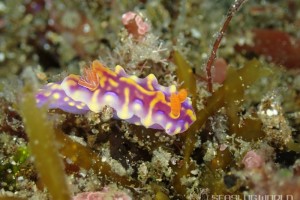
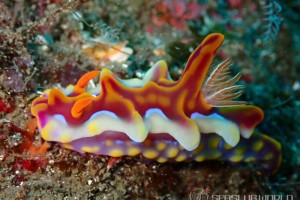
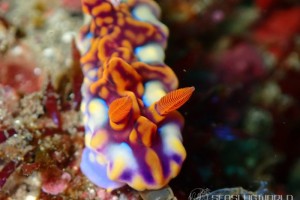
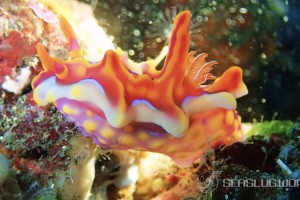
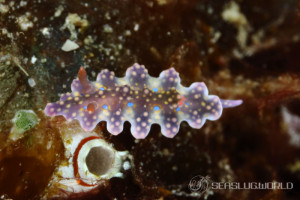
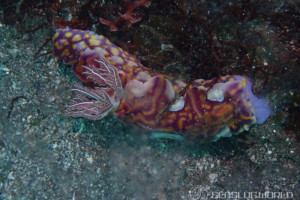
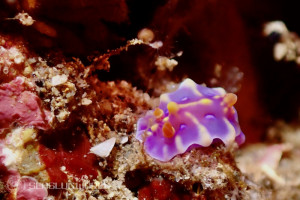
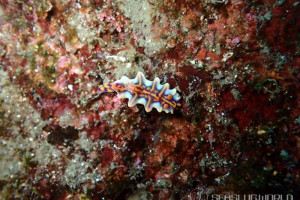
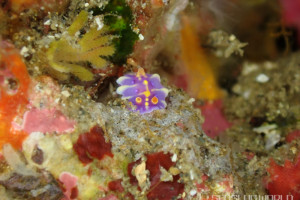
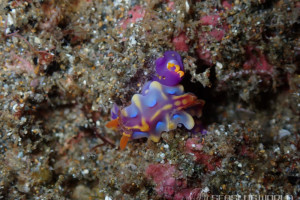
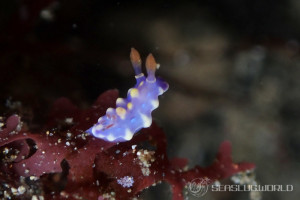
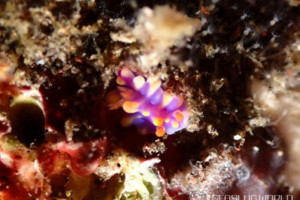
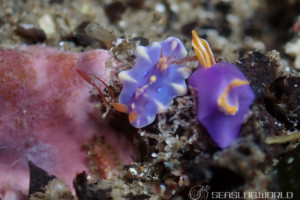
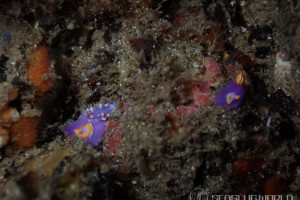
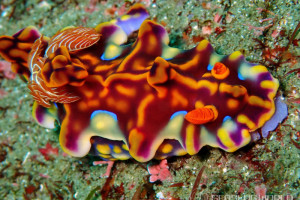
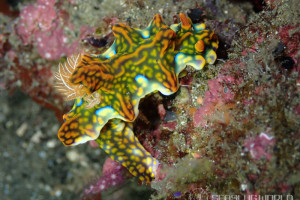
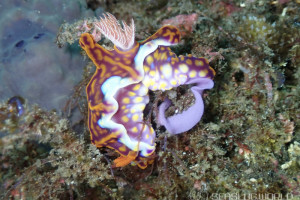
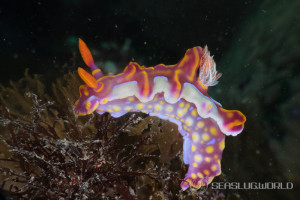
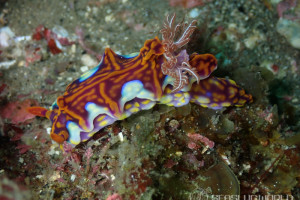
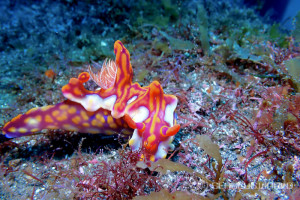
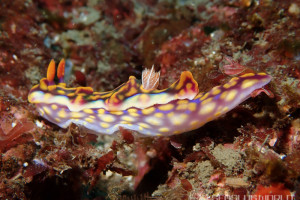
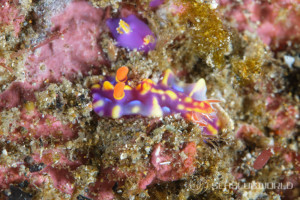
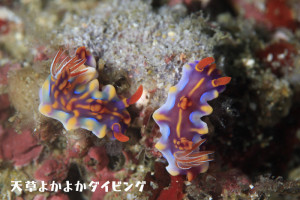
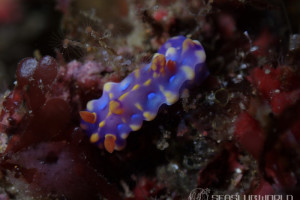
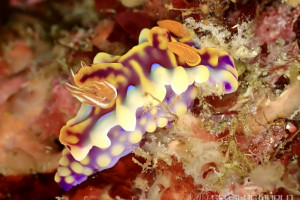
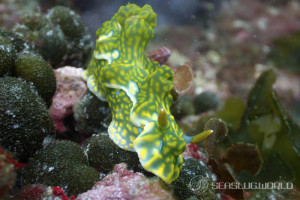
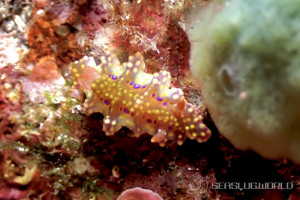
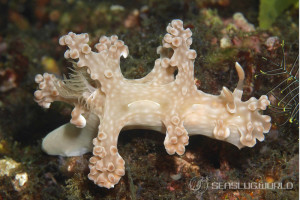
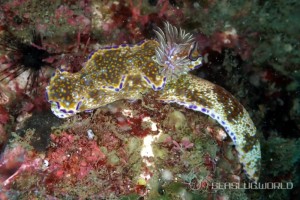
A medium to large Chromodorididae, body length up to 70 mm. Ground colour highly variable: purple, red, blue, or green. A longitudinal ridge runs along the dorsal midline, with several places raised as tubercles; the tubercle in front of the gills is especially large. Lateral ridges extend outward from the ridge bases and project onto the mantle margin. The dorsum bears orange and yellow markings, and the mantle margin is pale yellow. Round yellow spots, somewhat raised, are scattered on the body sides. Rhinophores red to orange. Gills heavily tinged red, with the outer side of the axis white.Distribution
Type locality is Amakusa, Kumamoto, Japan. The original description is based on Amakusa material. Subsequent records confirm a wide Indo-West Pacific distribution (South Africa, the Red Sea, Australia, Indonesia, Papua New Guinea, Japan).Etymology
The specific epithet flavicostata is a Latin compound of flavus (yellow) and costatus (ribbed), meaning "yellow-ribbed".Remarks
At one time reassigned to Ceratosoma flavicostatum, but later restored to Miamira in a phylogenetic revision of Chromodorididae. Ceratosoma magnifica is a junior synonym. Within the genus, distinguished by the dorsal ridge structure and yellow costae.References
- ミアミラウミウシ, Baba K. (1949). Opisthobranchia of Sagami Bay collected by His Majesty the Emperor of Japan (相模湾産後鰓類図譜). Iwanami Shoten, Tokyo. 4+2+194+7 pp., pls. 1-50.
- ケラトソマ・シヌアタ, 殿塚孝昌. (2003). ウミウシガイドブック〈3〉. TBSブリタニカ.
- Miamira flavicostata, Johnson R.F. & Gosliner T.M. (2012). Traditional taxonomic groupings mask evolutionary history: a molecular phylogeny and new classification of the chromodorid nudibranchs. PLoS ONE 7(4): e33479.
A Kindle field guide by the site author
Kimoto N. (2026). Sea Slugs of Japan & the Indo-Pacific, 2nd Edition.
Kindle Edition
View on Amazon PR (Amazon Associates)Seasonality
Shooting Locations
Loading shooting locations...
Photos of Miamira flavicostata
Tag:















Same Genus Nudibranchs
Similar Colors Nudibranchs
Academic Database
Sea slug observation data is available in international marine biodiversity databases.