Verconia nivalis (Baba, 1937)
Description
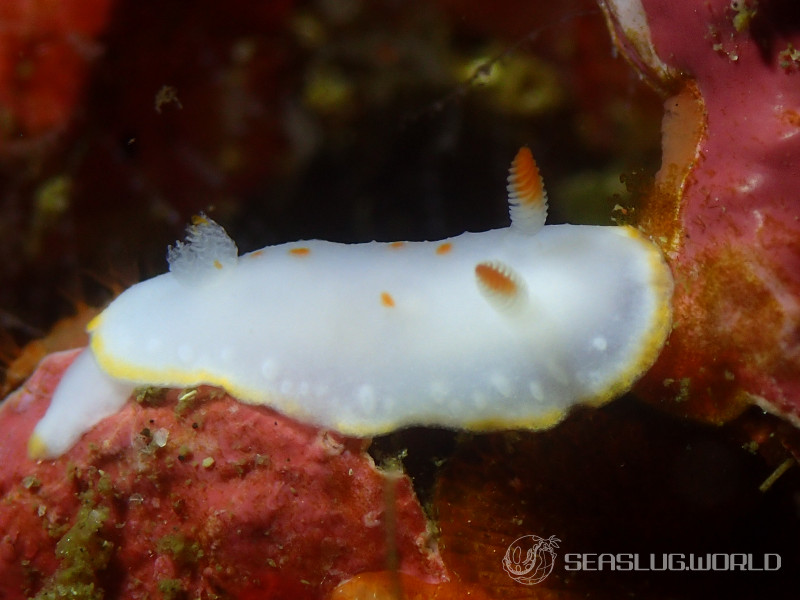
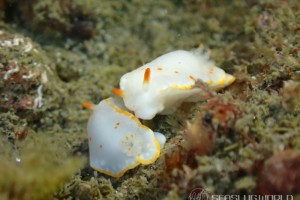
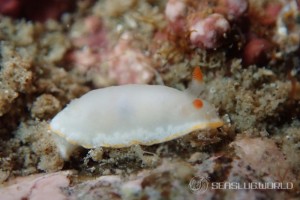
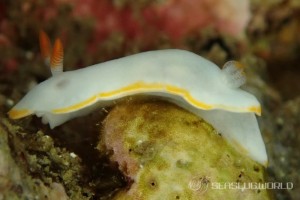
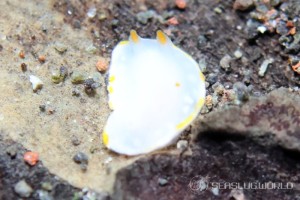
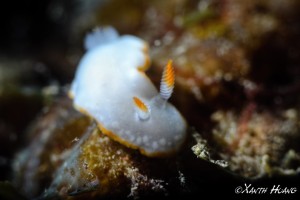
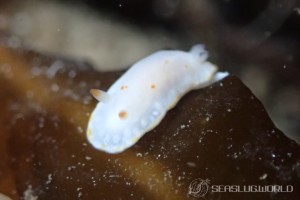
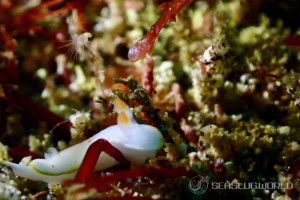
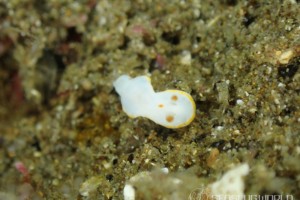
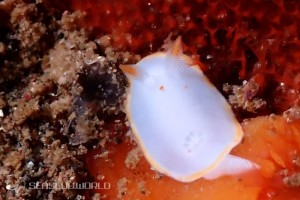
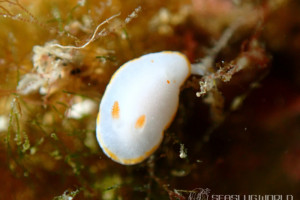
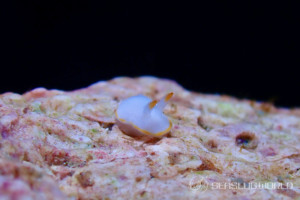
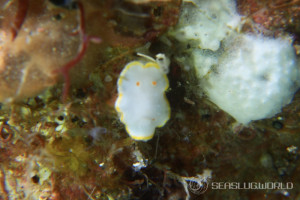
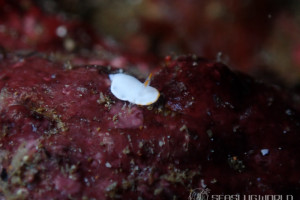
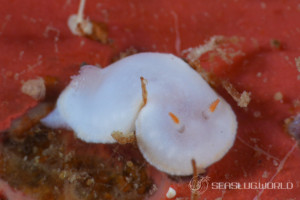
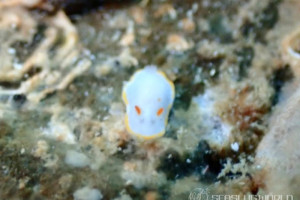
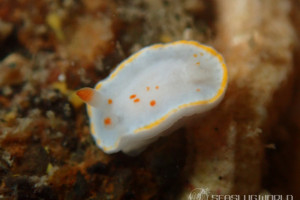
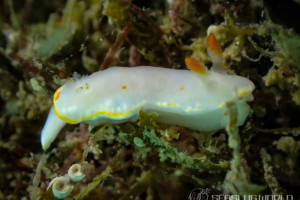
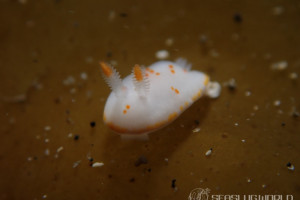
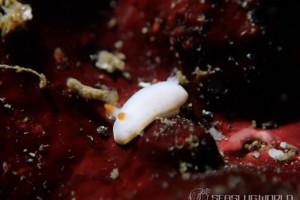
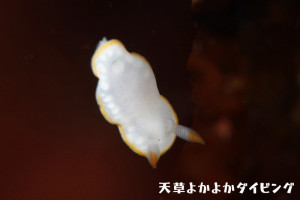
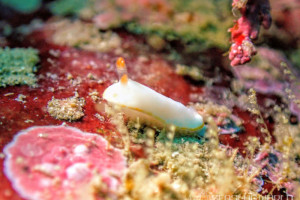
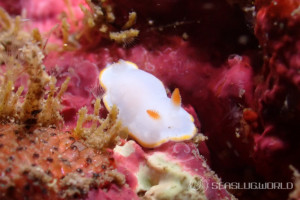
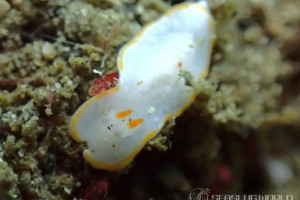
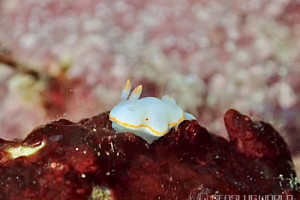
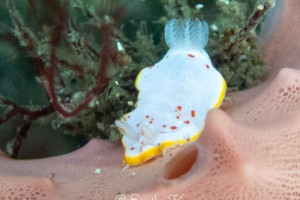
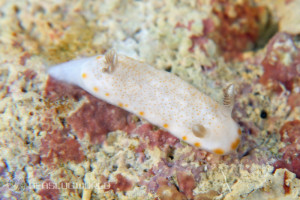
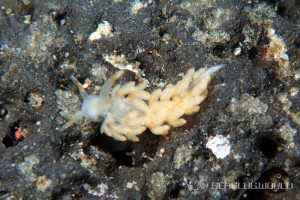
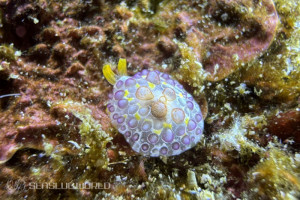
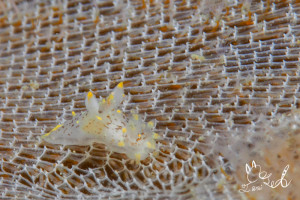
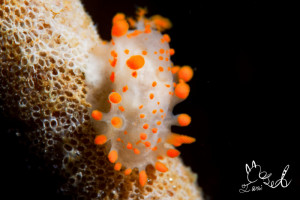
A small chromodorid, 8-15 mm in length. The body is typically glossodoridiform. The gills consist of 7-9 small, simply pinnate plumes. The ground colour of the body is snow-white. The back is ornamented with almost inconspicuous colours: a yellow, often discontinuous line running all around the pallial margin; and a few tiny orange-yellow spots scattered over the centre of the dorsum. The upper half of each rhinophore is orange-yellow, the basal half white. The gill plumes are uniformly white, sometimes tipped with yellow. The foot bears no markings.Distribution
Type locality: Seto, Kii. The original series also includes specimens from Zushi (Sagami Bay) and Kominato (Chiba).Etymology
The specific epithet nivalis (Latin: "snowy, of snow") corresponds to the diagnostic phrase "ground colour of the body is snow-white" and is read as a descriptive naming after the body ground colour.Remarks
Originally placed in Noumea, later transferred to Verconia.References
- Noumea nivalis nov. sp., Baba K. (1937). Opisthobranchia Of Japan (II). Journal of the Faculty of Agriculture, Kyushu University. 5(7): 289-344. https://doi.org/10.5109/22586
- シラユキウミウシ(新稱), Baba K. (1949). Opisthobranchia of Sagami Bay collected by His Majesty the Emperor of Japan (相模湾産後鰓類図譜). Iwanami Shoten, Tokyo. 4+2+194+7 pp., pls. 1-50.
- シラユキウミウシ, 鈴木敬宇. (2000). ウミウシガイドブック〈2〉. TBSブリタニカ.
- 高岡生物研究会. (2002). 日本海のウミウシ. 第2版.
- シラユキウミウシ, 中野理枝. (2004). 本州のウミウシ. ラトルズ.
- シラユキウミウシ, 小野篤司 & 加藤昌一. (2009). ウミウシ. 誠文堂新光社.
- Verconia nivalis, Johnson R.F. & Gosliner T.M. (2012). Traditional taxonomic groupings mask evolutionary history: a molecular phylogeny and new classification of the chromodorid nudibranchs. PLoS ONE 7(4): e33479.
A Kindle field guide by the site author
Kimoto N. (2026). Sea Slugs of Japan & the Indo-Pacific, 2nd Edition.
Kindle Edition
View on Amazon PR (Amazon Associates)Seasonality
Shooting Locations
Loading shooting locations...
Photos of Verconia nivalis
Tag:








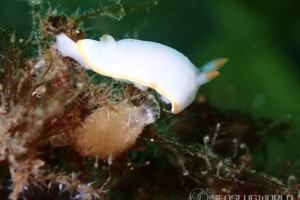

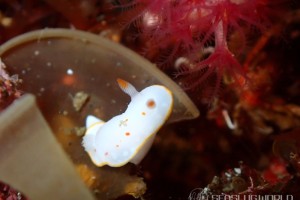
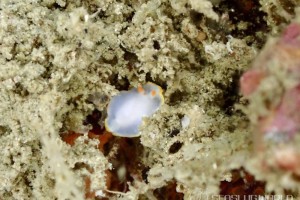

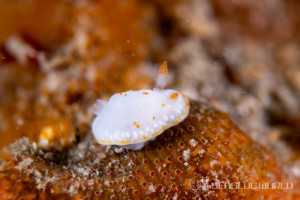













Same Genus Nudibranchs
Similar Colors Nudibranchs

Academic Database
Sea slug observation data is available in international marine biodiversity databases.