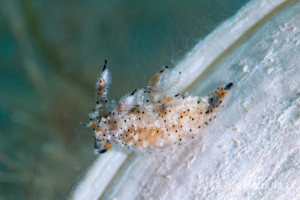
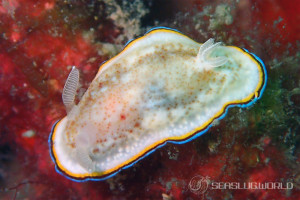
Polycera norvegica Sørensen, Rauch, Pola & Malaquias, 2020
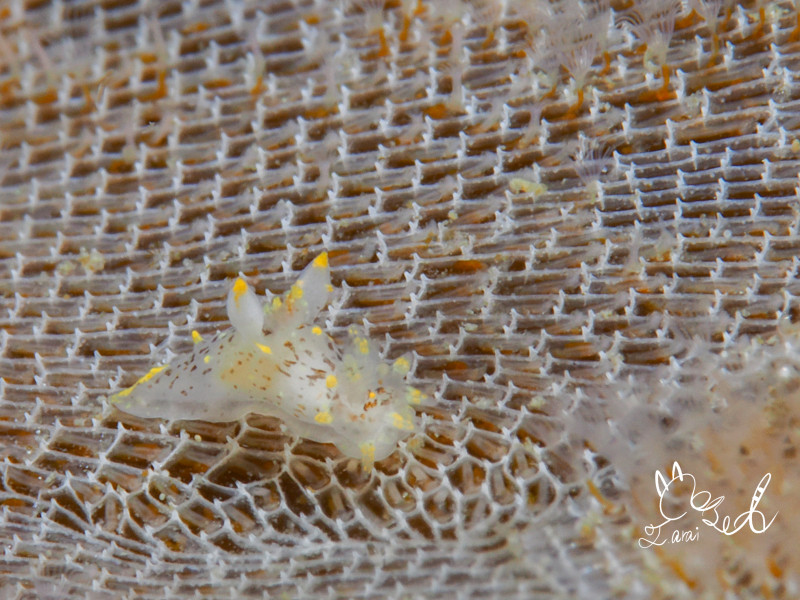
- Location
- SOL SKORVEN, West Coast of Sweden, Sweden
- Date
- 2025/06/28
- Length
- 5mm
- Depth
- 15.0m
- Water temperature
- 14.5℃
Description
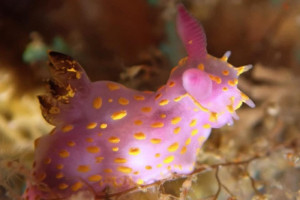
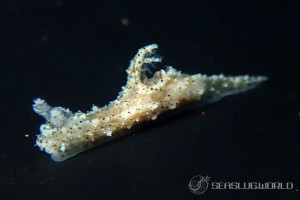
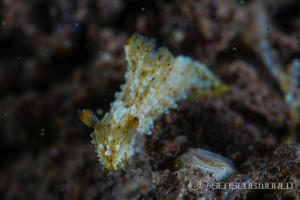
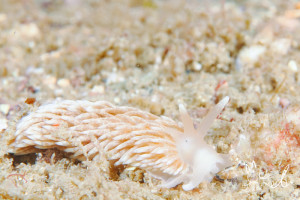
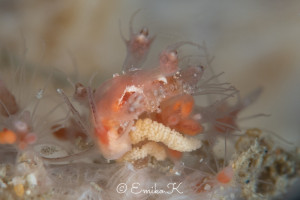
A small polycerid nudibranch reaching up to 14 mm in length (vs up to 30 mm in Polycera quadrilineata). Body translucent white with scattered yellow, light-yellow or orange tubercles; two main colour morphotypes are recognised — a dotted morph (white/translucent base with black, dark brown or grey dots) and a yellow/orange morph (orange/brown patches concentrated on the head and 'neck' region). Frontal veil bears 4–7 digitiform processes. Rhinophores lamellated with 6–10 lamellae. Gill circlet of 7–9 (rarely 11) pinnate gills. Radular formula 4.2.0.2.4 with 8–11 rows; rachidian absent. Labial cuticle small and weak with two short lateral wings. Reproductive system triaulic; penis armed with two types of chitinous spines (elongate near prostate and hook-shaped near genital opening), in contrast to a single elongate needle-like type in P. quadrilineata.Distribution
Norway, from Trondheim on the central west coast southwards along the south-western coast (Bergen, Haugesund, Stavanger, Egersund). Type locality: Sandholmane, Haugesund, Norway (59°22′N, 5°10′E). Sublittoral, occurring at 2–15 m depth, frequently on kelp (Laminaria spp.).Etymology
The specific epithet 'norvegica' is a Latin geographical adjective meaning 'of Norway', referring to the type locality and the known range of the species (Sørensen et al., 2020).Remarks
Long included within Polycera quadrilineata (O. F. Müller, 1776), populations from Norway were shown by COI analysis to form an independent lineage diverging by 9.6–12.4% (p-distance) from P. quadrilineata sensu stricto. Anatomical differences (smaller body size, fewer radular rows and marginal teeth, weaker labial cuticle, and the presence of two penial-spine types) corroborate species-level distinction. Sister-taxon to P. quadrilineata.References
A Kindle field guide by the site author
Kimoto N. (2026). Sea Slugs of Japan & the Indo-Pacific, 2nd Edition.
Kindle Edition
View on Amazon PR (Amazon Associates)Seasonality
Shooting Locations
Loading shooting locations...
Photos of Polycera norvegica

Same Genus Nudibranchs
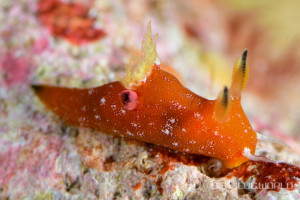
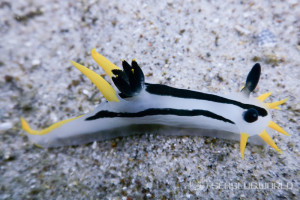
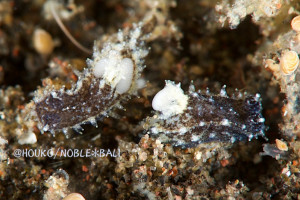
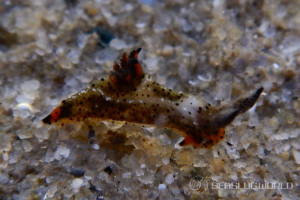

Similar Colors Nudibranchs
Academic Database
Sea slug observation data is available in international marine biodiversity databases.