Polycera janjukia Burn, 1962
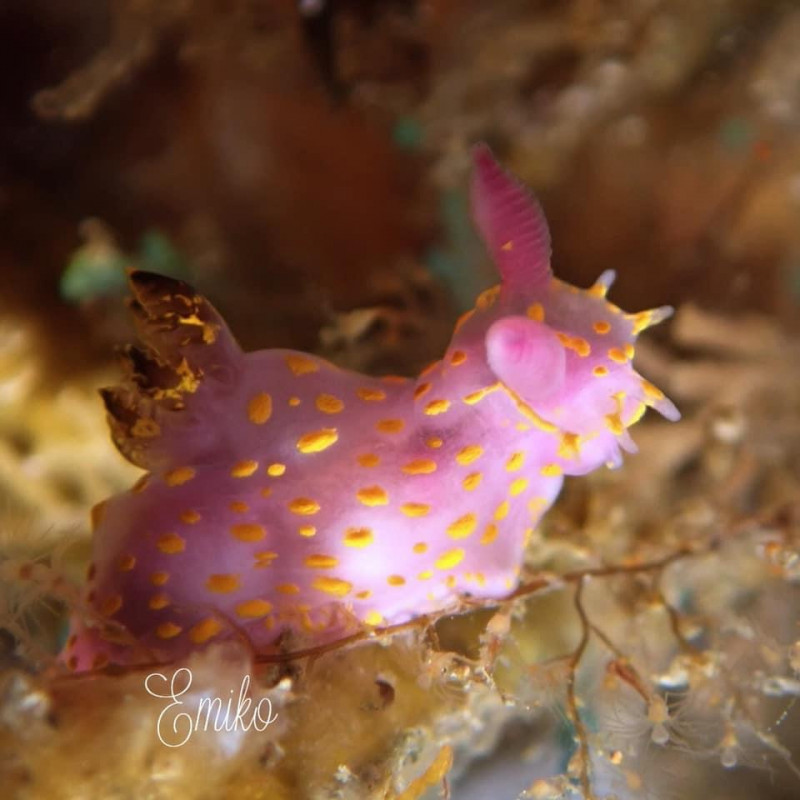
- Location
- Hole in the wall, New South Wales, Australia
- Date
- 2019/03/02
- Length
- 15mm
- Depth
- 10.0m
- Water temperature
- 21.0℃
Description
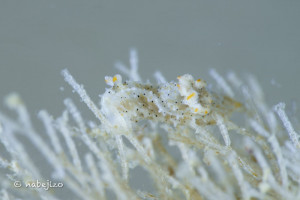
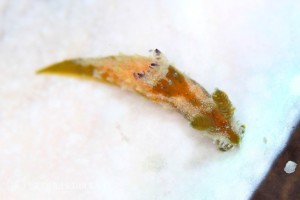
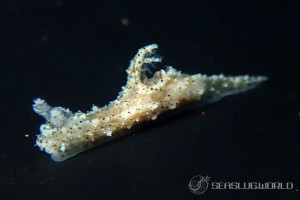
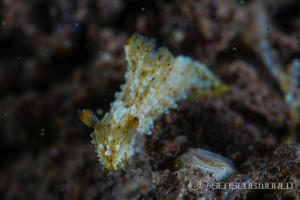
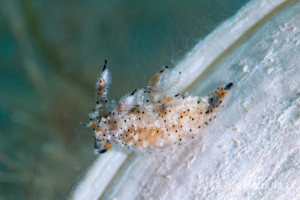
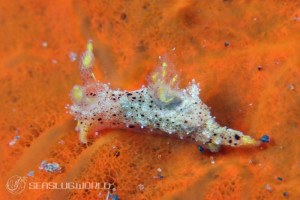
A small polycerid reaching about 8 mm alive (5 mm in spirits). Six (or seven) simple velar processes, irregular in size and shape. The pallial margin and the upper edge of the foot each carry a single row of raised coloured spots. Rhinophores immense relative to the body — about 3 mm long, with 12-15 laminae, terminating in a small cylindrical cap. Branchiae five, contractile, bipinnate, the anterior three larger than the posterior two; the anus opens between the rear two plumes. Oral tentacles reduced to indistinct head lobes. Foot very narrow and attenuated into a long tail. Body bright pink, sparsely covered with medium ochraceous spots; pallial and foot margin spots ochraceous, rhinophores and gills dirty yellow.Distribution
Southeast Australia. The type locality is Torquay, Victoria, on the underside of a low-tide stone (April 1958).Etymology
The specific epithet janjukia alludes to the Jan Juc Creek which enters the sea just south of Torquay township, Victoria — the type locality.Remarks
Originally described in Burn's "Descriptions of Victorian nudibranchiate Mollusca, with a comprehensive review of the Eolidacea" (Memoirs of the National Museum of Victoria 25: 99, 1962). A congener of Polycera parvula (Burn, 1958) (originally described in Palio), which Burn distinguished by its persistent maroon body colour and two velar processes versus six or seven in P. janjukia.References
A Kindle field guide by the site author
Kimoto N. (2026). Sea Slugs of Japan & the Indo-Pacific, 2nd Edition.
Kindle Edition
View on Amazon PR (Amazon Associates)Seasonality
Shooting Locations
Loading shooting locations...
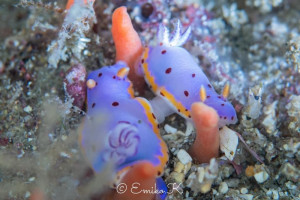
Photos of Polycera janjukia

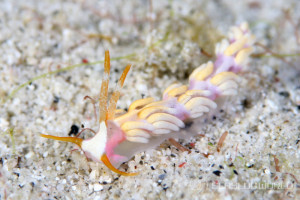
Same Genus Nudibranchs

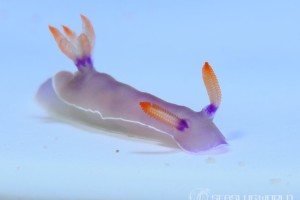
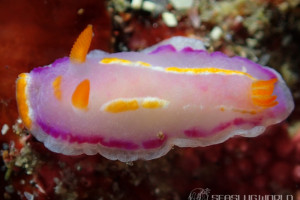
Similar Colors Nudibranchs

Academic Database
Sea slug observation data is available in international marine biodiversity databases.