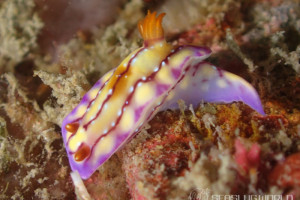
Hypselodoris emma Rudman, 1977
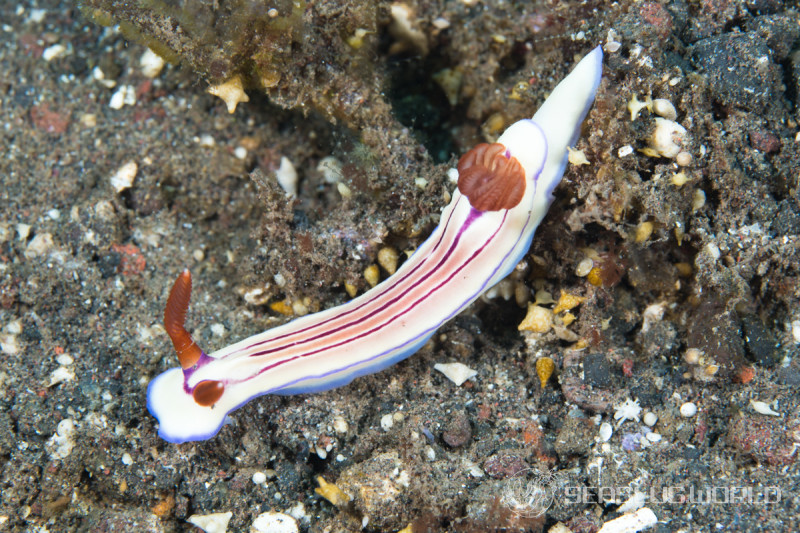
- Location
- Tulamben, Pulau Bali, Indonesia
- Date
- 2019/02/17
- Length
- 30mm
- Depth
- 10.0m
- Water temperature
- ??℃
Description
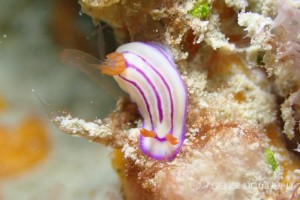
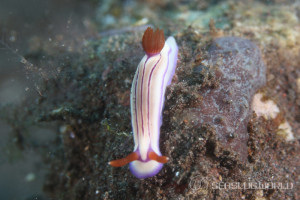
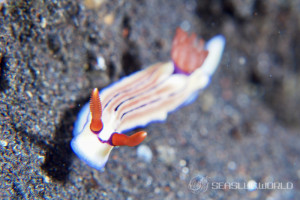
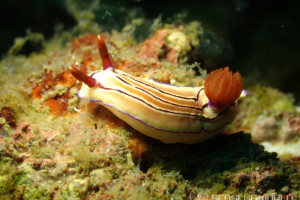
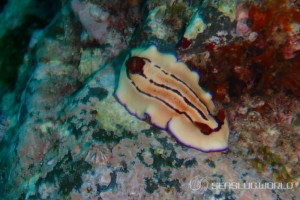
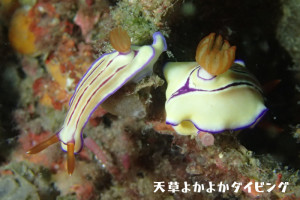
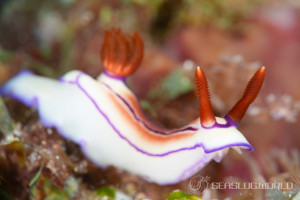
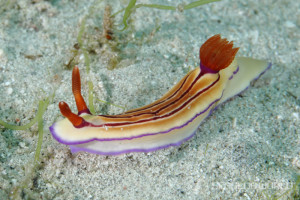
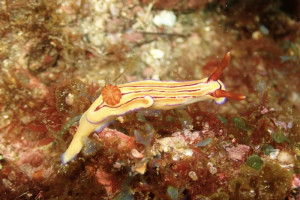
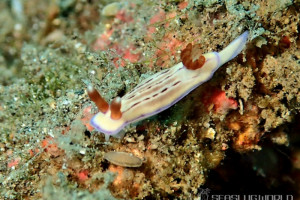
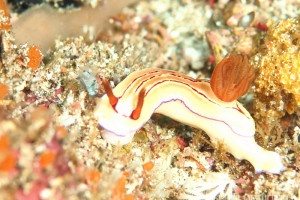
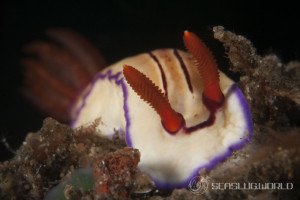
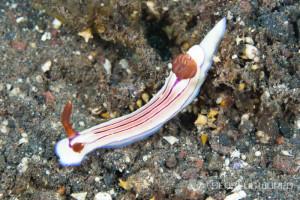
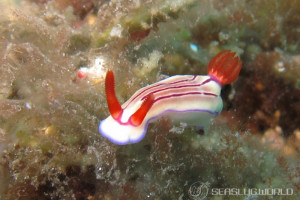
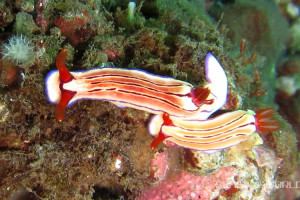
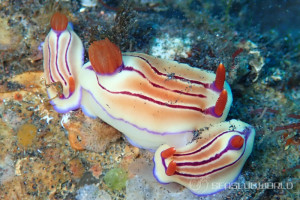
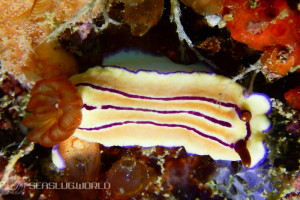
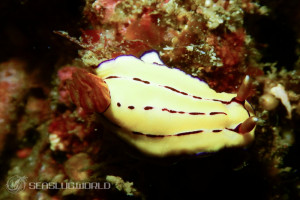
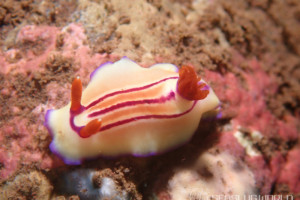
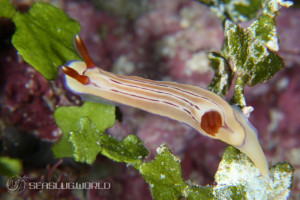
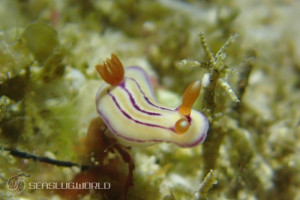
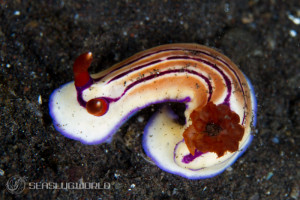
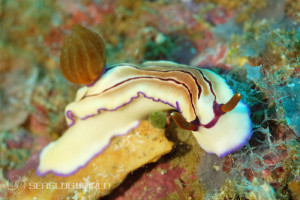
Body slender; mantle spatula-shaped, the anterior end rounded and much wider than the rest of the notum, waved about by the animal when moving (suggesting a tactile function). The rest of the mantle is narrow; the foot extends a little behind the mantle. Mantle ground colour yellow, fading to whitish near the edge. Just inside the mantle edge runs a violet-pink line, the actual edge being whitish. Three evenly spaced violet-pink lines run down the back: a centre line runs from between the rhinophores to the branchial opening, joining a ring of purple bordering the opening; the two outer lines join in front of the rhinophores and behind the branchial pocket. The rhinophore pockets are bordered with the same colour. Four diffuse brownish-orange lines run between the violet-pink lines. Rhinophores brilliant orange; gills orange but darker than rhinophores. Underside of mantle pale yellow with the purple border showing through. Foot and head creamy white; foot edged with a pinkish-violet line (absent along the leading edge). Gills simple, forming a complete circlet, 8-11 in number. Body length 33-40 mm alive.Distribution
Type locality: Ras Kankadya, Dar es Salaam, Tanzania. The species ranges across East Africa to Indonesia.Etymology
The specific epithet emma honours the describer's daughter, Emma Rose. The Japanese vernacular name Ema-iro-umiushi transliterates the species name combined with the Japanese term for chromodorid sea slugs.Remarks
Resembles H. maridadilus in colour, but is separated by the consistent colour pattern (yellow ground with three violet stripes and four diffuse brown stripes).References
- Hypselodoris emma Rudman, 1977, Gosliner T.M. & Johnson R.F. (1999). Phylogeny of Hypselodoris (Nudibranchia: Chromodorididae) with a review of the monophyletic clade of Indo-Pacific species, including descriptions of twelve new species. Zoological Journal of the Linnean Society. 125: 1-114. https://doi.org/10.1111/j.1096-3642.1999.tb00585.x
- ヒプセロドリス・エンマ, 殿塚孝昌. (2003). ウミウシガイドブック〈3〉. TBSブリタニカ.
- ヒュプセロドーリス・エマ, 小野篤司. (2004). 沖縄のウミウシ. ラトルズ.
- ヒュプセロドーリス・エマ, 中野理枝. (2004). 本州のウミウシ. ラトルズ.
- Hypselodoris emma, Johnson R.F. & Gosliner T.M. (2012). Traditional taxonomic groupings mask evolutionary history: a molecular phylogeny and new classification of the chromodorid nudibranchs. PLoS ONE 7(4): e33479.
- Hypselodoris emma, Terrence Gosliner, Ángel Valdés and David Behrens. (2015). Nudibranch and Sea Slug Identification Indo-Pacific. New World Pubns Inc.
- エマイロウミウシ*(新称), 中野理枝, 朝倉知子, 池田紫, 石川雅教, 今本淳, 岩瀬南美, 西田和記, 堀江諒, 山田久子 & 渡井久美. (2017). 奄美大島北部海域における後鰓類相の調査報告. Kuroshio Biosphere. 13: 1-18 + 6 pls.
Featured in this book
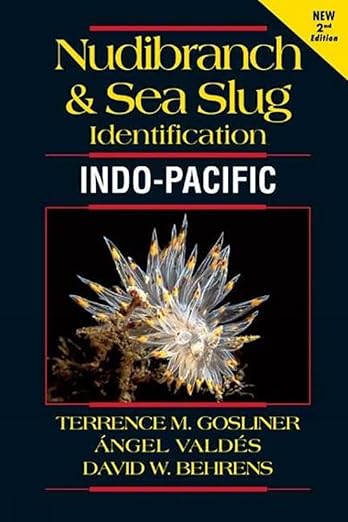
Terrence Gosliner, Ángel Valdés and David Behrens. (2018). Nudibranch and Sea Slug Identification Indo-Pacific 2nd Edition. New World Pubns Inc.
New World Publications
This species, Hypselodoris emma, is included in the book.
View on Amazon PR (Amazon Associates)Seasonality
Shooting Locations
Loading shooting locations...
Photos of Hypselodoris emma
Tag:


















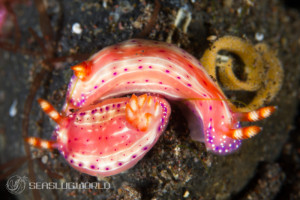
Same Genus Nudibranchs
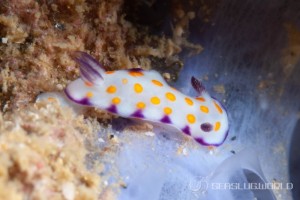

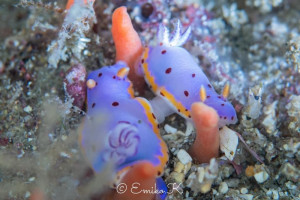
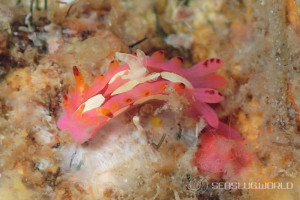
Similar Colors Nudibranchs
Academic Database
Sea slug observation data is available in international marine biodiversity databases.