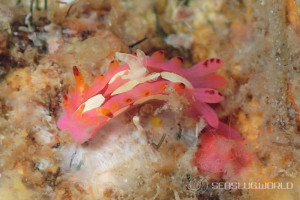
Mexichromis aurora (R. F. Johnson & Gosliner, 1998)
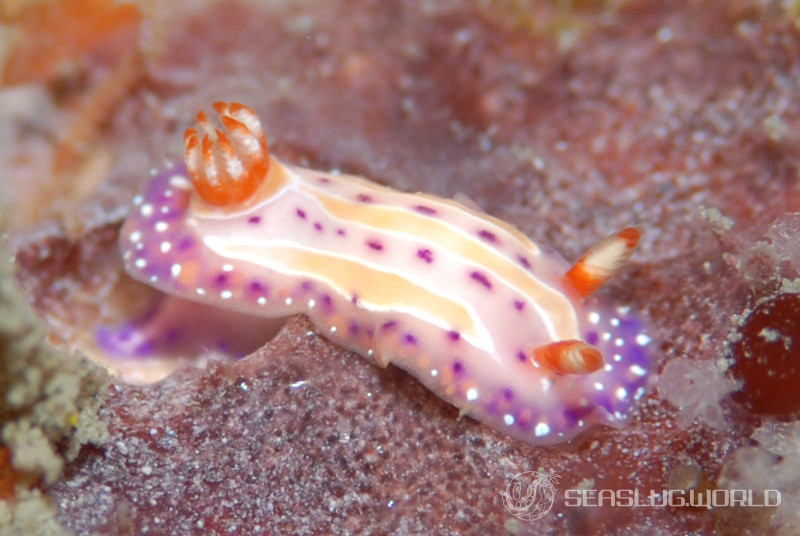
- Location
- Marine park 2gou, Kashinishi, Kouchi, Japan
- Date
- 2016/01/25
- Length
- 10mm
- Depth
- 14.0m
- Water temperature
- 17.0℃
Description
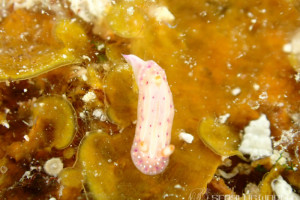
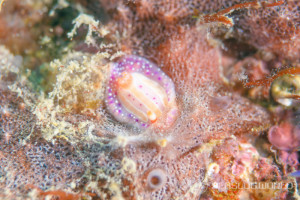
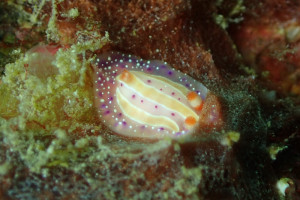
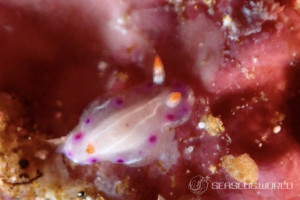
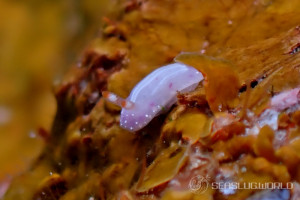
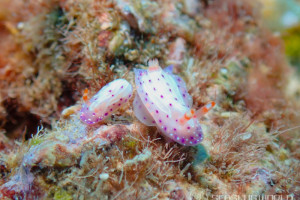
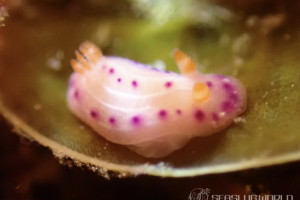
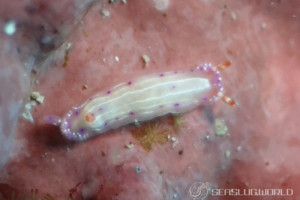
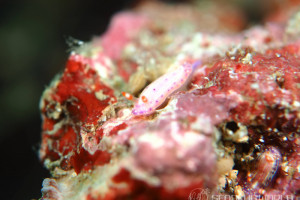
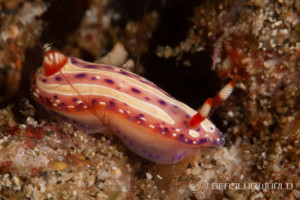
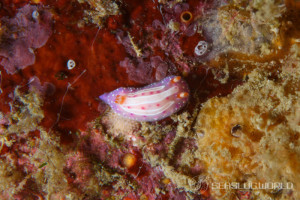
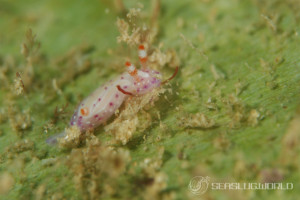
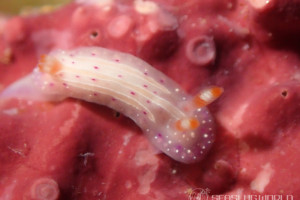
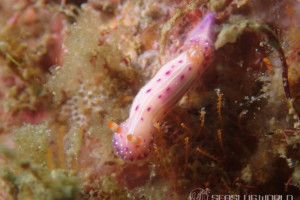
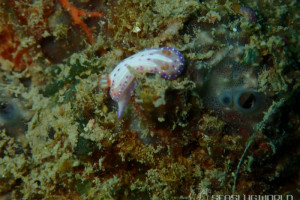
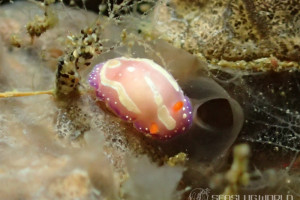
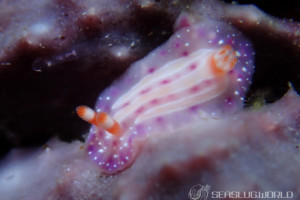
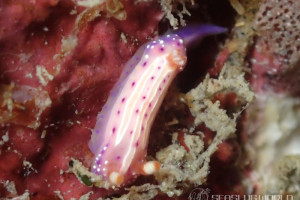
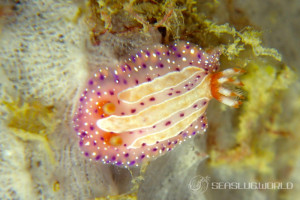
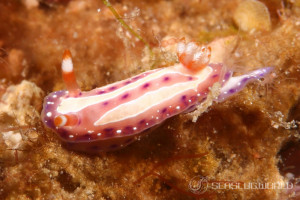
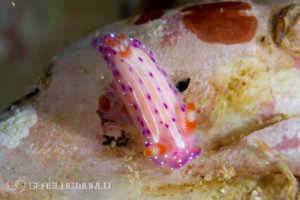
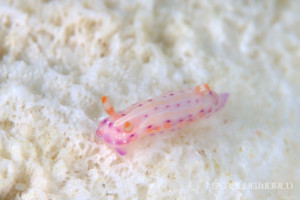
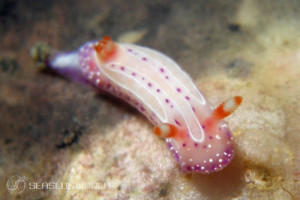
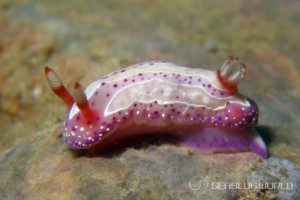
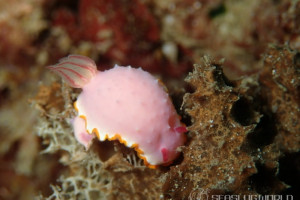
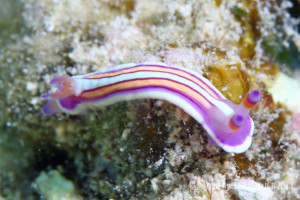
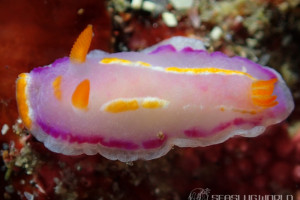
A small chromodorid reaching 6–8 mm in body length. The body is oval with a wide mantle overlap. In life the mantle, body and foot are all light pink in colour, darkening to maroon on the edges of the mantle and the posterior tip of the foot. Three parallel whitish-yellow longitudinal bands run from the rhinophores to the gills, each outlined by a thin opaque white line. The central band completely encircles the gill cavity. The lighter pink areas between the bands are dotted with 5–7 dark pink to purple spots and occasional opaque white spots. The remainder of the notum lateral to the outer bands is marked with the same dark pink to purple and opaque white spots. The short posterior end of the foot is divided by a thin medial white line. The rhinophores have 8–9 lamellae and a dark orange base and apex with a single transverse white band through the middle. The 6–9 simply pinnate gills have the same dark orange base and apex with a central white band. There are 2–4 greatly enlarged posterior mantle glands and a series of 16–19 smaller glands around the rest of the mantle, all opening ventrally — a configuration unique to Pectenodoris. Radular formula 28 × 13–16.0.13–16 in the Okinawan holotype, with 5–6 or 10 denticles on the inner lateral teeth and 5–6 denticles on the middle laterals; the rachidian tooth is absent. The reproductive system is triaulic, with a long, straight ampulla, a short, looped prostate, an extremely short and wide oviduct, a long, convoluted ejaculatory portion of the vas deferens terminating in a short, bulbous, muscular penial bulb, a narrow elongate vaginal duct, a large curved pyriform receptaculum seminis and an ovoid bursa copulatrix.Distribution
Indo-West Pacific to the central Pacific. Type locality: Seragaki Beach, ENE of Maekizaki, Ryukyu Islands, Okinawa, Japan, 58 m depth, based on the holotype (CASIZ 074702) collected by R. F. Bolland on 1 September 1989. Paratypes from Lembeh Strait (Batuangus Point), Indonesia; Bethlehem, Maricaban Island, Batangas Province, Luzon, Philippines; and Horseshoe Cliffs near Onna Village, Okinawa. Pease's original treatment notes a tropical-to-subtropical western Pacific range (Philippines, Indonesia, sub-tropical Okinawa) at depths of 10–58 m.Etymology
The original Etymology section (Johnson & Gosliner, 1998, p.300) reads: "Pectenodoris aurora is named for Aurora, the Roman goddess of the morning. This species is marked with all of the beautiful colors of a great sunrise." The specific epithet aurora refers to the Roman goddess of the dawn, in reference to the species' colour pattern evoking the colours of a sunrise.Remarks
In the original description Johnson & Gosliner placed the species in Pectenodoris Rudman, 1984 — a monotypic genus distinguished by comb-like radular teeth, very fragile jaw rodlets, large ventrally opening mantle glands and the presence of a vestibular gland — until then containing only Pectenodoris trilineata (Adams & Reeve, 1850). The species is part of Rudman's 1986 "Chromodoris decora color group" together with Chromodoris decora (Pease, 1860), Thorunna australis (Risbec, 1928), Hypselodoris maculosa (Pease, 1871), Noumea alboannulata Rudman, 1986 and the juvenile of Hexabranchus sanguineus. The species was later transferred to Mexichromis in a molecular revision on the basis of molecular phylogeny; the parentheses in the author citation reflect this generic transfer. The Japanese name "イチゴミルクウミウシ" ("strawberry-milk slug") refers to the contrast between the soft pink ground colour and the whitish-yellow longitudinal bands.References
- Pectenodoris aurora sp. nov., Johnson R.F. & Gosliner T.M. (1998). The genus Pectenodoris (Nudibranchia: Chromodorididae) from the Indo-Pacific, with the description of a new species. Proceedings of the California Academy of Sciences. 50(12): 295-306.
- イチゴミルクウミウシ(新称), 小野篤司. (2000). ウミウシガイドブック. 第2版. TBSブリタニカ.
- イチゴミルクウミウシ, Pectenodoris aurora, 小野篤司. (2004). 沖縄のウミウシ. ラトルズ.
- Mexichromis aurora, Johnson R.F. & Gosliner T.M. (2012). Traditional taxonomic groupings mask evolutionary history: a molecular phylogeny and new classification of the chromodorid nudibranchs. PLoS ONE 7(4): e33479.
- イチゴミルクウミウシ, 中野理枝. (2018). 日本のウミウシ. 文一総合出版.
Featured in this book
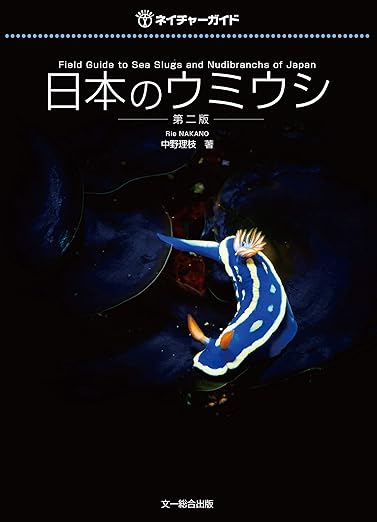
中野理枝. (2019). 日本のウミウシ. 第二版. 文一総合出版.
文一総合出版
This species, Mexichromis aurora, is included in the book.
View on Amazon PR (Amazon Associates)Seasonality
Shooting Locations
Loading shooting locations...
Photos of Mexichromis aurora

























Same Genus Nudibranchs
Similar Colors Nudibranchs
Academic Database
Sea slug observation data is available in international marine biodiversity databases.