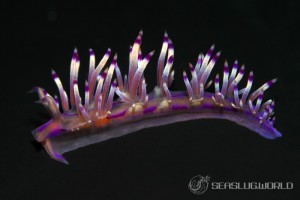
Coryphellina lotos Korshunova, Martynov, Bakken, Evertsen, Fletcher, Mudianta, H. Saito, Lundin, Schrödl & Picton, 2017
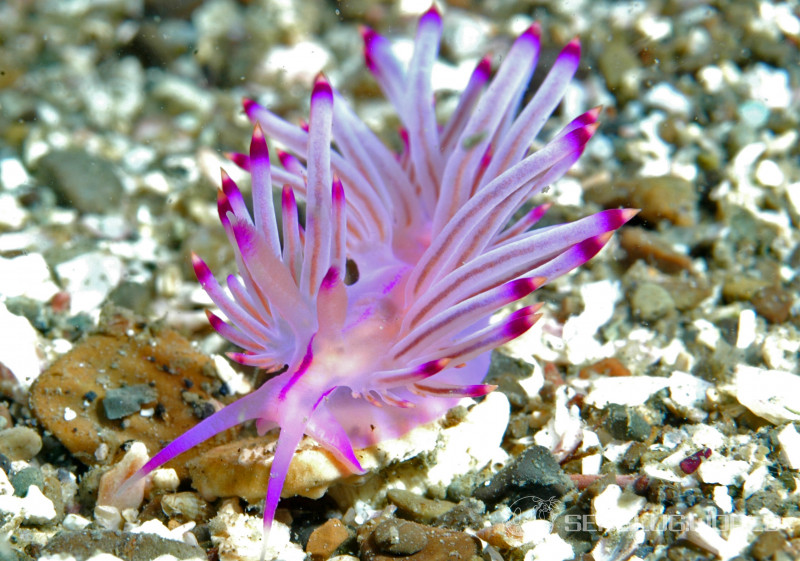
- Location
- Gontarouiwaoki, Hayama, Kanagawa, Japan
- Date
- 2005/10/07
- Length
- 20mm
- Depth
- 12.0m
- Water temperature
- 22.0℃
Description
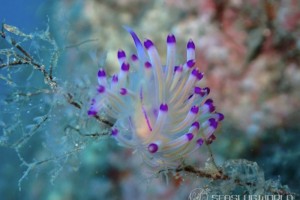
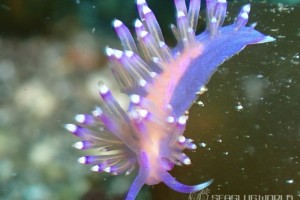
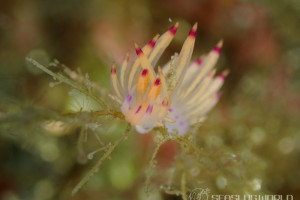
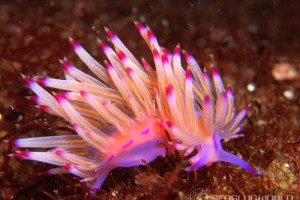
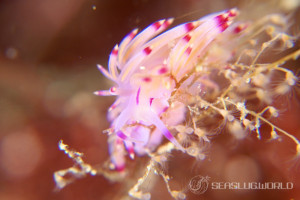
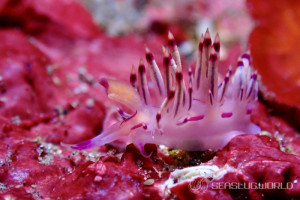
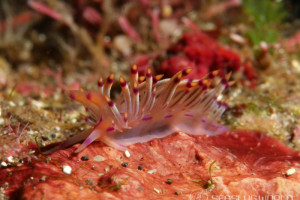
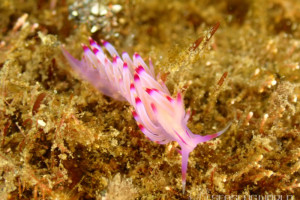
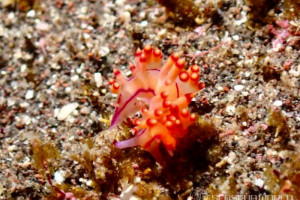
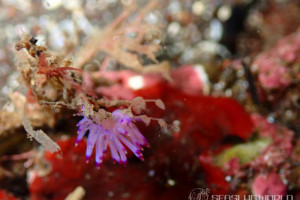
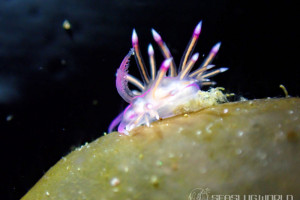
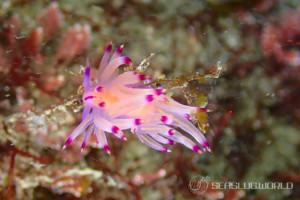
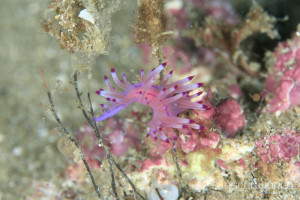
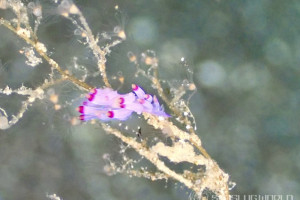
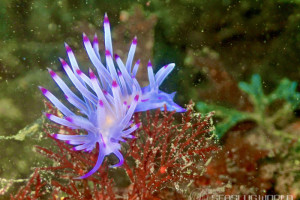
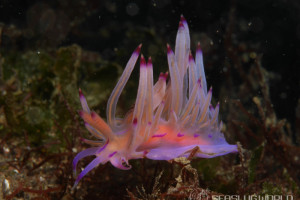
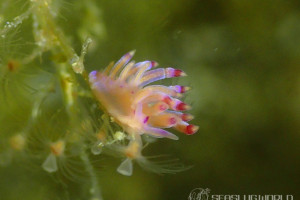
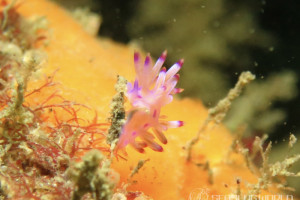
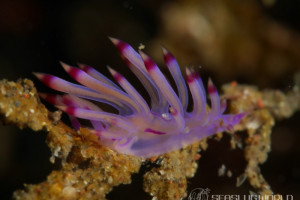
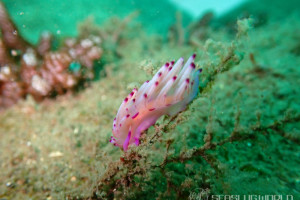
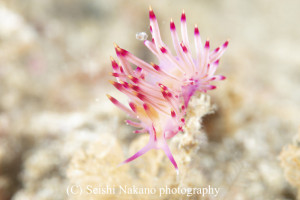
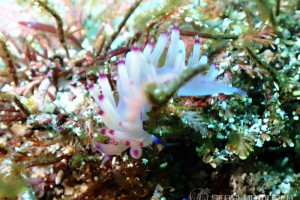
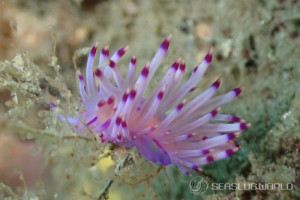
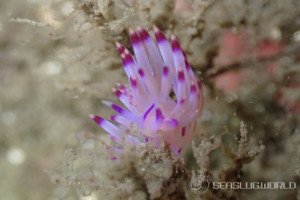
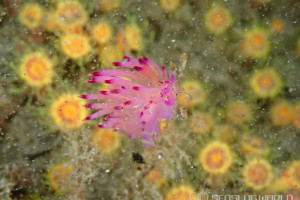
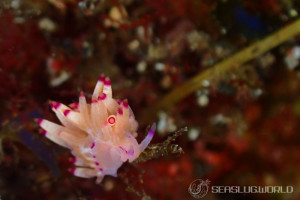
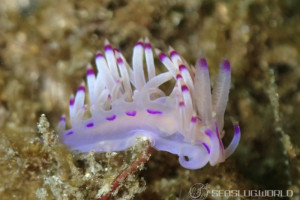
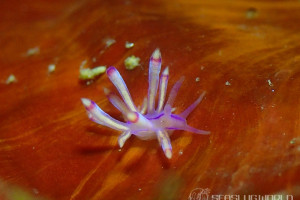
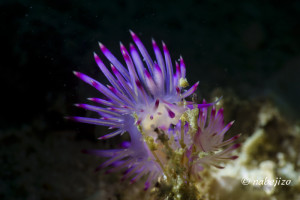
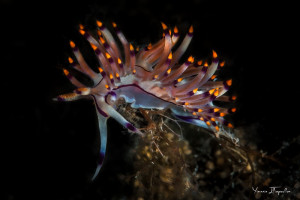
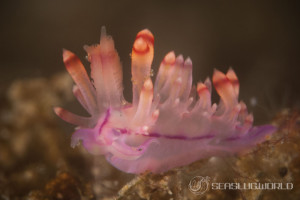
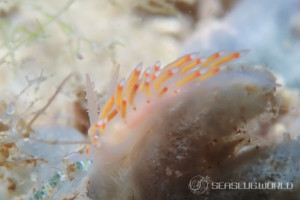
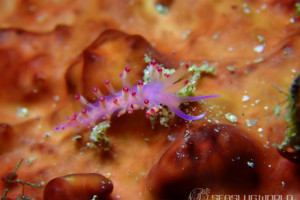
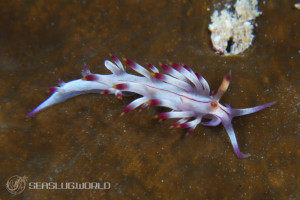
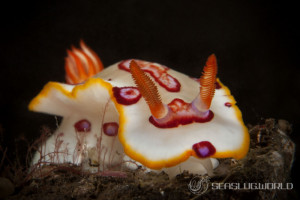
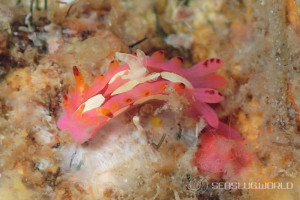
A slender species reaching about 23 mm in extended length. Background color ranges from translucent white through lilac to purple, often with an iridescent sheen. The notal edge is strongly reduced, remaining only as low elevations beneath the ceratal groups. Cerata are finger-shaped to fusiform, gradually tapering distally and containing an elongated cnidosac, with digestive gland diverticula occupying about one-third to one-quarter of the ceratal volume. The cerata are arranged in up to six distinct groups per side, with 9-13 cerata in the first group. The cnidosac area is covered by peachy pigment, with intense red to violet subapical rings; sparse white opalescent speckling appears beneath the subapical rings. Three pink to lilac longitudinal lines (one dorsal, two dorsolateral) are all discontinuous: the dorsal line is well developed only between the rhinophores, becoming faint along the rest of the body. Rhinophores are densely papillated, about half to two-thirds the length of the oral tentacles, the same color as the body or apricot, with pink to purple subapical rings and translucent tips. Oral tentacles are white to purple, with sparse white opalescent powder in the middle and translucent tips.Distribution
The type locality is Osezaki, on the Pacific coast of Honshu, Japan, at 10-15 m in depth. While originally known only from this locality, molecular work has subsequently confirmed the species from Central Vietnam (Nha Trang Bay, including Hon Tre, Hon Mun and Hon Mot), where it is found on rocks and stones on sandy bottoms at 5-20 m. A wider tropical Indo-West Pacific distribution is plausible but requires further DNA-based confirmation.Etymology
The specific epithet lotos refers to the lotus flower (Greek/Latin), in reference to the resemblance of the body color of the type specimens to the typical color of the lotus flower.Remarks
Coloration is highly variable, ranging from pale pink to deep iridescent lilac. The sister species Coryphellina pseudolotos closely matches the external morphology of C. lotos, but in C. pseudolotos the body remains translucent even in adults, whereas C. lotos typically shows an iridescent pigmented background. Reliable identification between the two species generally requires DNA barcoding.References
- セスジミノウミウシ(新称), 生物學御研究所編. (1955). 相模湾産後鰓類図譜〈補遺〉. 岩波書店.
- セスジミノウミウシ, 小野篤司. (1999). ウミウシガイドブック. TBSブリタニカ.
- セスジミノウミウシ, 鈴木敬宇. (2000). ウミウシガイドブック〈2〉. TBSブリタニカ.
- フラベリナ・ルブロリネアタ, 殿塚孝昌. (2003). ウミウシガイドブック〈3〉. TBSブリタニカ.
- セスジミノウミウシ, 小野篤司. (2004). 沖縄のウミウシ. ラトルズ.
- セスジミノウミウシ, 中野理枝. (2004). 本州のウミウシ. ラトルズ.
- セスジミノウミウシ, 小野篤司 & 加藤昌一. (2009). ウミウシ. 誠文堂新光社.
- Flabellina rubrolineata, Terrence Gosliner, Ángel Valdés and David Behrens. (2015). Nudibranch and Sea Slug Identification Indo-Pacific. New World Pubns Inc.
- Coryphellina lotos sp. n., Korshunova T., Martynov A., Bakken T., Evertsen J., Fletcher K., Mudianta I.W., Saito H., Lundin K., Schrödl M. & Picton B. (2017). Polyphyly of the traditional family Flabellinidae affects a major group of Nudibranchia: aeolidacean taxonomic reassessment with descriptions of several new families, genera, and species (Mollusca, Gastropoda). ZooKeys. 717: 1-139. https://doi.org/10.3897/zookeys.717.21885
- ロータスミノウミウシ(新称), 中野理枝. (2018). 日本のウミウシ. 文一総合出版.
- Coryphellina lotos, Ekimova I., Deart Y., Antokhina T., Mikhlina A. & Schepetov D. (2022). Stripes Matter: Integrative Systematics of Coryphellina rubrolineata Species Complex (Gastropoda: Nudibranchia) from Vietnam. Diversity. 14(4): 294. https://doi.org/10.3390/d14040294
Featured in this book

Terrence Gosliner, Ángel Valdés and David Behrens. (2018). Nudibranch and Sea Slug Identification Indo-Pacific 2nd Edition. New World Pubns Inc.
New World Publications
This species, Coryphellina lotos, is included in the book.
View on Amazon PR (Amazon Associates)Seasonality
Shooting Locations
Loading shooting locations...
Photos of Coryphellina lotos
Tag:



















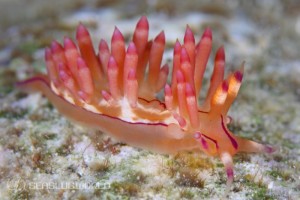
Same Genus Nudibranchs


Similar Colors Nudibranchs
Academic Database
Sea slug observation data is available in international marine biodiversity databases.