Coryphella trilineata O'Donoghue, 1921
Coryphella trilineata
No field photograph submitted for this species yet
Have you photographed this species?Description
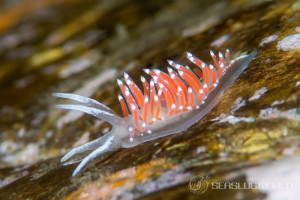
A small flabellinid reaching about 35 mm in body length, with a translucent white to greyish background colour. The most distinctive feature is a set of three white longitudinal stripes on the dorsum: one along the midline and one on each side. The central stripe forks between the rhinophores and continues to the tips of the oral tentacles. The cerata are translucent, with the digestive gland showing through in bright orange to reddish-orange. Rhinophores are thick and clearly annulated. The tips of the rhinophores and oral tentacles are pale, with orange pigment either lacking or only faintly developed.Distribution
The type locality is Nanoose Bay, Vancouver Island, British Columbia, Canada (O'Donoghue 1921, based on a single specimen). Following molecular revision the species is considered to range broadly across the Northeast Pacific coast, from southern Alaska to Oregon, with a neotype designated from Rich Passage, Washington State. Records previously assigned to this species from the southern part of the range (around Monterey Bay, Northern California) have been separated as the sister species Coryphella piunca. The species occurs from the intertidal zone to about 30 m depth.Etymology
The specific epithet trilineata is a Latin compound of tri- ("three") and lineata ("lined"), in reference to the three white longitudinal stripes on the dorsum.Remarks
Feeds on hydroids, notably species of Tubularia and Eudendrium californicum.References
- Coryphella trilineata n. sp., O'Donoghue C.H. (1921). Nudibranchiate Mollusca from the Vancouver Island region. Transactions of the Royal Canadian Institute. 13(1): 147-209, plates 7-11.
- ミスジサキシマミノウミウシ(新称), スーザン・ミドルトン他. (2015). 海の美しい無脊椎動物. 創元社.
- Coryphella trilineata O'Donoghue, 1921, Ekimova I., Valdés Á., Malaquias M. A. E., Rauch C., Chichvarkhin A. & Mikhlina A. (2022). High-level taxonomic splitting in allopatric taxa causes confusion downstream: A revision of the nudibranch family Coryphellidae. Zoological Journal of the Linnean Society. 196(1): 215-249. https://doi.org/10.1093/zoolinnean/zlab105
- Orienthella trilineata (O'Donoghue, 1921), Korshunova T., Fletcher K. & Martynov A. (2025). The endless forms are the most differentiated—how taxonomic pseudo-optimization masked natural diversity and evolution: the nudibranch case. Zoological Journal of the Linnean Society. 204(4): zlaf057. https://doi.org/10.1093/zoolinnean/zlaf057
- Coryphella trilineata O'Donoghue, 1921, Ekimova, I., Carmona, L., Mikhlina, A. L., Grishina, D., Stanovova, M. V., Schepetov, D. M., Hoover, C., de Souza-Canal, J., Kuznetsov, K. O., & Valdés, Á. (2026). Neither "lumpers" nor "splitters": A global revision of Flabellinidae s.l. nudibranchs (Gastropoda: Heterobranchia: Nudibranchia). PLoS One. 21(5): e0347759. https://doi.org/10.1371/journal.pone.0347759
Featured in this book
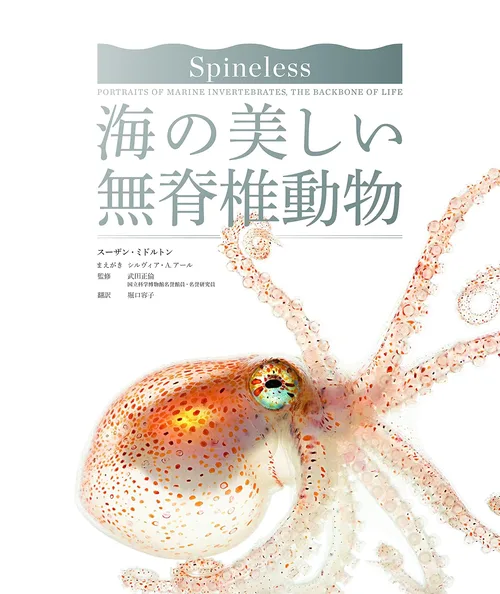
スーザン・ミドルトン他. (2015). 海の美しい無脊椎動物. 創元社.
創元社
This species, Coryphella trilineata, is included in the book.
View on Amazon PR (Amazon Associates)Seasonality
Shooting Locations
Loading shooting locations...
Same Genus Nudibranchs

Academic Database
Sea slug observation data is available in international marine biodiversity databases.