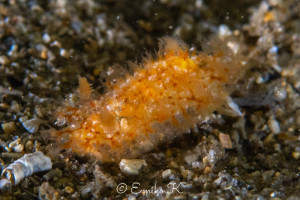
Coryphella amabilis (Y. Hirano & Kuzirian, 1991)
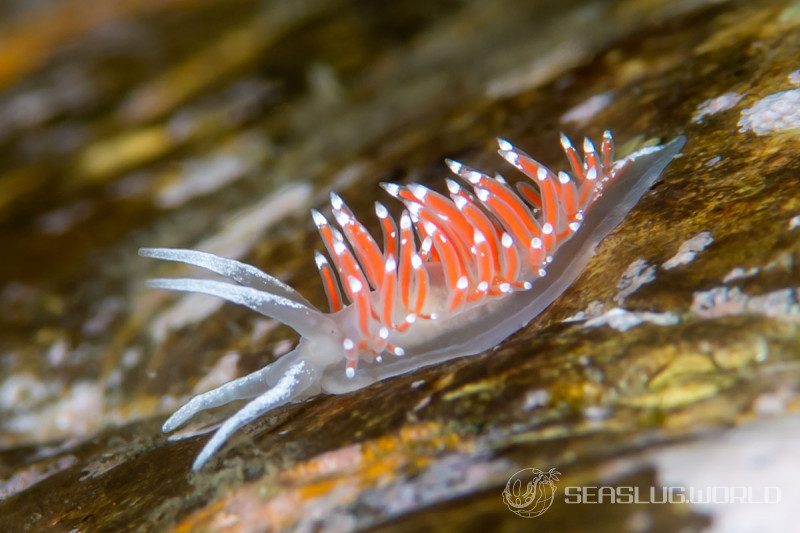
- Location
- Hiranaimati oosimapark parking zone, Aomori, Japan
- Date
- 2021/03/28
- Length
- 15mm
- Depth
- 10.0m
- Water temperature
- 7.0℃
Description
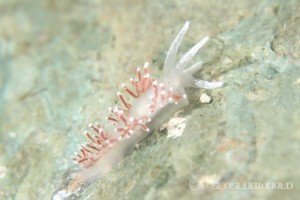
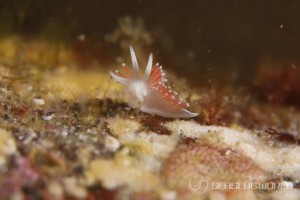
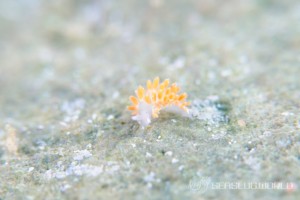
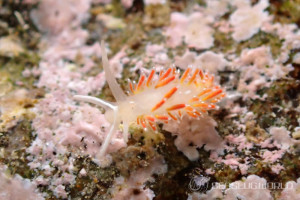
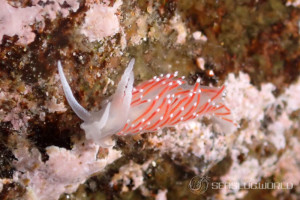
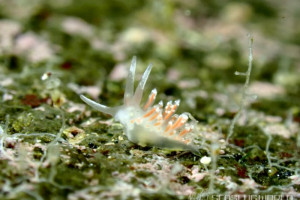
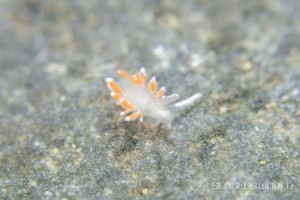
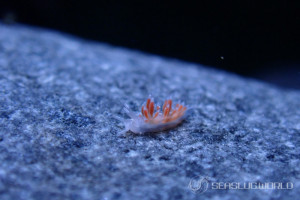
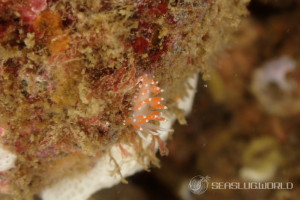
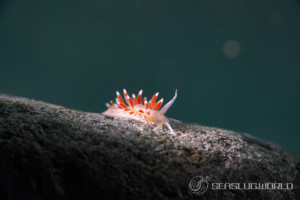
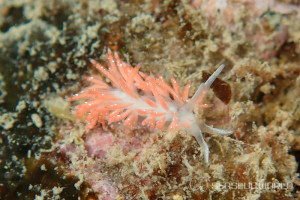
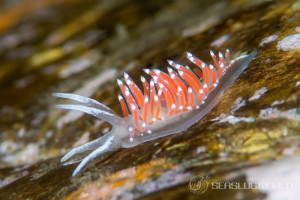
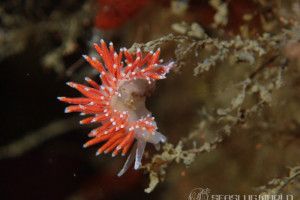
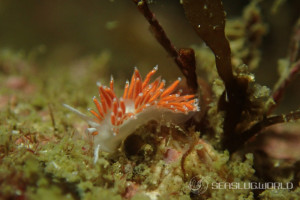
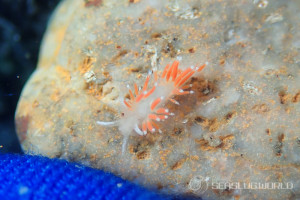
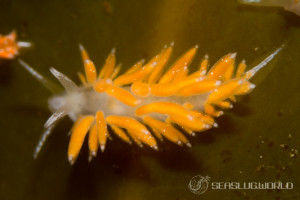
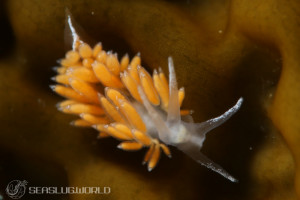
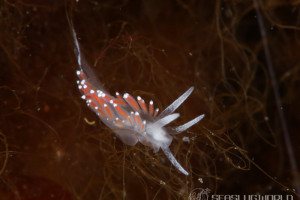
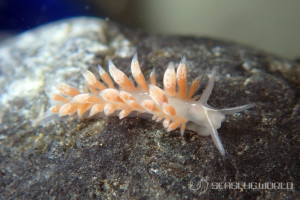
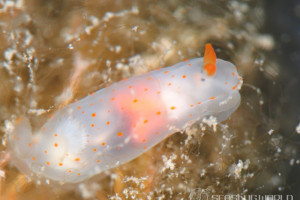
A small flabellinid reaching about 26 mm in length. The body is translucent white, with an orange-tinted visceral mass visible through the body wall. Each ceras shows a red digestive gland through its wall and ends in a white tip. A single fine white line runs along the midline of the tail. The rhinophores and oral tentacles are smooth, translucent white like the body, with fine white speckling along the distal half. Externally distinguished from Coryphella athadona by the absence of a white longitudinal line on the dorsum.Distribution
The type locality is Oshoro Bay, Hokkaido, Japan, based on material described by Hirano & Kuzirian (1991). Subsequent records are concentrated in cold-temperate Japanese waters.Etymology
The specific epithet amabilis is Latin for "lovely" or "lovable".References
- Flabellina amabilis n. sp., Hirano Y. & Kuzirian A.M. (1991). A new species of Flabellina (Nudibranchia: Aeolidacea) from Oshoro Bay, Japan. The Veliger. 34(1): 48-55.
- Microchlamylla amabilis (Hirano & Kuzirian, 1991), comb. n., Korshunova T., Martynov A., Bakken T., Evertsen J., Fletcher K., Mudianta I.W., Saito H., Lundin K., Schrödl M. & Picton B. (2017). Polyphyly of the traditional family Flabellinidae affects a major group of Nudibranchia: aeolidacean taxonomic reassessment with descriptions of several new families, genera, and species (Mollusca, Gastropoda). ZooKeys. 717: 1-139. https://doi.org/10.3897/zookeys.717.21885
- Coryphella amabilis (Hirano & Kuzirian, 1991), comb. n., Ekimova I., Valdés Á., Malaquias M. A. E., Rauch C., Chichvarkhin A. & Mikhlina A. (2022). High-level taxonomic splitting in allopatric taxa causes confusion downstream: A revision of the nudibranch family Coryphellidae. Zoological Journal of the Linnean Society. 196(1): 215-249. https://doi.org/10.1093/zoolinnean/zlab105
- Microchlamylla amabilis (Hirano and Kuzirian, 1991) comb. nov., Korshunova T., Fletcher K. & Martynov A. (2025). The endless forms are the most differentiated—how taxonomic pseudo-optimization masked natural diversity and evolution: the nudibranch case. Zoological Journal of the Linnean Society. 204(4): zlaf057. https://doi.org/10.1093/zoolinnean/zlaf057
- Coryphella amabilis, Ekimova, I., Carmona, L., Mikhlina, A. L., Grishina, D., Stanovova, M. V., Schepetov, D. M., Hoover, C., de Souza-Canal, J., Kuznetsov, K. O., & Valdés, Á. (2026). Neither "lumpers" nor "splitters": A global revision of Flabellinidae s.l. nudibranchs (Gastropoda: Heterobranchia: Nudibranchia). PLoS One. 21(5): e0347759. https://doi.org/10.1371/journal.pone.0347759
A Kindle field guide by the site author
Kimoto N. (2026). Sea Slugs of Japan & the Indo-Pacific, 2nd Edition.
Kindle Edition
View on Amazon PR (Amazon Associates)Seasonality
Shooting Locations
Loading shooting locations...
Photos of Coryphella amabilis
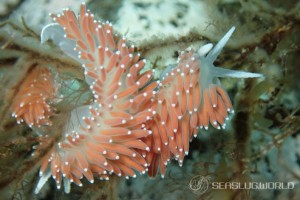

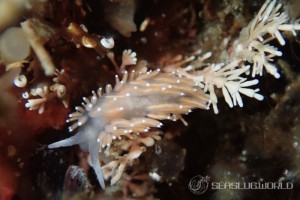




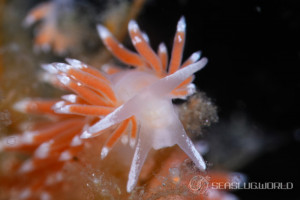

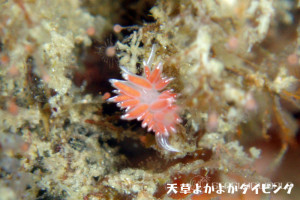

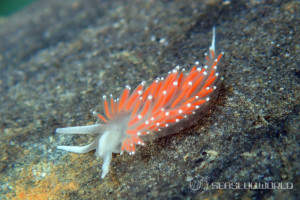
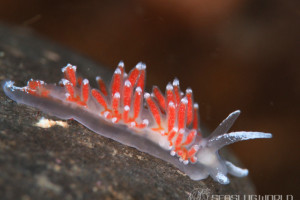






Same Genus Nudibranchs


Similar Colors Nudibranchs
Academic Database
Sea slug observation data is available in international marine biodiversity databases.