Favorinus perfoliatus Baba, 1949
Description
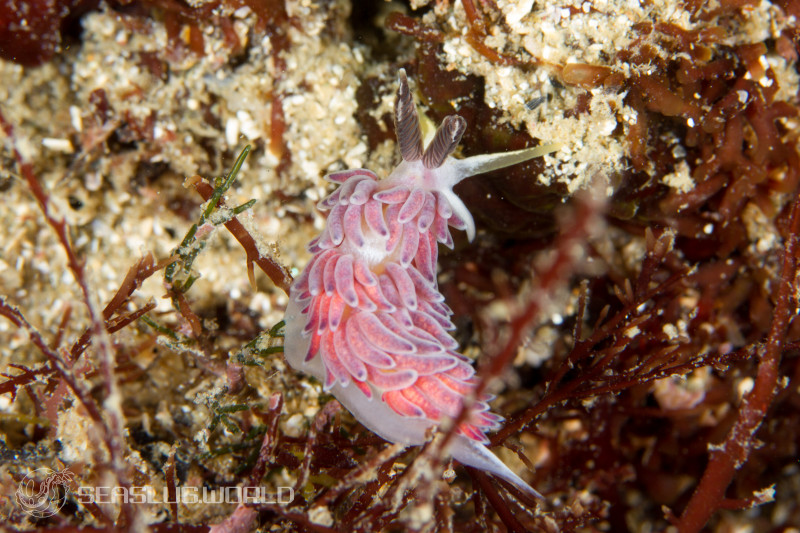
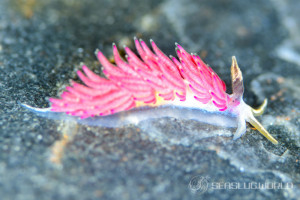
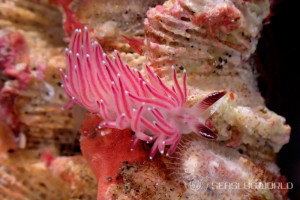
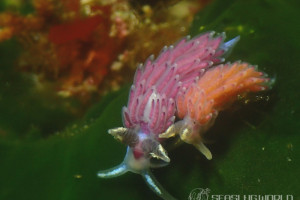
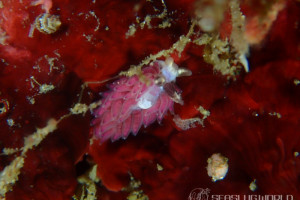
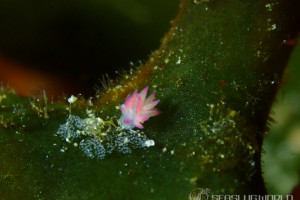
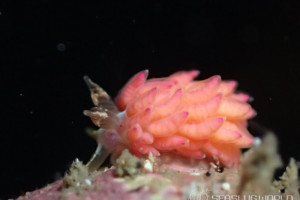
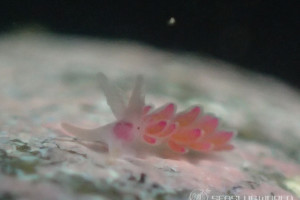
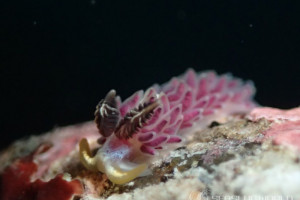
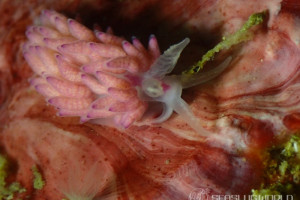
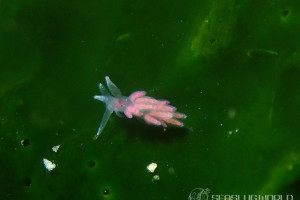
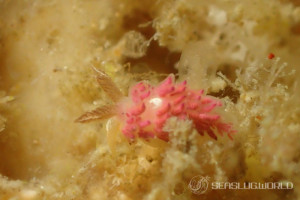
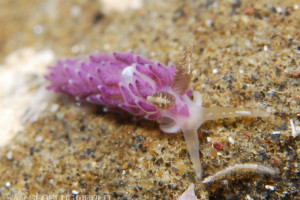
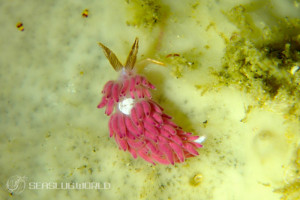
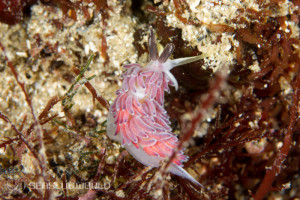
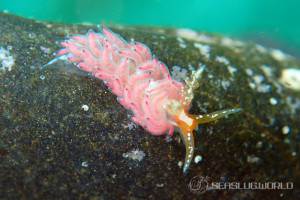
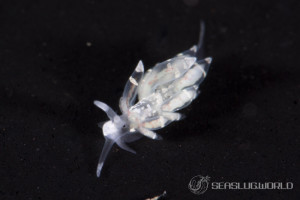
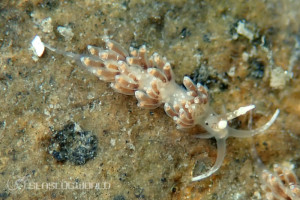
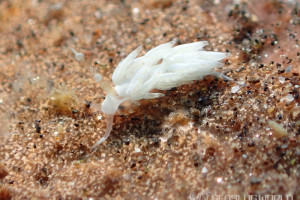
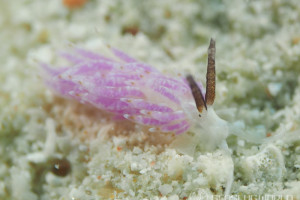
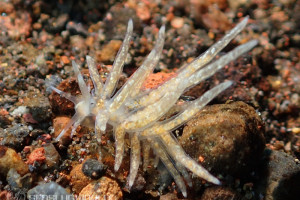
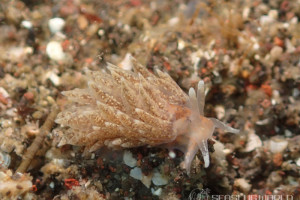
A tiny Aeolidacea, body length about 6 mm. The diagnostic feature is the rhinophores bearing many lamellae. Oral tentacles as usual. Cerata are simple fusiform, in 6-7 groups per side: 1st group 9 cerata, 2nd 7, 3rd 4, 4th 3, 5th onward 1-2. The first 2 groups are mounted on horseshoe ridges; the rest in oblique rows. Positions of the genital orifice, anus, and nephroproct are as in Favorinus japonicus. Anterior foot corners tentaculiform. Ground colour pale pink; the cerata bear a red central vein, and the rhinophores are dark-coloured. Masticatory edge of the jaw plate as in Favorinus japonicus. Radula formula 18×0.1.0. The central tooth bears up to 5 minute denticles on each side of the median cusp (sometimes smooth).Distribution
Type locality is Kameshiro-shō Miyose-no-takane, Sagami Bay (16-20 m depth, July 1936 and August 1940, 3 specimens). The original description (Baba, 1949) records the species only from the type locality.Etymology
The specific epithet perfoliatus is a Latin compound of per- (through) and foliatus (leafy), meaning "leaves piercing through" — referring to the many lamellae on the rhinophore. The original description does not give an explicit etymology paragraph. The Japanese name "Tsuno-hida-mino-umiushi" (horn-pleated aeolid) likewise refers to the lamellate rhinophores.Remarks
Distinguished from Favorinus japonicus (described in the same monograph) by the lamellate rhinophores (versus only two spherical swellings at mid-length in Favorinus japonicus) and by the pale pink ground colour (versus pale yellow in Favorinus japonicus).References
A Kindle field guide by the site author
Kimoto N. (2026). Sea Slugs of Japan & the Indo-Pacific, 2nd Edition.
Kindle Edition
View on Amazon PR (Amazon Associates)Seasonality
Shooting Locations
Loading shooting locations...
Photos of Favorinus perfoliatus
Tag:









Same Genus Nudibranchs
Academic Database
Sea slug observation data is available in international marine biodiversity databases.