Hydromyles globulosus (Rang, 1825)
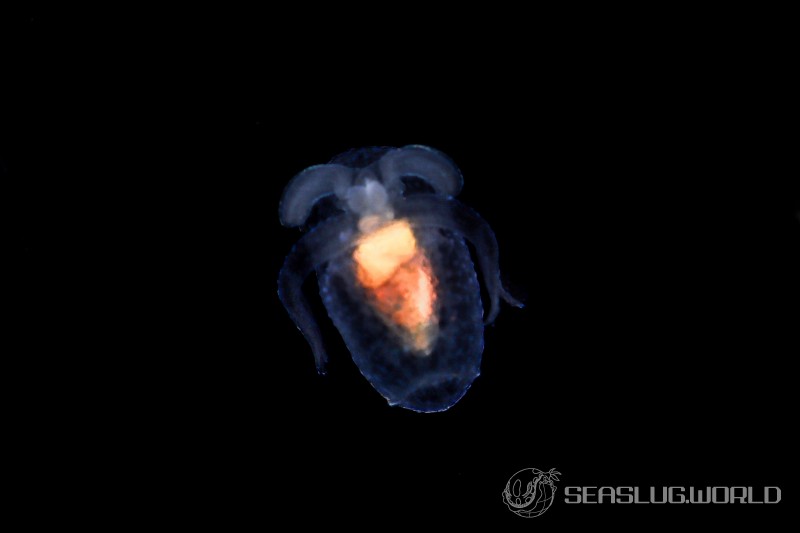
Description
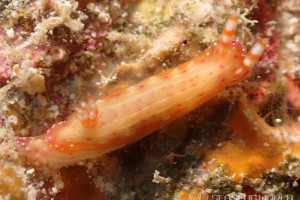
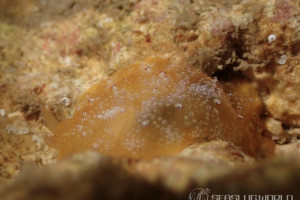
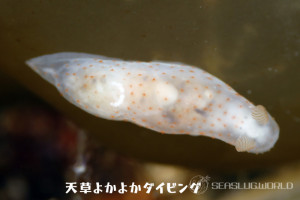
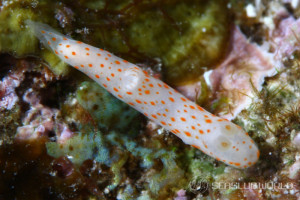
A small gymnosome pteropod (a shell-less pteropod, related to the group popularly known as "sea angels"). The body is egg-shaped and about 8 mm long, and although there is no shell, the integument is relatively firm and opaque. Orange-coloured internal organs such as the liver show through the semi-transparent body wall, and the surface is scattered with small white spots. Two ciliated bands encircle the body and power swimming and floating. When the animal extends itself, the long posterior foot-lobe and shorter lateral foot-lobes project forward like antennae. Disturbed individuals retract the head, wings, and all foot-lobes into a transverse slit on the anterior mantle, so the whole animal becomes a smooth, oval shape. The rectal caecum can emit a brownish, ink-like fluid, and the species is believed to prey on other gymnosome pteropods.Distribution
Widely distributed across the tropical and temperate Indo-Pacific, between roughly 50°N and 50°S, and regularly encountered in Japanese waters. The species was originally described by the French naval surgeon and naturalist Sander Rang in 1825 in Annales des Sciences Naturelles, under the name Psyche globulosa; no explicit type locality was designated.Etymology
The specific epithet globulosus (originally the feminine globulosa, to agree with Psyche) is derived from Latin globulus ("little ball") and simply means "small and globular", a direct reference to the animal's rounded, pellet-like body. The Japanese common name Mametsubu (豆粒, "bean-grain") reflects the same idea. The generic name Hydromyles was proposed by Gistel 1848 as a replacement for Rang's original Psyche, which was already occupied by a long-established genus name used for moths. When the species was transferred into the masculine genus Hydromyles, the epithet was correspondingly changed from globulosa to globulosus to maintain gender agreement.Remarks
Hydromylidae is a small family containing only this single genus and species. Together with the sister family Laginiopsidae it is sometimes grouped into the superfamily Gymnopteroidea, distinct from the "true" gymnosome families. Older Japanese literature often uses the earlier genus spelling "Hydromylus" and the feminine form "globulosa".References
- Psyche globulosa n.g. n.sp., Rang S. (1825). Description d'un genre nouveau de la classe des Ptéropodes, et de deux espèces nouvelles du genre Clio. Annales des Sciences Naturelles. 5: 283-287.
- マメツブハダカカメガイ Hydromylus globulosa (Rang, 1825), 奥谷喬司 (2017). わが国近海に見られる浮遊性巻貝類—VII 裸殻翼足類. うみうし通信 94: 8-9.
A Kindle field guide by the site author
Kimoto N. (2026). Sea Slugs of Japan & the Indo-Pacific, 2nd Edition.
Kindle Edition
View on Amazon PR (Amazon Associates)Seasonality
Shooting Locations
Loading shooting locations...
Photos of Hydromyles globulosus

Similar Colors Nudibranchs


Academic Database
Sea slug observation data is available in international marine biodiversity databases.