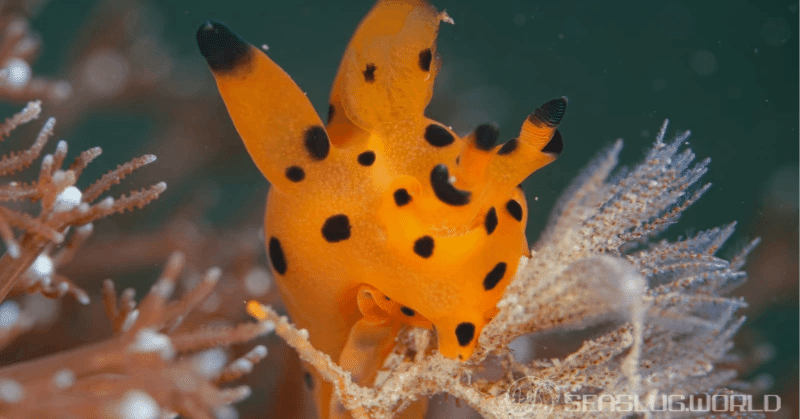
Nekojita-umiushi is no longer in Goniodoris — it moves to the resurrected Pelagella
Title says it all: a paper has been published that significantly reshuffles the Goniodoris genus. Quick intro.
https://academic.oup.com/mollus/article-abstract/89/2/eyad008/7169159?redirectedFrom=fulltext
Goniodoris is the third most diverse genus within the family Goniodorididae. The genus has undergone several taxonomic changes, and around one-third of the currently accepted species are now synonymised (most of these as junior synonyms of species in other genera). Goniodoris also contains homonymously named genera, such as Pelagella, established for Doris pareti. D. pareti was synonymised with Goniodoris castanea, and the genus Pelagella has gone largely unnoticed. In the present work we examine specimens of G. castanea from the UK and Spain, G. joubini from Hawai'i, and six undescribed Goniodoris species from Australia, the Philippines, and Mozambique to investigate the systematics of Goniodoris. The morphology of the new species was examined through dissection of internal anatomy and scanning electron microscopy of the radula, oral cuticle, and penis. Phylogenetic analyses were performed using partial DNA sequences from mitochondrial and nuclear genes. These analyses showed that G. nodosa, the type species of Goniodoris, is not a member of the clade composed of the species in this study. The valid name for that clade is Pelagella. Six new species of Pelagella — P. albopunctata n. sp., P. balanoyensis n. sp., P. longicornis n. sp., P. scottjohnsoni n. sp., P. rubrobranchiata n. sp., and P. vitrea n. sp. — are described.
— Abstract (translated)
The three-line summary:
- DNA shows Goniodoris nodosa and G. castanea (nekojita-umiushi) are in different genera
- Pelagella is an older genus name set up specifically for G. castanea
- So nekojita-umiushi becomes Pelagella castanea
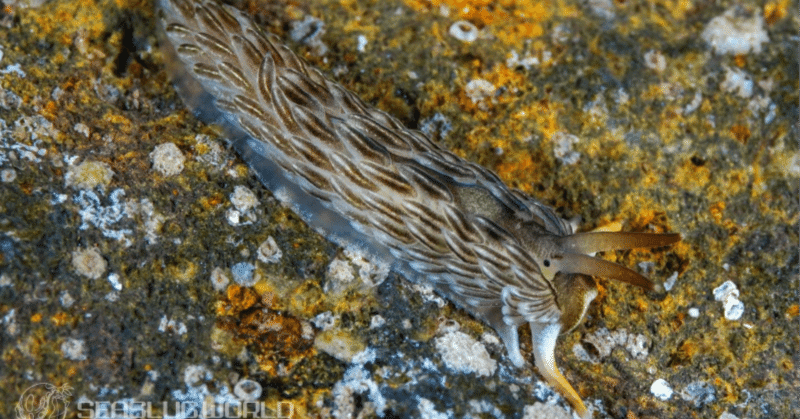
Looking at Goniodoris nodosa, I'm not sure I'd have called the genera apart by eye. Its range — UK, Spain, Norway — means it is not something we'd see in Japan anyway.
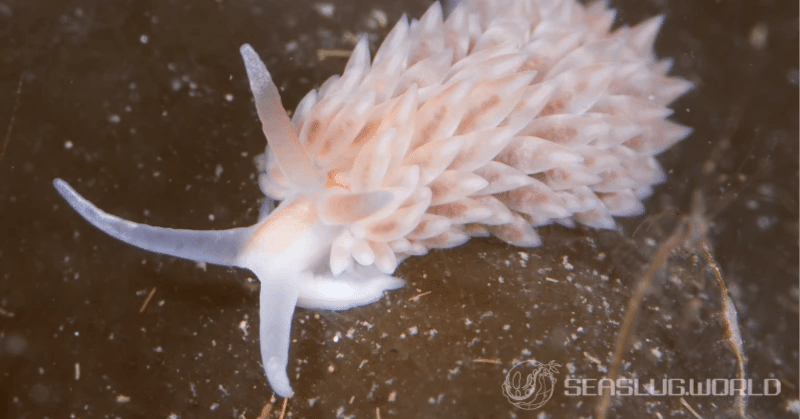
Species described in this paper
Pelagella albopunctata
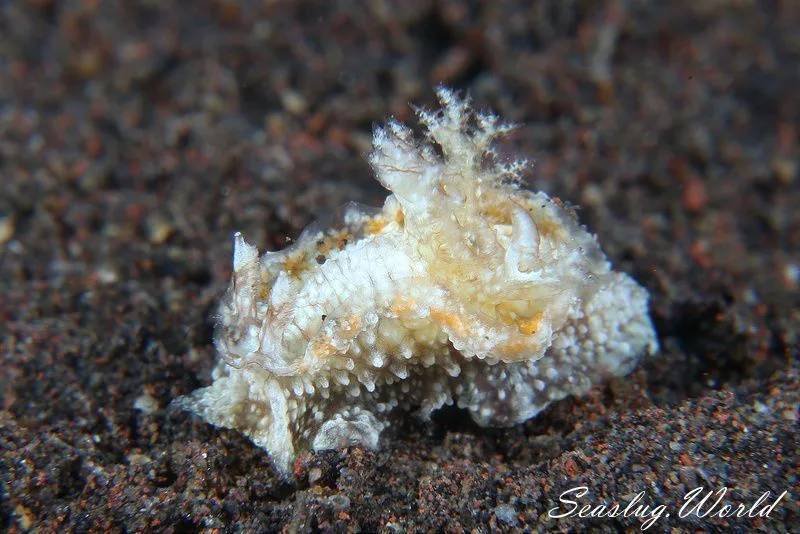
The rest of this article is for Premium members
This is one of our in-depth member articles — new species reports, paper walkthroughs, and taxonomy deep-dives. Members read them all. Free for your first month, then USD 3.00/month, cancel anytime.
- New species reports, paper walkthroughs, and taxonomy deep-dives — members only
- No ads (AdSense) across the entire site
- Priority handling of your observations (Premium uploads are identified and published first when the moderation queue is backed up)
- Priority access to the AI identification feature
Already a member? Please log in.
Enjoyed this post? You can tip the author directly —
Tip this post