Osaka Bay Nudibranch Observation Meet 2021 — A Three-Day Report
From October 2 to 4, I was invited by the Osaka Bay Nudibranch Observation Meet to join as a guest representing SEASLUG.WORLD.
Right up until the last minute, with a COVID state of emergency and a typhoon in the forecast, it was unclear whether the event would go ahead — but the weather turned out to be almost too nice, and we had a wonderfully fulfilling three days.
Day 1 — Kishiwada Natural History Museum
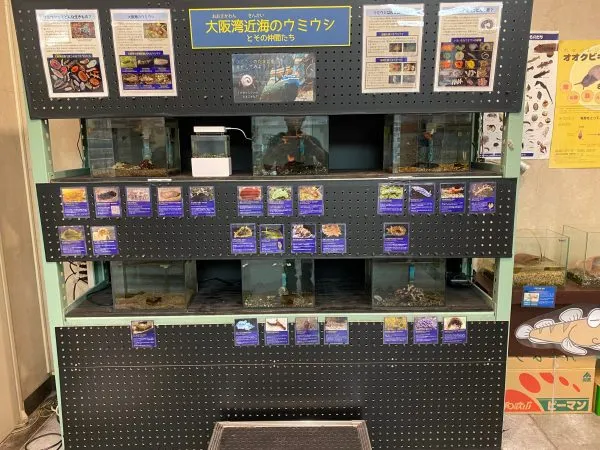
The first floor has a display of nudibranchs from Osaka Bay — I could talk about the animals in the tank alone for a full hour.
I finally made it to the Kishiwada Natural History Museum, whose name I'd first heard back in Tulamben in 2019.
I got so caught up talking nudibranchs with curator Kashio-san and the others that I barely took any photos… The second and third floors are also fascinating, and I highly recommend a visit.
Most of what we talked about can't really be written here, but it was a wonderfully rewarding time — I arrived a little before 3 p.m. and before I knew it, it was 9 p.m.
Time really does fly.
Kishiwada Natural History Museum
Day 2 — Nudibranch Observation Meet
Departed Namba at 7:45 a.m. for Jogasaki Coast in Kada, Wakayama Prefecture.
It was a pleasant hour-and-a-half trip with plenty of chatting with the staff along the way.
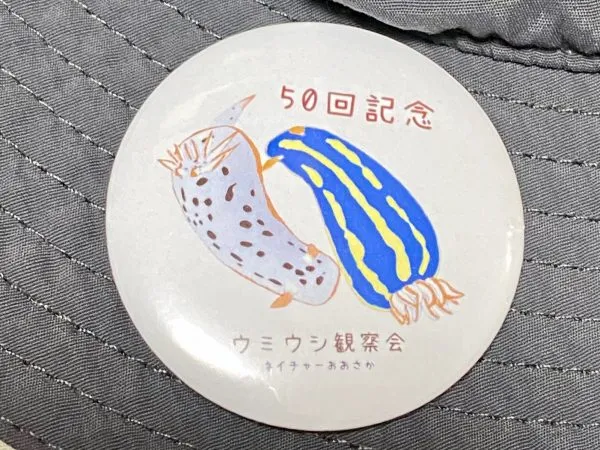
Commemorative pin badges
They gave me a commemorative pin badge marking the 50th meetup — the quality is seriously impressive.
Mia-san's nudibranch goods shop
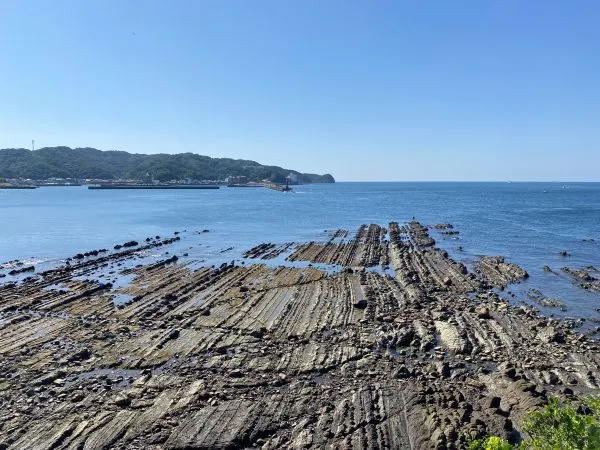
Jogasaki Coast — the site was completely filled up with participants alone.
We arrived, got ready, and finally headed down to the rocky shore.
With 50 participants and 15 staff members, it was a large-scale observation meet of over 65 people in all.
I meant to move around as much as possible, but I got so absorbed in searching myself that I couldn't call out to people as much as I'd hoped. My apologies for that.
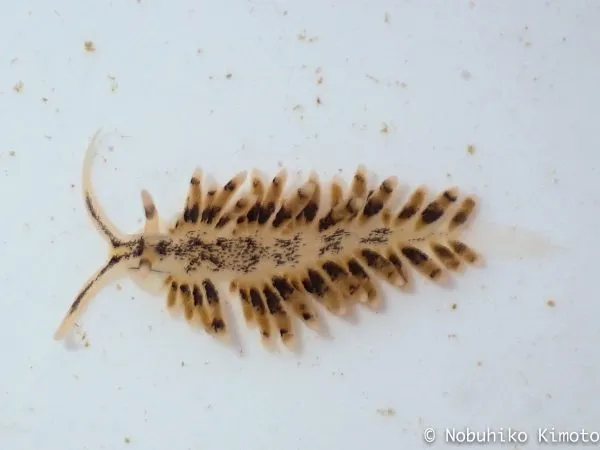
Yatsumino-umiushi
I personally found about three yatsumino-umiushi. Since it was a species I'd been wanting to see, that was great — but every time I showed it to someone nearby saying "hey, this is a nudibranch," they'd tell me it was too small to make out. Sorry about that…
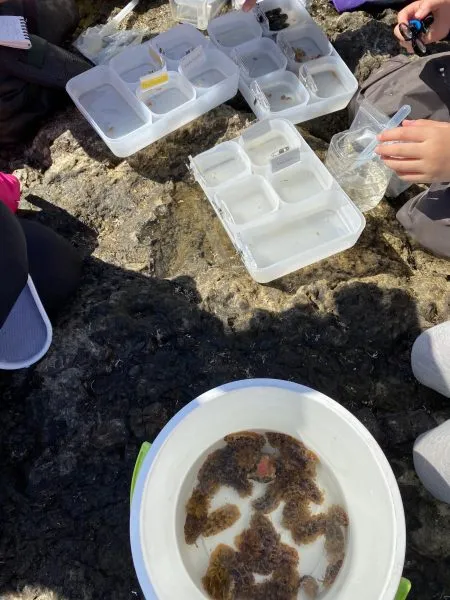
More than 100 nudibranchs
Low tide that day was at 10:16 a.m., and since the water was at its lowest when we arrived and rising from there, conditions weren't ideal. Even so, in total about 15 species and 100 individuals turned up — including a bucket full of miyako-umiushi (Dendrodoris fumata), a sight I'd never seen before.
All of the nudibranchs were counted and measured, and, except for those needed for research, every one was returned to the sea.
Osaka Bay Nudibranch Observation Meet — 51st Session: Looking for Autumn Nudibranchs
After the meet broke up, we made a side trip to a yacht harbor where the members often search for nudibranchs.
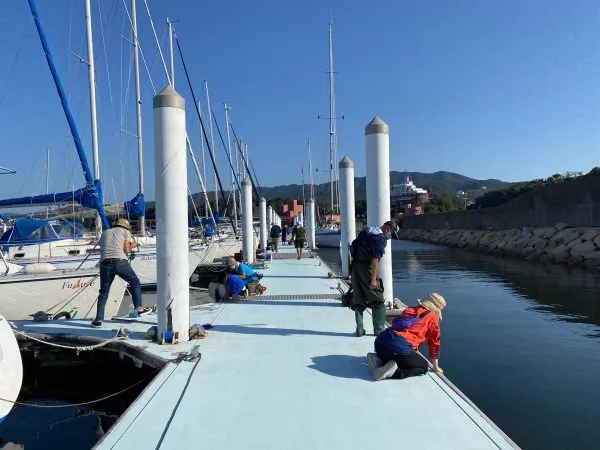
Yacht harbor — we were searching here with permission, so please don't try this casually on your own!
Bryozoans, hydroids, and other growths cling to the buoys, ropes, and pier walls, and apparently in the right season you can find huge numbers of nudibranchs here.
Everyone has sharp eyes, and even here they spotted konoha-midorigai (Elysia marginata), frerito-ge-amefurashi (Bursatella leachii), and more. I'd love to come back at a better time of year.
In the evening we were treated to a social and study session at the office.
An 8-year-old kid even gave a presentation on nudibranchs — the future looks very promising. Failing to take photos of it was a major blunder on my part.
Day 3 — Nudibranch Observation Meet
Finally, the last day. Left Namba at 8:14 a.m. for Misakikōen Station. It was a little closer than the day before — about a 50-minute train ride.
From there we walked to the site and began around 9:30 a.m.
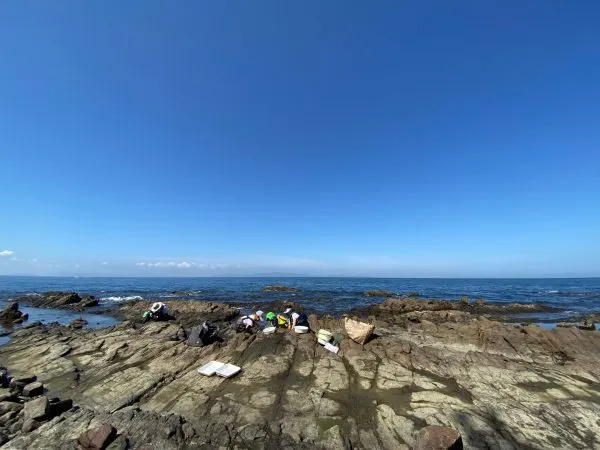
Nagamatsu Coast
Ten participants and ten staff members, for a total of 20 people.
Low tide that day was at 11:27 a.m., so we had plenty of time to search.
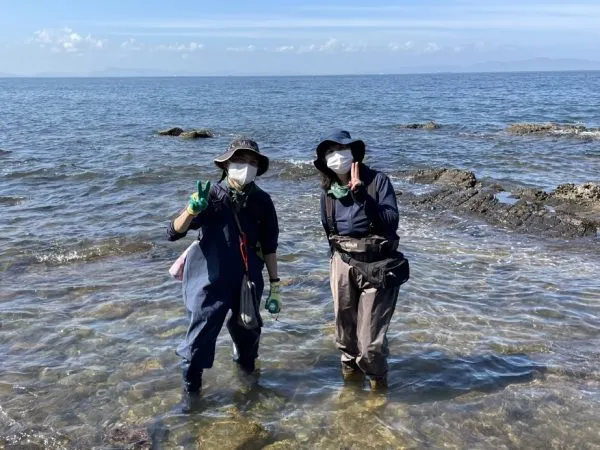
Borrowed a pair of chest waders, and since my footing didn't slip, it was much easier to search — they really are an essential item for rocky shores.
Thanks in part to the chest waders, I was able to find quite a few that day, so I could show nudibranchs to the participants while still taking some photos of my own at a relaxed pace.
During breaks I signed autographs, and on the way back people showed me lots of their photos — it was a really enjoyable time.
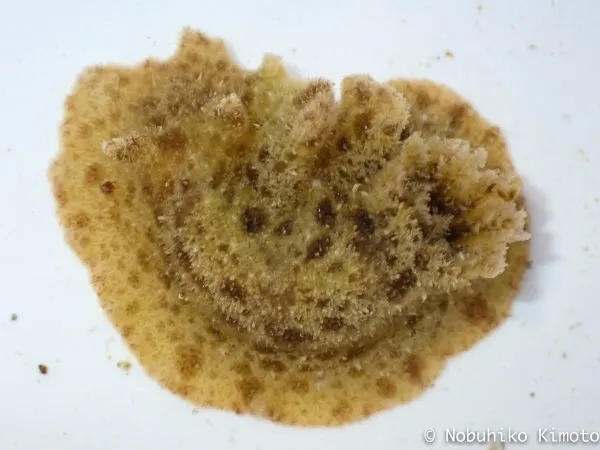
Totoro-umiushi
I managed to find the totoro-umiushi with my own eyes — a nudibranch I'd been wanting to see in person — and we turned up about 18 species, more than the day before. With around 50 individuals collected, it was an excellent haul.
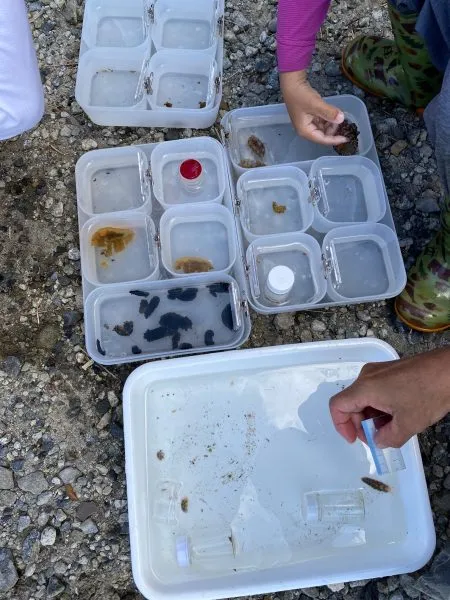
18 species
After the meet broke up, we went over to a fishing port, where Kashio-san showed us the introduced nudibranch species he's been researching.
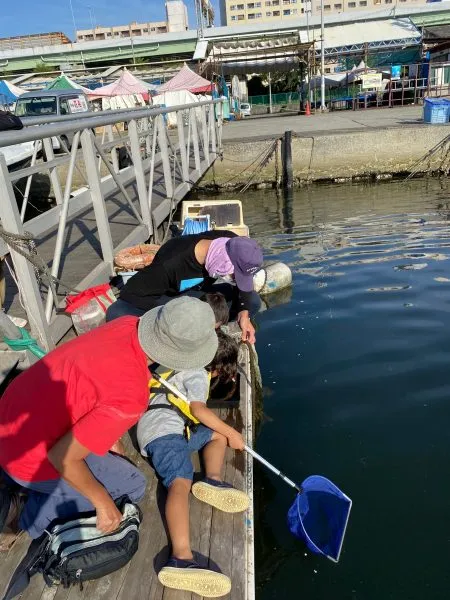
Fishing port — we were searching here with permission, so please don't try this casually on your own!
The sight of everyone hunting for nudibranchs on the pier of a fishing port was pretty surreal. There were even eagle rays around, but everyone just kept silently searching for nudibranchs.
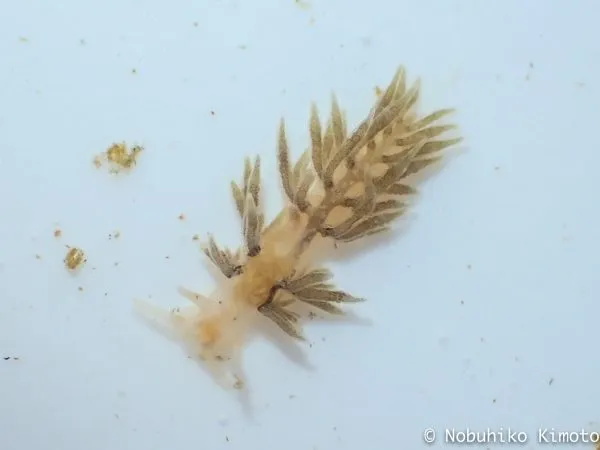
Trinchesia perca
The species found here is Cuthona perca (now reclassified as Trinchesia perca), which was a topic of discussion on Twitter a while back.
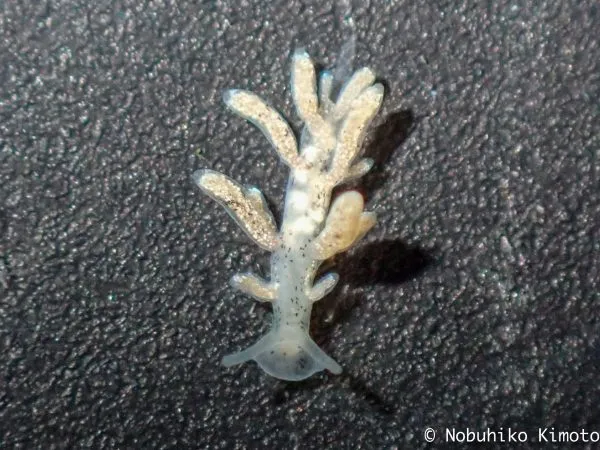
Tenellia adspersa
And here's another species considered an introduction — Tenellia adspersa.
Perca runs around 10 mm, so you can find them once your eye adjusts, but adspersa is incredibly tiny. At most about 3 mm, I'd say. I suspect both species may also occur in the Kantō region, so I'll try hunting for them when I get the chance.
After that, they kindly gave me a ride to the station, and I headed back to Tokyo.
To everyone at the Osaka Bay Nudibranch Observation Meet, thank you for the wonderful three days. I've already been invited to join a night tidepool session next time, so I'll definitely be back — looking forward to seeing you all again.
Osaka Bay Nudibranch Observation Meet
Osaka Nature Conservation Association (Public Interest Incorporated Association)
Enjoyed this post? You can tip the author directly —
Tip this post