Clione limacina (Phipps, 1774)
Clione limacina
No field photograph submitted for this species yet
Have you photographed this species?Description
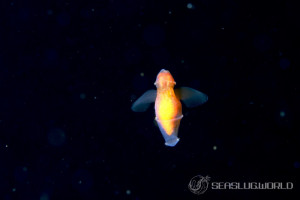
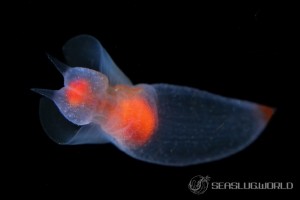
A pelagic gymnosome pteropod (sea angel) with a translucent body, often tinged with pale orange-red on the head and visceral mass. The larval shell is shed early in development, leaving the adult entirely shell-less. A pair of wing-like parapodia projects from the sides of the body and is flapped continuously to swim. During predation, six buccal cones (three pairs) are everted from the head in an instant to seize the prey's shell, and chitinous hooks are then extruded from internal hook sacs to extract the soft body. North Atlantic and Arctic specimens may reach 70–85 mm in body length — one of the largest known gymnosomes — clearly larger than the North Pacific congener Clione elegantissima (about 30 mm).Distribution
The original description (Phipps, 1774) was based on specimens collected during the 1773 Royal Navy expedition toward the North Pole, at Spitsbergen (Svalbard, Norway), in the far northern Atlantic. The species is widespread in the cold polar and subpolar waters of the Arctic Ocean, Greenland Sea, Barents Sea, North Sea, and North Atlantic, extending south along the eastern coast of North America. It occupies epipelagic to mesopelagic depths and is abundant beneath sea ice and along ice margins. The species does not occur in Japanese waters: North Pacific and Okhotsk Sea specimens long misidentified as Clione limacina have been reassigned to Clione elegantissima Dall, 1871 by Yamazaki & Kuwahara (2017).Etymology
The specific epithet limacina is Latin for "slug-like," referring to the shell-less, soft body that undulates as it swims. The genus name Clione derives from Cleio (Clio), a sea nymph in Greek mythology.Remarks
A holopelagic gymnosome pteropod that spends its entire life cycle in the open water column. A simultaneous hermaphrodite, breeding in spring and summer, with a life span of at least two years. Adults feed almost exclusively on the shelled pteropods Limacina helicina and Limacina retroversa. Because Limacina shells are highly vulnerable to dissolution under ocean acidification, the species has attracted attention as a sentinel taxon for polar pelagic ecosystems. The species was originally described as Clio limacina by the British polar explorer Constantine John Phipps in his account of the 1773 Royal Navy expedition, A Voyage Towards the North Pole (1774). Sromek et al. (2015) showed a COI divergence of about 23% between Northern and Southern Hemisphere populations, supporting recognition of the Antarctic form as a separate species, Clione antarctica Smith, 1902. No established Japanese vernacular name exists for this Atlantic species; this site uses the katakana transliteration "Clione limacina" (クリオネ・リマシナ) as a provisional name. The Japanese vernacular name "Hadaka-kamegai" and the popular name "Clione" refer to its North Pacific congener Clione elegantissima (pid 297).References
- Clio limacina n.sp., Phipps C.J. (1774). A Voyage Towards the North Pole, Undertaken by His Majesty's Command 1773. London: J. Nourse. xv + 253 pp.
- Clione limacina, Sromek L., Lasota R. & Wolowicz M. (2015). Genetic evidence for the existence of two species of the "bipolar" pelagic mollusk Clione limacina. American Malacological Bulletin. 33(1): 118-120. https://doi.org/10.4003/006.033.0108
- Clione limacina (Phipps, 1774), Yamazaki T. & Kuwahara T. (2017). Description of a new sea angel (Gastropoda: Gymnosomata) from the Sea of Okhotsk and the validity of Clione okhotensis. Journal of Molluscan Studies. 83(1): 19-26. https://doi.org/10.1093/mollus/eyw032
A Kindle field guide by the site author

Kimoto N. (2026). Sea Slugs of Japan & the Indo-Pacific, 2nd Edition.
Kindle Edition
View on Amazon PR (Amazon Associates)Seasonality
Shooting Locations
Loading shooting locations...
Same Genus Nudibranchs
Academic Database
Sea slug observation data is available in international marine biodiversity databases.