Cuvierina columnella (Rang, 1827)
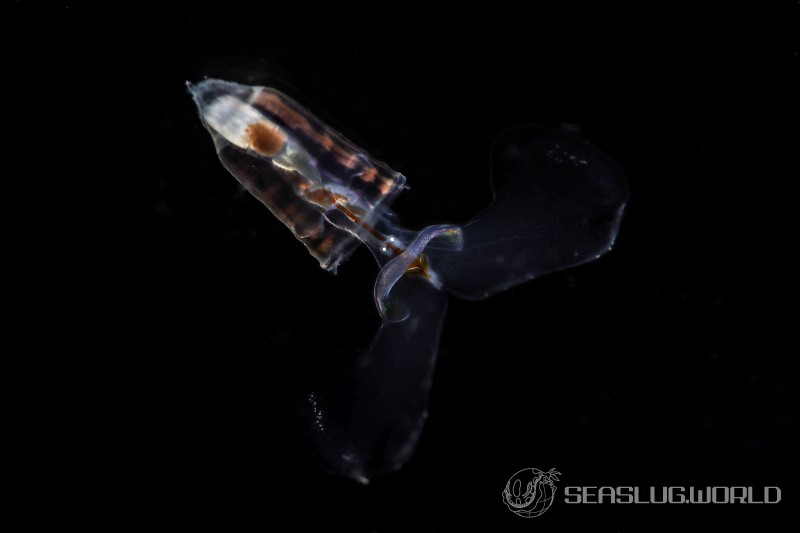
Description
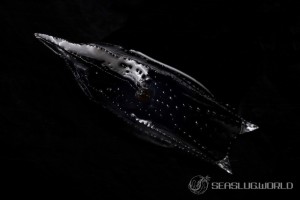
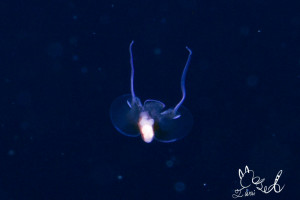
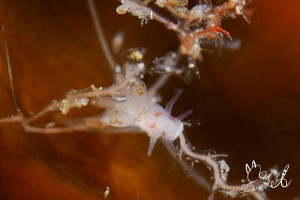
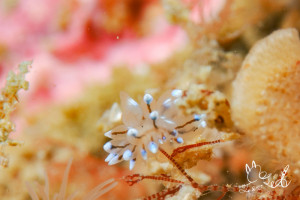
A small, transparent, pelagic pteropod ("sea butterfly") whose shell is shaped like a bottle or a small cigar. The shell is about 10 mm long with its greatest width near the apex, and the aperture is a somewhat twisted subtriangular opening. The conical protoconch (embryonic shell) is typically lost during growth, often leaving only a narrow collar at the base. The animal protrudes a pair of fused wing-feet through the aperture and swims by flapping them through the water column. A short, inflated form known historically as "forma urceolaris" is now more commonly treated as a distinct species, Cuvierina urceolaris.Distribution
Widespread across the tropical and temperate oceans as an open-ocean pelagic species. In Japanese waters it occurs in Kuroshio-influenced offshore areas, and empty shells are sometimes found washed up on shore. The type locality is in the northwest Atlantic (37°05'N, 54°34'W).Etymology
The specific epithet columnella is the diminutive of Latin columna ("column"), meaning "little column" and refers to the slender columnar shape of the shell. The genus name Cuvierina was introduced by Boas 1886 as a replacement for Cuvieria Rang, 1827, which had been preoccupied; both forms commemorate the French zoologist Baron Georges Cuvier (1769-1832), the suffix -ina being a diminutive.Remarks
Cuvierina was long considered an almost monotypic genus, but a comprehensive revision by Burridge, Janssen & Peijnenburg 2016 recognized six extant species. Under this revised taxonomy, records from the NE Atlantic and Mediterranean are now referred to Cuvierina atlantica, specimens from the Cape Verde region to Cuvierina cancapae, and a new species, Cuvierina tsudai, was described from the Pacific. Japanese records previously reported as Cuvierina columnella (including Okutani 2016) may therefore need re-examination and could belong in part to Cuvierina tsudai.References
- Cuvieria columnella n.g. n.sp., Rang S. (1827). Description de deux genres nouveaux (Cuvieria et Euribia) appartenant à la classe des Ptéropodes. Annales des Sciences Naturelles. 12: 320-329, pl. 17 [dated 1826].
- ウキヅツガイ Cuvierina columnella (Rang, 1827), 奥谷喬司 (2016). わが国近海に見られる浮遊性巻貝類―IV. 有殻翼足類 (1):カメガイ科のウキビシガイ亜科・ウキヅツガイ亜科. うみうし通信 91: 8-9.
- Cuvierina columnella (Rang, 1827), Burridge A.K., Janssen A.W. & Peijnenburg K.T.C.A. (2016). Revision of the genus Cuvierina Boas, 1886 based on integrative taxonomic data, including the description of a new species from the Pacific Ocean (Gastropoda, Thecosomata). ZooKeys. 619: 1-72.
A Kindle field guide by the site author

Kimoto N. (2026). Sea Slugs of Japan & the Indo-Pacific, 2nd Edition.
Kindle Edition
View on Amazon PR (Amazon Associates)Seasonality
Shooting Locations
Loading shooting locations...
Photos of Cuvierina columnella

Similar Colors Nudibranchs
Color:
Transparent
Academic Database
Sea slug observation data is available in international marine biodiversity databases.