Dendronotus gracilis Baba, 1949
Description
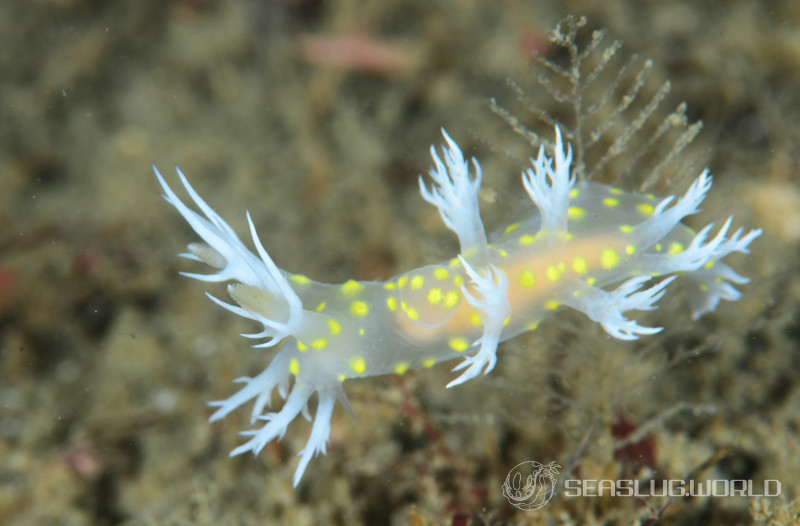
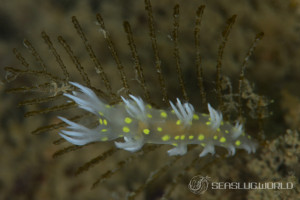
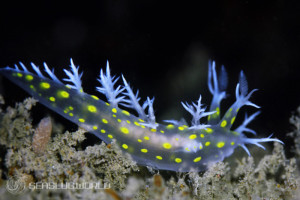
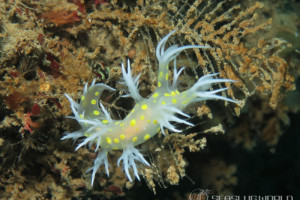
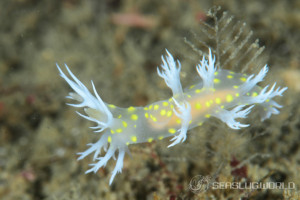
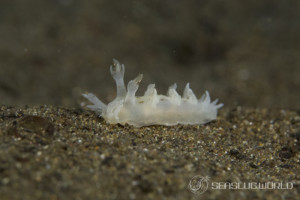
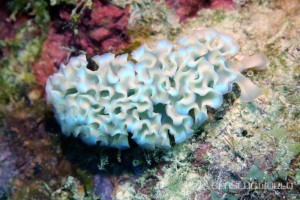
A small Dendronotidae with a slug-shaped body, body length about 25 mm. The head veil is reduced, with two head-veil-margin processes per side, each with only a few branches. The rhinophore sheath rises tall, with 5-6 simple finger-like processes on the upper margin. There are four pairs of dorsal-ridge processes, none extensively branched. Two simple finger-like processes occur on the dorsal midline of the tail. Body surface smooth. Whole body bluish-white (greenish-blue), with about 15 yellow eye-spots, each centred with an orange fine dot, scattered on the dorsum. The masticatory edge of the jaw plate bears 6-7 rows of scale-teeth, with the outermost row papillate and the rest scale-like. Radula formula 36×35-70.1.1.1.35-70 to 47×55-80.1.1.1.55-80. The central tooth has three cusps. The stomach has a girdle of 50-60 dark-brown chitinous plates.Distribution
Type locality is Amadai-ba, Sagami Bay (80-100 m depth, May-July 1935, July 1936, and July 1939, 5 specimens) and off Kameshiro-shō, Sagami Bay (80 m depth, August 1936, 2 specimens). The original description (Baba, 1949) records the species from Sagami Bay and Kii.Etymology
The specific epithet gracilis is Latin for slender or graceful. The original description does not give an explicit etymology paragraph; the descriptive sense reflects the slender, graceful body. The Japanese name "Shiro-suginoha-umiushi" (white cedar-leaf sea slug) reflects the bluish-white ground colour and the cedar-leaf-like processes.Remarks
The first Dendronotus species described from Japan. A deep-water species (80-100 m), diagnosed by its bluish-white ground colour with yellow-on-orange eye-spots on the dorsum.References
A Kindle field guide by the site author

Kimoto N. (2026). Sea Slugs of Japan & the Indo-Pacific, 2nd Edition.
Kindle Edition
View on Amazon PR (Amazon Associates)Seasonality
Shooting Locations
Loading shooting locations...
Photos of Dendronotus gracilis


Same Genus Nudibranchs

Similar Colors Nudibranchs
Academic Database
Sea slug observation data is available in international marine biodiversity databases.