Dermatobranchus striatellus Baba, 1949
Description
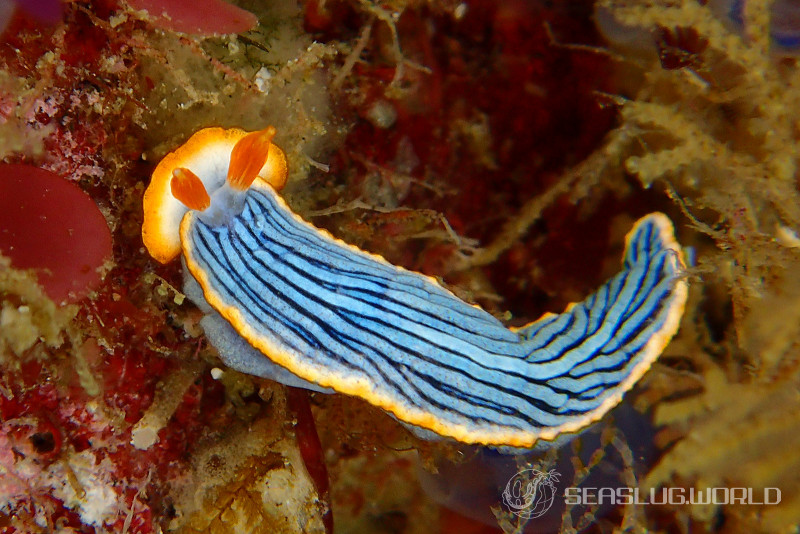
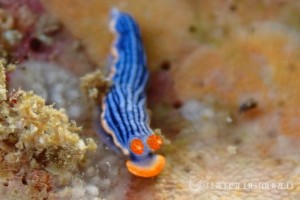
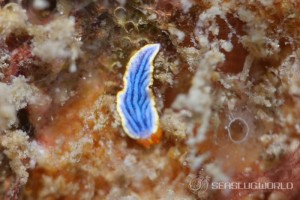
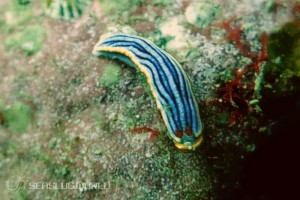
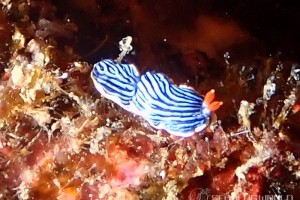
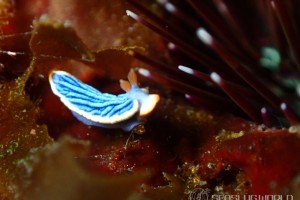
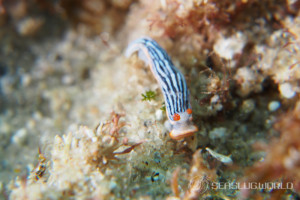
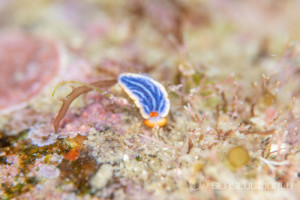
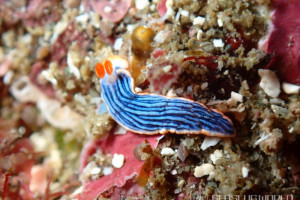
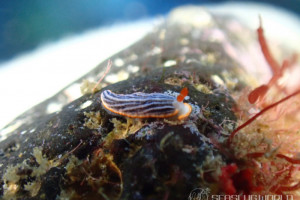
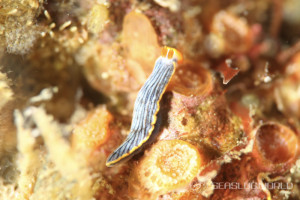
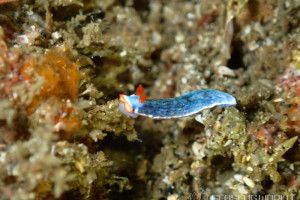
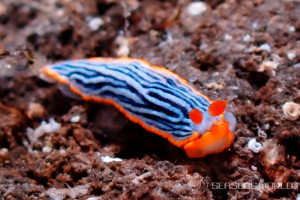
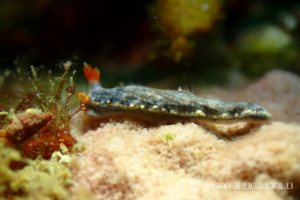
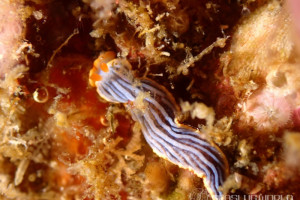
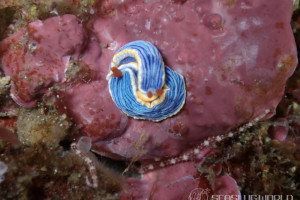
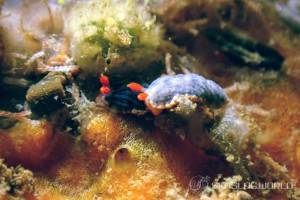
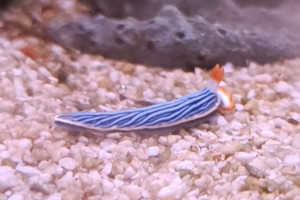
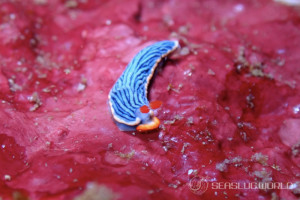
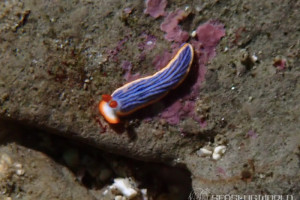
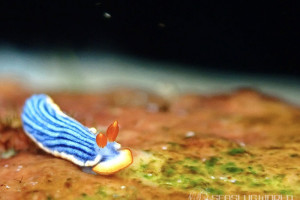
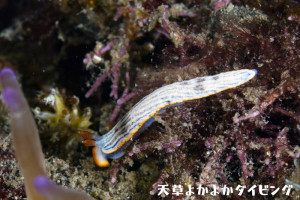
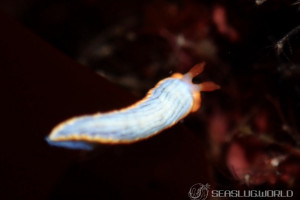
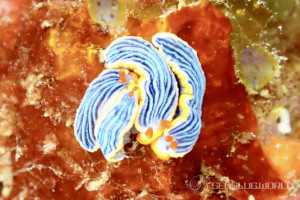
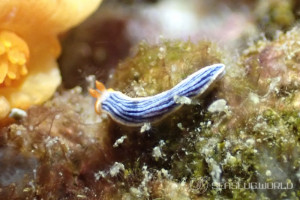
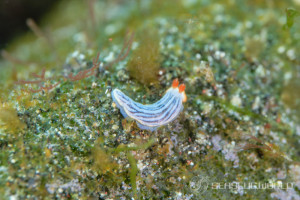
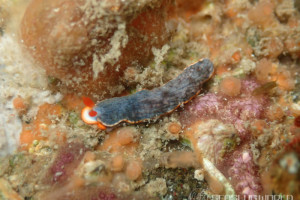
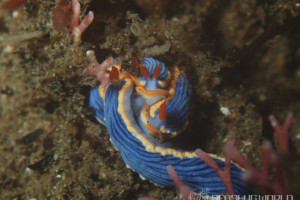
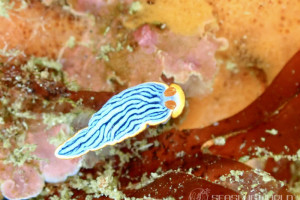
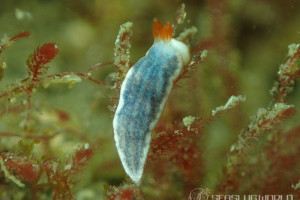
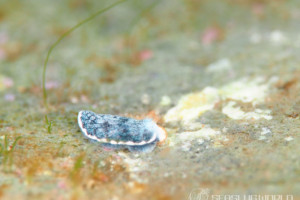
A small Arminidae, body length about 2.5 cm. The dorsal longitudinal folds are somewhat thick and number 12-14. Rhinophore lamellae bear a wide vermilion band. A fine orange-yellow line borders the outline excluding the mantle, head-veil, and foot margins. A few black fine dots are present on the dorsum. Ventral body and foot bluish-black. The masticatory edge of the jaw plate is covered by 3-4 rows of scale-teeth, with the outermost row spinous and often split. Radula formula about 20-23×3.1.1.1.3. Tooth morphology is generally similar to that of Dermatobranchus striatus. The central tooth is not very wide, with 5-6 denticles on each side of the median cusp; the first lateral is asymmetric, broad, with 9-10 denticles; the second and following laterals are usually smooth but occasionally bear 4-6 denticles.Distribution
Type locality is Hayama-Najima, Sagami Bay (intertidal, August 1940, 8 specimens). The original description (Baba, 1949) records the species only from Sagami Bay.Etymology
The specific epithet striatellus is the Latin diminutive of striatus (striped), meaning "little-striped". The original description does not give an explicit etymology paragraph; the descriptive sense reflects the finer dorsal folds compared with Dermatobranchus striatus. The Japanese name "Samejima-otome-umiushi" likely reflects either a striped pattern reminiscent of a shark (same) or the type locality at Samejima.Remarks
The radula resembles that of Dermatobranchus striatus (van Hasselt), but the species is diagnosed by its finer dorsal folds (12-14). Whereas Dermatobranchus striatellus has a vermilion band on the dorsum, Dermatobranchus striatus has a more uniform grey ground colour. Dermatobranchus semistriatus has even finer and more numerous folds (20-25).References
- Dermatobranchus striatellus Baba, 1949, Baba K. (1949). Opisthobranchia of Sagami Bay collected by His Majesty the Emperor of Japan (相模湾産後鰓類図譜). Iwanami Shoten, Tokyo. 4+2+194+7 pp., pls. 1-50.
- Samejima-otomeumiushi, Baba, K. 1976. Two new species and five common or rare species of the genus Dermatobranchus from Japan (Nudibranchia: Arminoidea: Arminidae). Veliger 19(1):4-12.
A Kindle field guide by the site author
Kimoto N. (2026). Sea Slugs of Japan & the Indo-Pacific, 2nd Edition.
Kindle Edition
View on Amazon PR (Amazon Associates)Seasonality
Shooting Locations
Loading shooting locations...
Photos of Dermatobranchus striatellus
Tag:




















Same Genus Nudibranchs
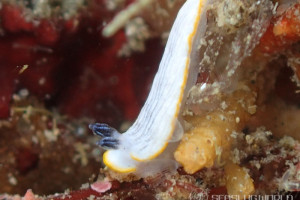
Dermatobranchus sp. 6
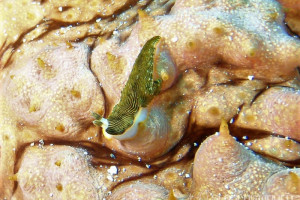
Dermatobranchus sp. 5

Dermatobranchus dendronephthyphagus
Dermatobranchus albineus
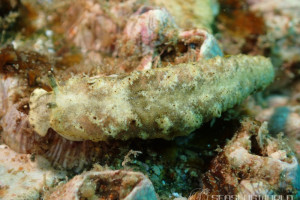
Dermatobranchus phyllodes
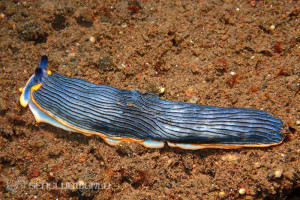
Dermatobranchus sp. 4
Dermatobranchus sp. 3
Dermatobranchus diagonalis
Dermatobranchus spp.
Dermatobranchus rodmani
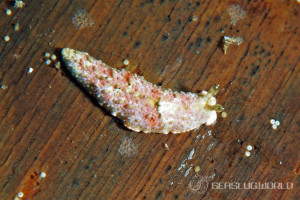
Dermatobranchus tuberculatus
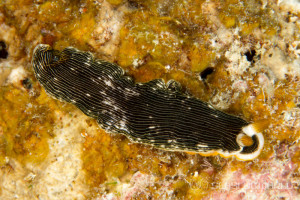
Dermatobranchus striatus
Similar Colors Nudibranchs
Academic Database
Sea slug observation data is available in international marine biodiversity databases.