Dermatobranchus semistriatus Baba, 1949
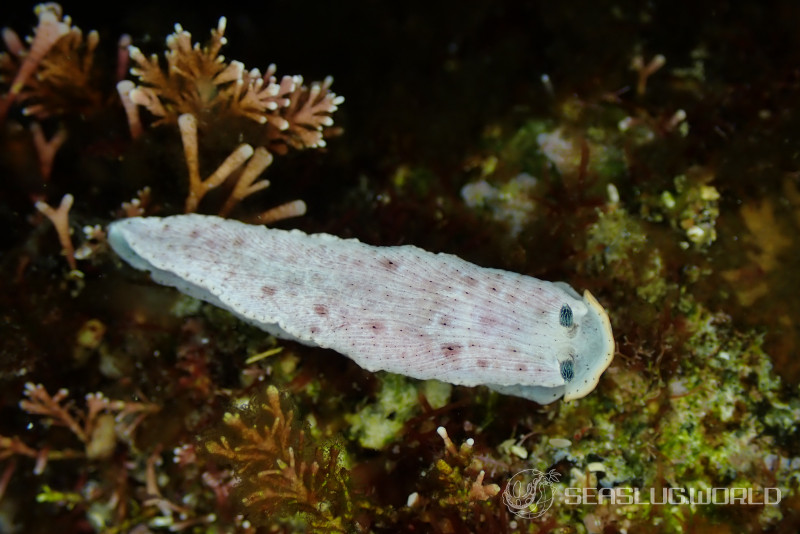
- Location
- Engetsutou, Sirahama, Wakayama, Japan
- Date
- 2023/01/09
- Length
- 22mm
- Depth
- 1.0m
- Water temperature
- 17.0℃
Description
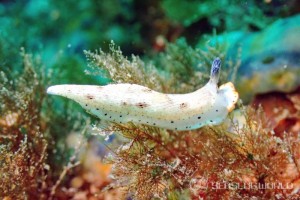
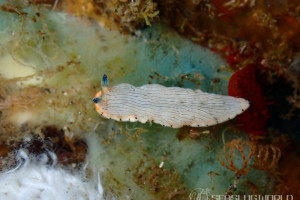
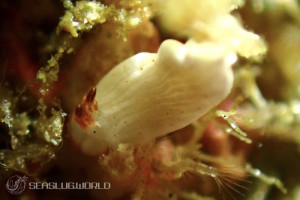
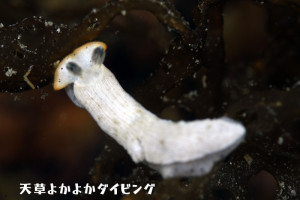
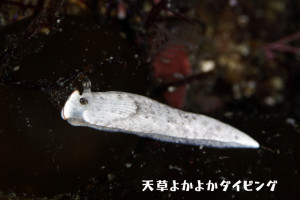
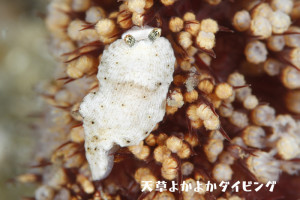
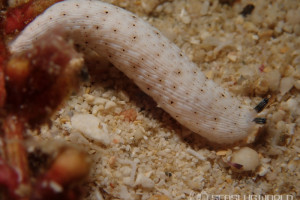
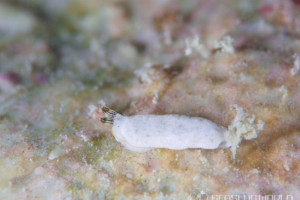
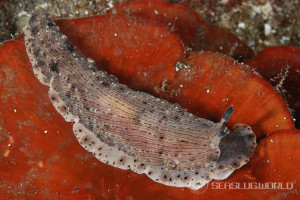
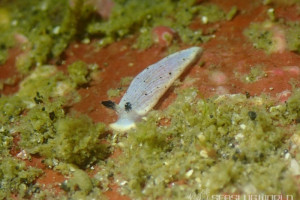
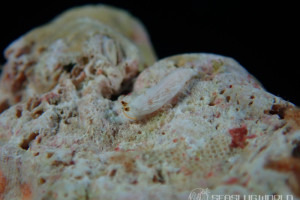
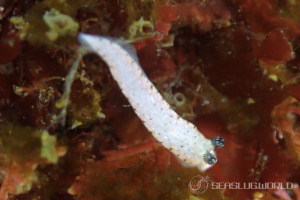
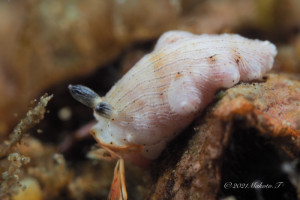
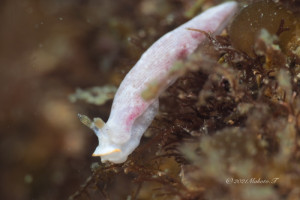
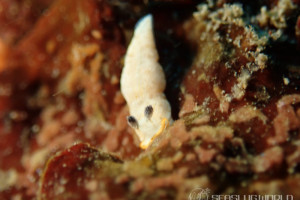
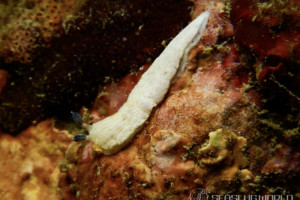
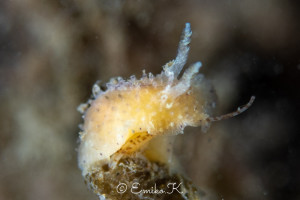
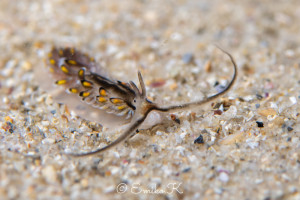
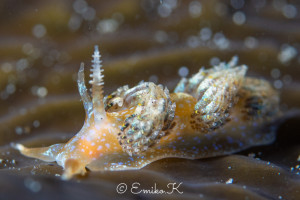
A small Arminidae, body length about 2 cm. The dorsal longitudinal folds are extremely fine and numerous (20-25 in count) — distinctively paler than in the related Dermatobranchus striatus and Dermatobranchus striatellus. Ground colour pale greyish-yellow, with many dark longitudinal lines and small black dots irregularly arranged along these lines. Rhinophores black; the head-veil margin, mantle, and foot margin pale yellow. Ventral body white. Black fine dots may sometimes be scattered on the foot margin and body sides. The masticatory edge of the jaw plate bears 1-2 rows of spinous scale-teeth. The radula bears characters distinguishing it from the three related species. Radula formula 25×50-60.1.1.1.50-60. The central tooth has 11-14 denticles on each side of the median cusp; the first lateral is asymmetric, narrow, with only 8-9 denticles; among the second and following laterals, 4-5 bear 5-3 denticles, with the rest decreasing outward.Distribution
Type locality is Hayama-Samejima, Sagami Bay (intertidal, July-August 1939, 5 specimens) and Hayama-Najima, Sagami Bay (intertidal, August-September 1939, 3 specimens). The original description (Baba, 1949) records the species only from Sagami Bay.Etymology
The specific epithet semistriatus is a Latin compound of semi- (half) and striatus (striped), reflecting the fine, numerous (20-25) dorsal folds. The original description does not give an explicit etymology paragraph. The Japanese name "Sagiri-otome-umiushi" likens the pale greyish-yellow ground to "sagiri" (fine mist).Remarks
Resembles Dermatobranchus striatus and Dermatobranchus striatellus, but distinguished by (1) extremely fine and numerous (20-25) dorsal folds, (2) a paler greyish-yellow ground colour, and (3) an asymmetric first lateral tooth bearing only 8-9 denticles.References
- Dermatobranchus semistriatus Baba, 1949, Baba K. (1949). Opisthobranchia of Sagami Bay collected by His Majesty the Emperor of Japan (相模湾産後鰓類図譜). Iwanami Shoten, Tokyo. 4+2+194+7 pp., pls. 1-50.
- Sagiri-otomeumiushi, Baba, K. 1976. Two new species and five common or rare species of the genus Dermatobranchus from Japan (Nudibranchia: Arminoidea: Arminidae). Veliger 19(1):4-12.
A Kindle field guide by the site author
Kimoto N. (2026). Sea Slugs of Japan & the Indo-Pacific, 2nd Edition.
Kindle Edition
View on Amazon PR (Amazon Associates)Seasonality
Shooting Locations
Loading shooting locations...
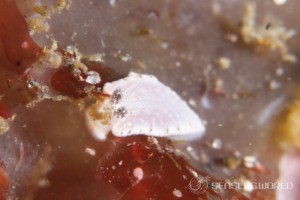
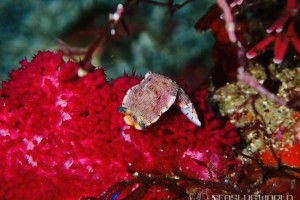
Photos of Dermatobranchus semistriatus







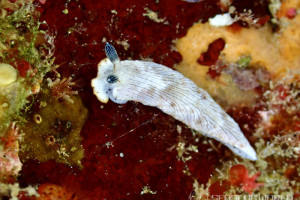

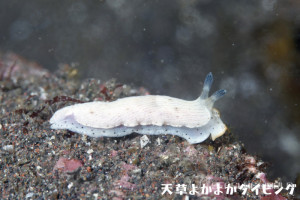
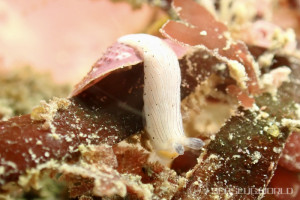
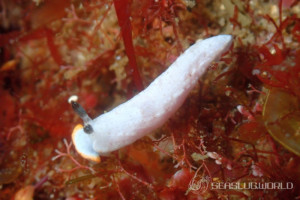

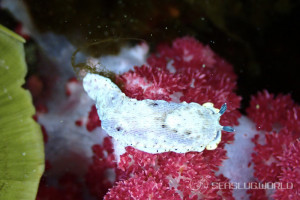

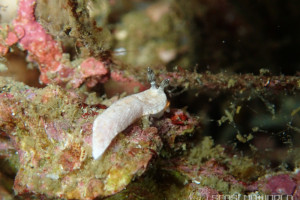
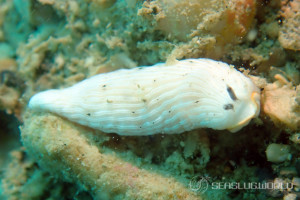

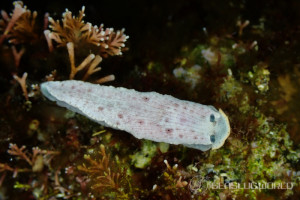



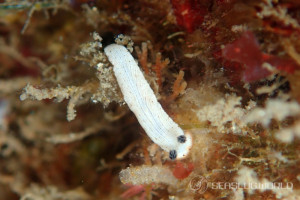
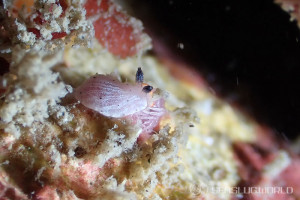

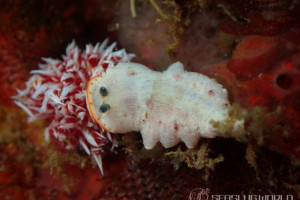

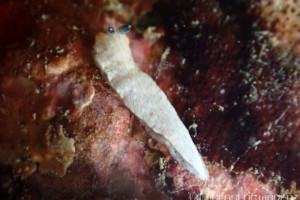




Same Genus Nudibranchs
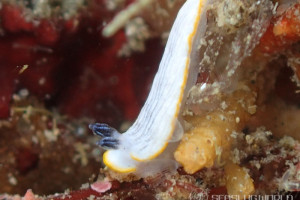
Dermatobranchus sp. 6
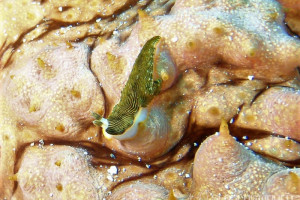
Dermatobranchus sp. 5

Dermatobranchus dendronephthyphagus
Dermatobranchus albineus
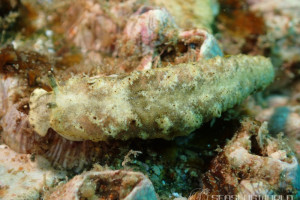
Dermatobranchus phyllodes
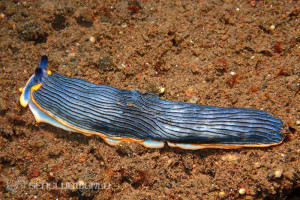
Dermatobranchus sp. 4
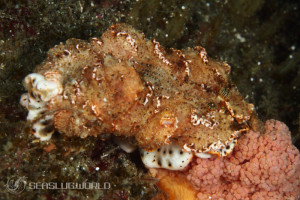
Dermatobranchus sp. 3
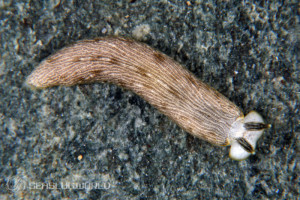
Dermatobranchus diagonalis
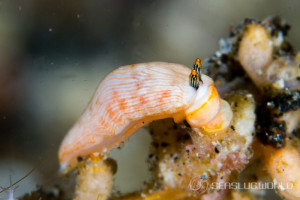
Dermatobranchus spp.
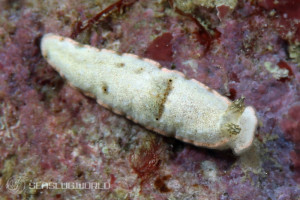
Dermatobranchus rodmani
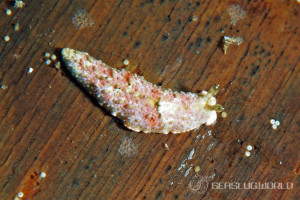
Dermatobranchus tuberculatus
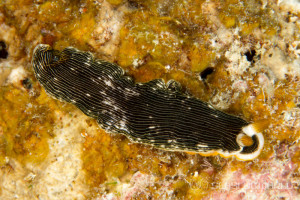
Dermatobranchus striatus
Similar Colors Nudibranchs

Academic Database
Sea slug observation data is available in international marine biodiversity databases.