Sagaminopteron multimaculatum Ong & Gosliner, 2017
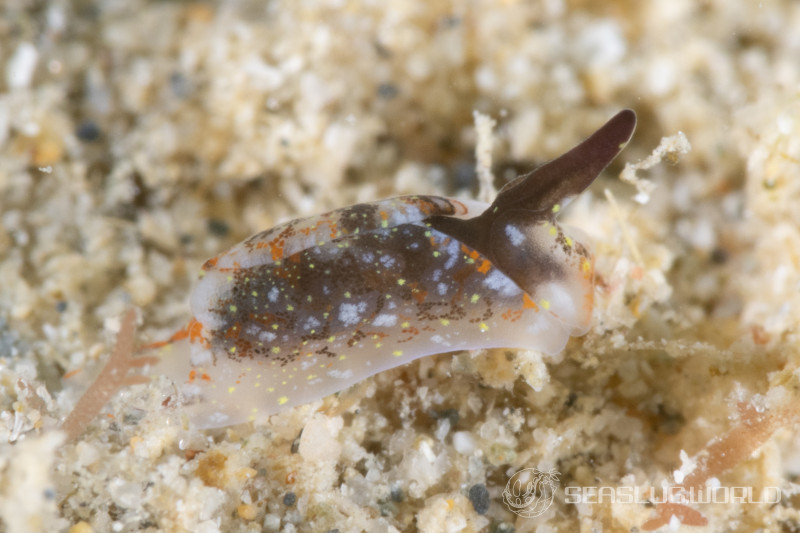
- Location
- Red Beach, Okinawa Island (East coast), Okinawa, Japan
- Date
- 2020/03/15
- Length
- 6mm
- Depth
- 5.5m
- Water temperature
- 21.0℃
Description
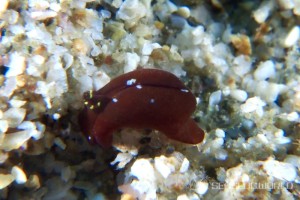
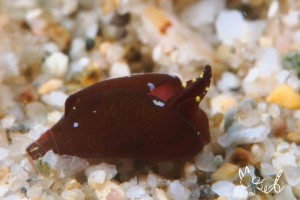
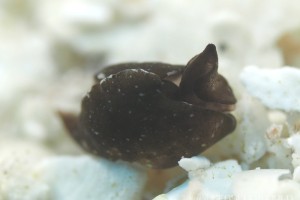
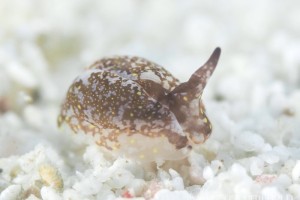
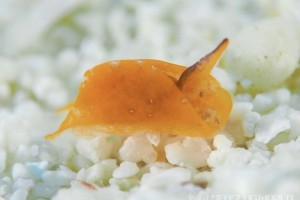
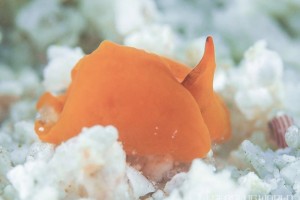
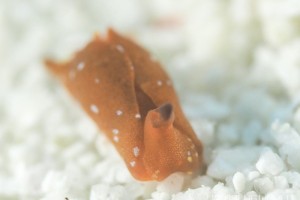
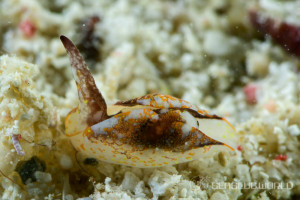
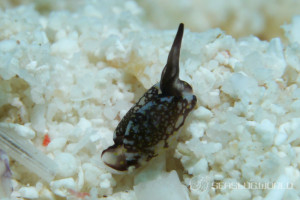
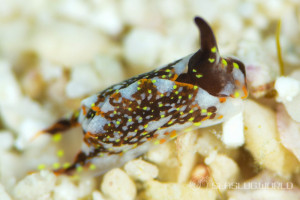
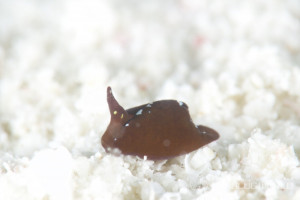
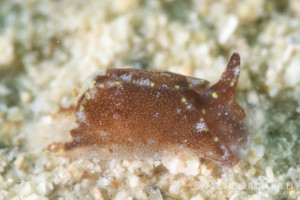
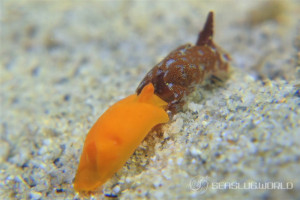
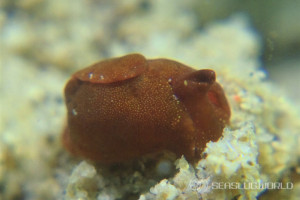
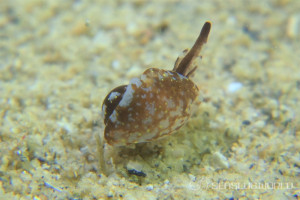
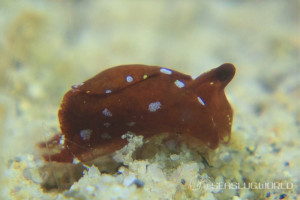
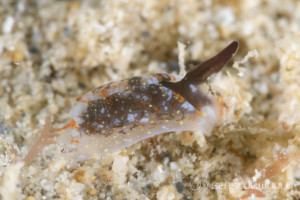
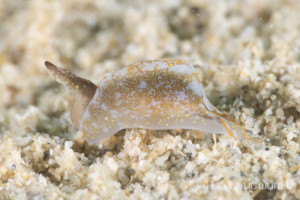
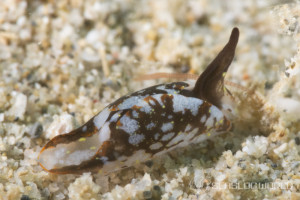
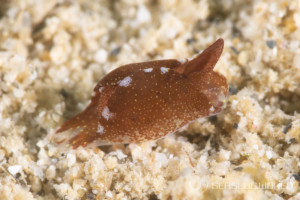
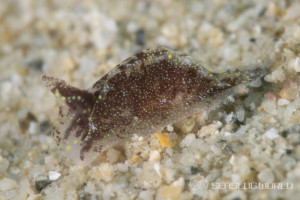
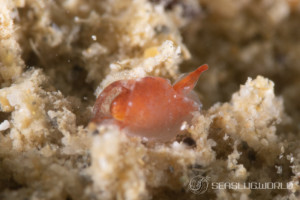
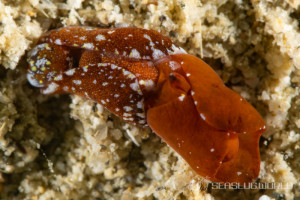
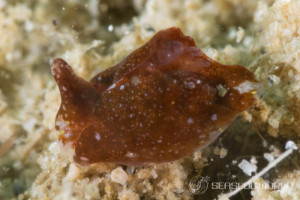
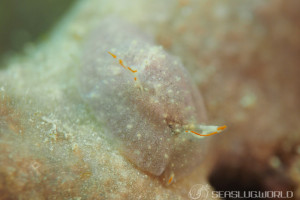
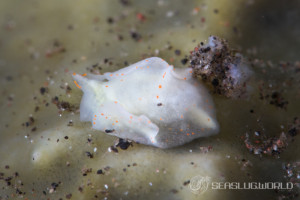
A small gastropterid 4 mm in length. Colour clear to translucent white around its foot. Majority of body green-brown with white, orange and canary yellow spots. Small yellow dots covering majority of elongate parapodia and extending well beyond posterior end of visceral hump. Small orange dots lining the edges of parapodia. Small yellow dots centred linearly on head shield, base of foot and posterior end of foot. Larger orange splotch present on anterior side of head shield.White splotches present on either side of head shield. White splotches lining the edge of parapodia and anteriorly near foot. Foot translucent white and lined with orange spots. Small yellow dots also present on foot. Head shield roughly triangular, broadest anteriorly and narrowing posteriorly. Siphon with longitudinal ridge along its anterior margin. Parapodia covering body when retracted and overlapping above visceral hump. Distinct flagellum absent. Gill with four simple plicae.
Shell: No trace of a shell found in specimen dissected. Buccal mass moderately muscularized. Radular formula 15 × (4·1·0·1·4) in holotype specimen (NMP 041182). Inner lateral teeth broad with single primary cusp. Masticatory margin of inner laterals broad with eight to ten irregular, elongate, acutely pointed denticles along entire margin. The penial bulb is much more highly muscularized in Sagaminopteron pohnpei than in S. multimaculatum.
Distribution
Type locality: Cemetery Beach, Tingloy, Batangas, Luzon, Philippines. Thus far, known only from the Philippines and possibly Australia (Great Barrier Reef).Etymology
Verbatim from the original description (Ong et al., 2017, p.767):The species epithet, multimaculatum, refers to the many coloured spots ornamenting the parapodia, head shield, visceral mass and foot of this species.
Remarks
Originally described as Sagaminopteron multimaculatum Ong & Gosliner, 2017. This species corresponds to specimens previously misidentified as Siphopteron pohnpei in a 2008 study and figured as Siphopteron sp. 8 by Gosliner, Valdés & Behrens 2015.The external anatomy of S. multimaculatum most closely resembles Sagaminopteron pohnpei (Hoff & Carlson, 1983); they are the only two species of Sagaminopteron that entirely lack a flagellum. The two are 7.4–7.6 % different in their COI gene sequences and clearly distinguished by ABGD analysis. They differ in: (1) S. multimaculatum has greenish-brown ground colour with orange, white and yellow spots, whereas S. pohnpei ranges from brown to orange, reddish or black with white or yellow spots; (2) in S. pohnpei the prostate is elongate with two distinct swollen bulbs, while in S. multimaculatum the prostate is simple, curved and relatively short with only one expanded area; (3) the penial bulb is much more highly muscularized in S. pohnpei. Phylogenetically, the Australian specimen identified as S. pohnpei in a 2008 study and the Philippine and Great Barrier Reef specimens together form the species S. multimaculatum. Ong et al. 2017 transferred S. pohnpei from Siphopteron to Sagaminopteron and described S. multimaculatum as its sister species.
References
- マダラウミコチョウ, 小野篤司. (2004). 沖縄のウミウシ. ラトルズ.
- Siphopteron sp. 8, Terrence Gosliner, Ángel Valdés and David Behrens. (2015). Nudibranch and Sea Slug Identification Indo-Pacific. New World Pubns Inc.
- Sagaminopteron multimaculatum sp. nov., Ong E., Hallas J.M. & Gosliner T.M. (2017). Like a bat out of heaven: the phylogeny and diversity of the bat-winged slugs (Heterobranchia: Gastropteridae). Zoological Journal of the Linnean Society. 180(4): 755-789. https://doi.org/10.1093/zoolinnean/zlw018
- サキシマウミコチョウ(新称), 中野理枝. (2018). 日本のウミウシ. 文一総合出版.
- サキシマウミコチョウ, 中野理枝. (2019). 日本のウミウシ. 第二版. 文一総合出版.
- マダラウミコチョウ, 小野篤司 & 加藤昌一. (2020). 新版 ウミウシ. 誠文堂新光社.
Featured in this book
Terrence Gosliner, Ángel Valdés and David Behrens. (2018). Nudibranch and Sea Slug Identification Indo-Pacific 2nd Edition. New World Pubns Inc.
New World Publications
This species, Sagaminopteron multimaculatum, is included in the book.
View on Amazon PR (Amazon Associates)Seasonality
Shooting Locations
Loading shooting locations...
Photos of Sagaminopteron multimaculatum
Tag:





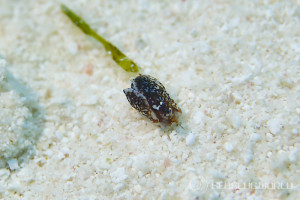
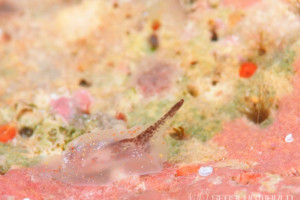
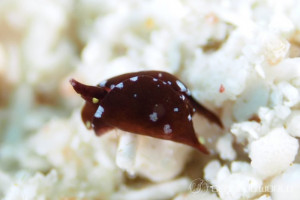

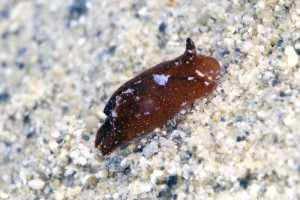





Same Genus Nudibranchs
Academic Database
Sea slug observation data is available in international marine biodiversity databases.