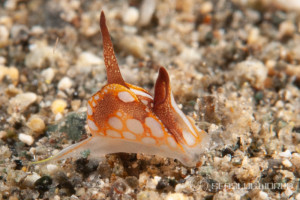
Cerberilla incola Burn, 1974
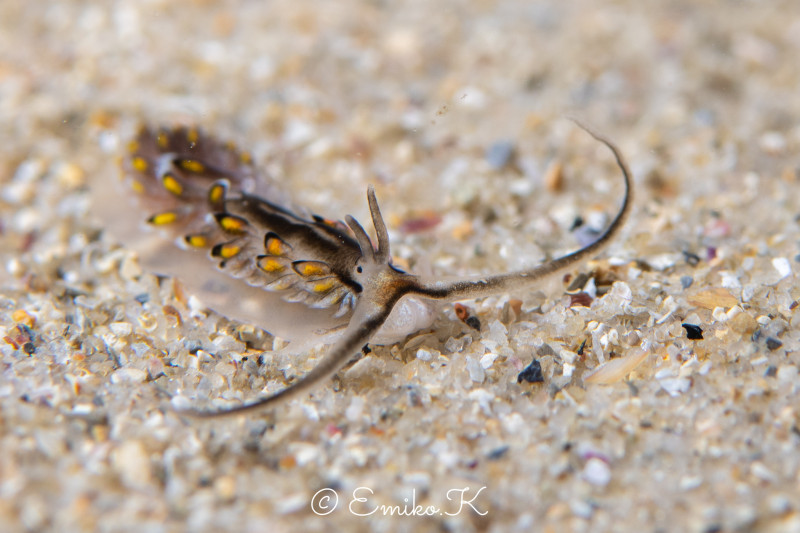
- Location
- Chowder Bay, New South Wales, Australia
- Date
- 2020/07/12
- Length
- 15mm
- Depth
- 5.0m
- Water temperature
- 16.0℃
Description
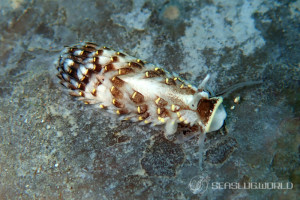
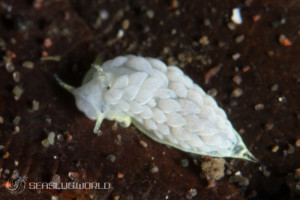
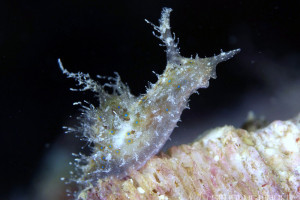
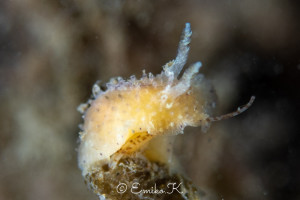
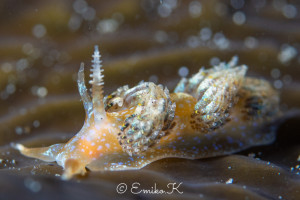
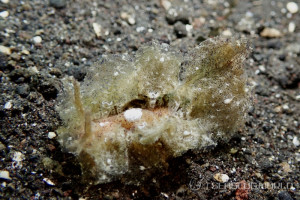
A small aeolid reaching about 10 mm in body length. The cerata bear two longitudinal brown lines — a distinctive diagnostic feature. In juveniles, the lines appear only on the larger cerata, while smaller cerata are uniformly translucent brown. The species spends most of its life buried in sand and is rarely seen alive.Distribution
Type locality: Port Phillip Bay, Victoria, Australia. Originally known only from southeastern Australia (e.g. Jervis Bay), the species has subsequently been recorded from southern Queensland and Reunion in the Indian Ocean, suggesting a broad Indo-West Pacific distribution. Inhabits sandy bottoms in bays at 8-15 m depth.Remarks
Members of the genus Cerberilla are sand-burrowing aeolids known to feed on burrowing anthozoans such as cerianthid tube anemones.References
A Kindle field guide by the site author
Kimoto N. (2026). Sea Slugs of Japan & the Indo-Pacific, 2nd Edition.
Kindle Edition
View on Amazon PR (Amazon Associates)Seasonality
Shooting Locations
Loading shooting locations...
Photos of Cerberilla incola

Same Genus Nudibranchs
Similar Colors Nudibranchs


Academic Database
Sea slug observation data is available in international marine biodiversity databases.