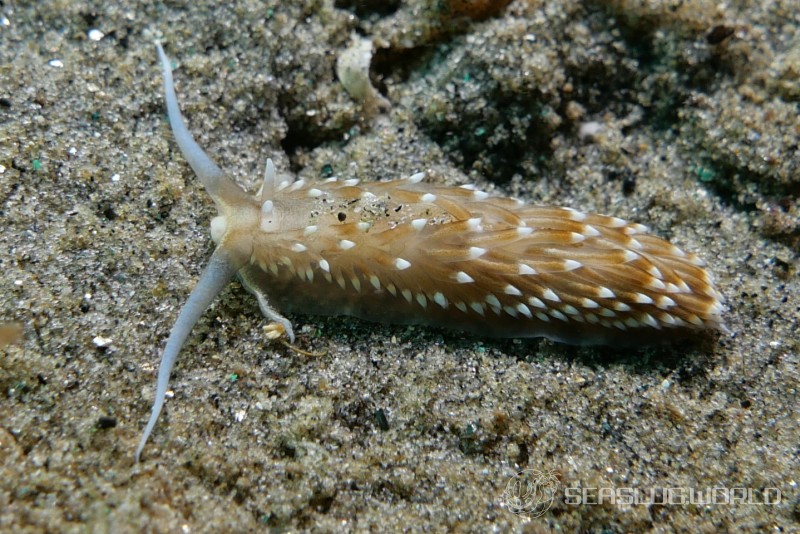
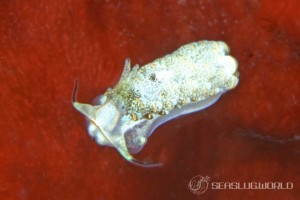
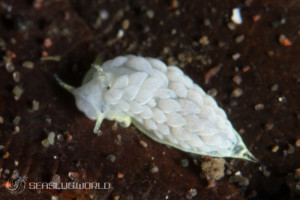
Cerberilla pungoarena Collier & Farmer, 1964
- Location
- Lifeguard Tower, San Diego, California, United States
- Date
- 2019/11/11
- Length
- ??mm
- Depth
- ??m
- Water temperature
- ??℃
Description
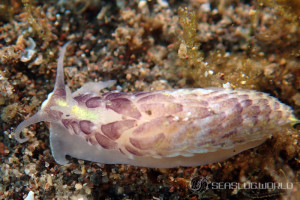
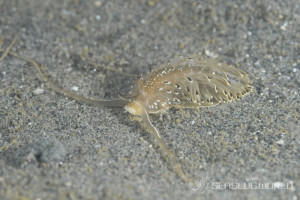
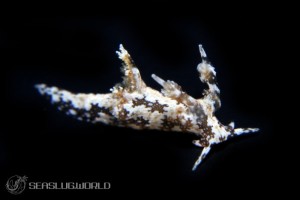
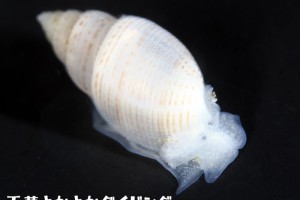
A sand-dwelling aeolid. The translucent body and cerata are tinged with pale brown, and the cerata have opaque white tips. Numerous cerata are arranged around the body. It normally stays buried in sand and is hard to find.Distribution
Eastern Pacific, from the Gulf of California and Baja California, Mexico, north to La Jolla and the Channel Islands, California, USA. It lives on and in sandy bottoms. The species was originally described from Isla Ángel de la Guarda (Puerto Refugio) in the Gulf of California.Etymology
The specific epithet pungoarena combines Latin pungere (“to prick, pierce”) and arena (“sand”), alluding to its sand-burrowing habit.Remarks
It feeds on burrowing sea anemones that live in the sand.References
- Cerberilla pungoarena n.sp., Collier C.L. & Farmer W.M. (1964). Additions to the nudibranch fauna of the east Pacific and the Gulf of California. Transactions of the San Diego Society of Natural History. 13(19): 377-396.
- Cerberilla pungoarena, Behrens D.W., Hermosillo A., Fletcher K. & Jensen G.C. (2022). Nudibranchs & Sea Slugs of the Eastern Pacific. Molamarine.
Featured in this book
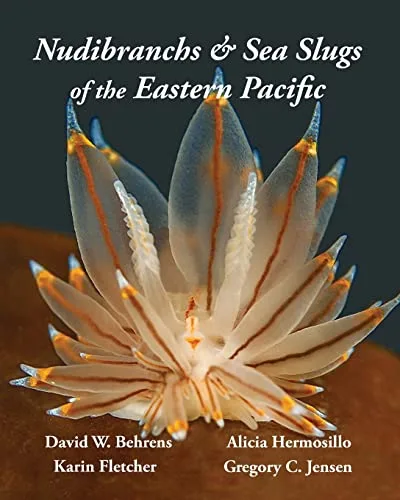
Behrens D.W., Hermosillo A., Fletcher K. & Jensen G.C. (2022). Nudibranchs & Sea Slugs of the Eastern Pacific. Molamarine.
Molamarine
This species, Cerberilla pungoarena, is included in the book.
View on Amazon PR (Amazon Associates)Seasonality
Shooting Locations
Loading shooting locations...
Photos of Cerberilla pungoarena

Same Genus Nudibranchs
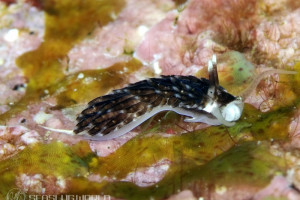
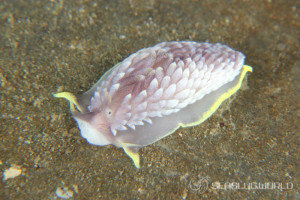
Similar Colors Nudibranchs

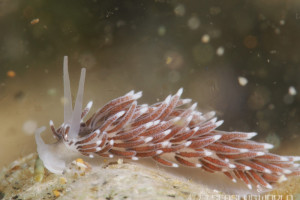
Academic Database
Sea slug observation data is available in international marine biodiversity databases.