Avaldesia tahala (J. M. Chan & Gosliner, 2007)
Avaldesia tahala
No field photograph submitted for this species yet
Have you photographed this species?Description
Body oval-shaped; the dorsum is spiculose, sponge-like, and frequently coated with sand and particulates. A small species, with preserved specimens measuring 4–15 mm in the original description (Chan & Gosliner, 2007) and one living specimen recorded at about 9 mm by a 2024 revision. Background colouration ranges through dark grey, brown, and reddish-brown; the Indonesian holotype-region material includes a deep red form with tan-coloured papillae, rhinophores, and gill. The dorsum bears a low, wide, web-like network of ridges, with large conical tan papillae at the highest points and short tan tubercles concentrated towards the edge. Rhinophores are perfoliate with 9–15 lamellae; the lower lamellae are brown and the upper lamellae are tan with white apices. The rhinophoral sheath is scalloped. The gill is tripinnate, tan to light brown, with six branches.Distribution
Type locality: north-west side near sea stack, Nosy Tanikely Island, Madagascar. Recorded from Madagascar, the Red Sea, Indonesia, the Philippines, Papua New Guinea, Australia, and the Marshall Islands. Found under coral rubble and on rocky reefs, sandy sediments, and algal fields in shallow water.Etymology
The original description (Chan & Gosliner, 2007) states that the word tahala means "ridge" in Malagasy, chosen "due to the web-like pattern on the dorsum." A geographic-language eponym tied to the type locality in Madagascar.Remarks
Originally described as Thordisa tahala Chan & Gosliner, 2007 and transferred to the new genus Avaldesia by a 2024 revision (new combination). The same paper covers the type species Avaldesia albomacula and the new species Avaldesia tamatoa. The species lacks the diagnostic anterior white spot of Avaldesia albomacula and is distinguished externally by its more spiculose, sponge-like dorsum.References
- Avaldesia tahala (Chan & Gosliner, 2007) new combination, Donohoo S.A. & Gosliner T.M. (2024). Variability in the white spot: a new genus and species of Discodorididae (Nudibranchia) from the central and western Pacific Ocean. Journal of Molluscan Studies. 90(1): eyad027. https://doi.org/10.1093/mollus/eyad027
A Kindle field guide by the site author

Kimoto N. (2026). Sea Slugs of Japan & the Indo-Pacific, 2nd Edition.
Kindle Edition
View on Amazon PR (Amazon Associates)Seasonality
Shooting Locations
Loading shooting locations...
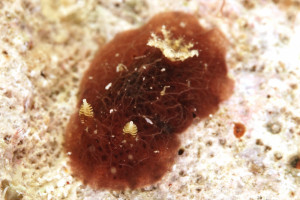
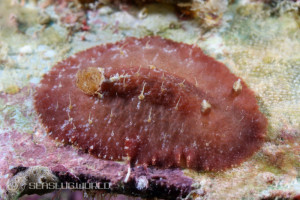
Same Genus Nudibranchs

Similar Colors Nudibranchs
Academic Database
Sea slug observation data is available in international marine biodiversity databases.