Cuthona divae (Er. Marcus, 1961)
Description
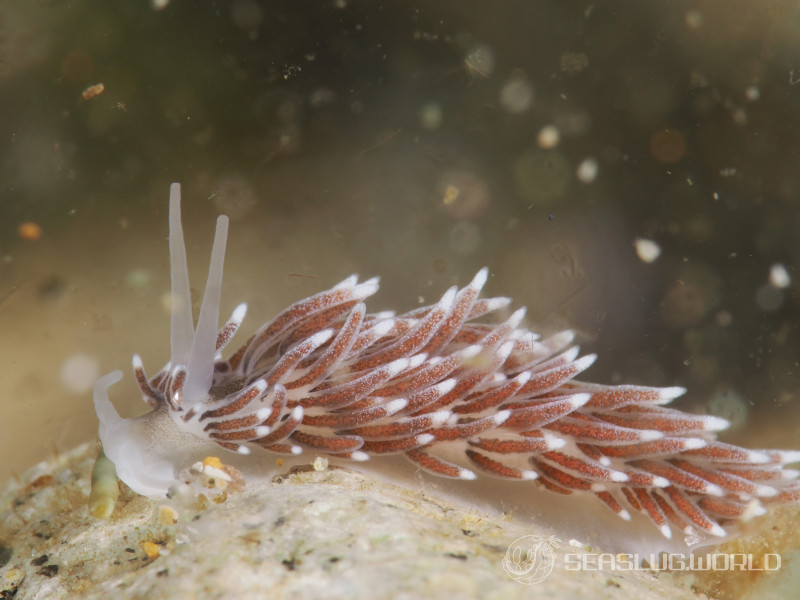
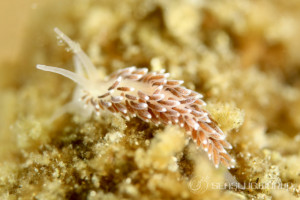
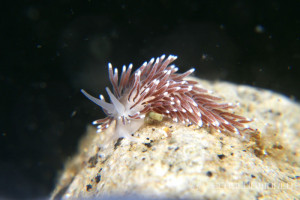
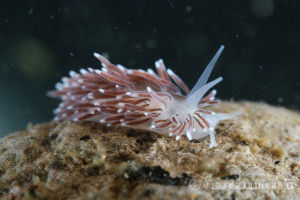
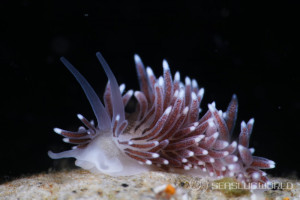
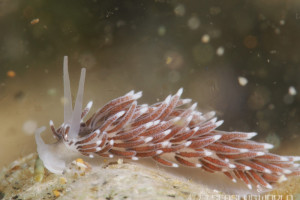
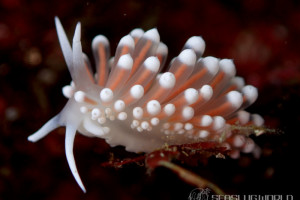
A small aeolid reaching about 25 mm in body length. Ground colour is a translucent cream to white, sometimes with a pale pinkish-brown cast. Through the translucent body wall, the internal gonads and digestive gland are visible as white, yellow or pale pink masses.The rhinophores are smooth and long, translucent at the base and opaque white distally. The cerata are smooth, unbranched, with a reddish-pink ground colour and an opaque white covering on the distal portion. The digestive gland inside the cerata is pale pink to red.
Distribution
Pacific coast of North and Central America. Type locality: Pacific coast of Mexico (Marcus, 1961). Hermosillo & Valdés 2007 confirmed the species' tropical eastern Pacific range from the Gulf of California to Panama.Etymology
The specific epithet divae honours the Brazilian zoologist Diva Diniz Corrêa, professor at the University of São Paulo and a colleague of the original describer Ernst Marcus, in recognition of her contributions to Brazilian zoology.Remarks
Some authors regard Cuthona divae as conspecific with Cuthona nana Alder & Hancock, 1842, but it is currently recognised as a distinct species in WoRMS. Hermosillo & Valdés 2007 reviewed the tropical eastern Pacific Cuthona and confirmed the validity of three species including this one. The genus Cuthona is hydroid-feeding.References
A Kindle field guide by the site author
Kimoto N. (2026). Sea Slugs of Japan & the Indo-Pacific, 2nd Edition.
Kindle Edition
View on Amazon PR (Amazon Associates)Seasonality
Shooting Locations
Loading shooting locations...
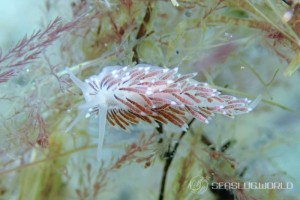
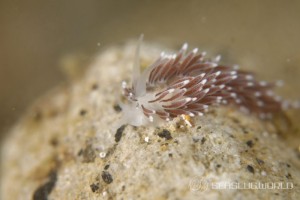
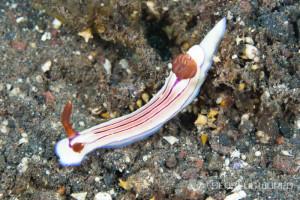
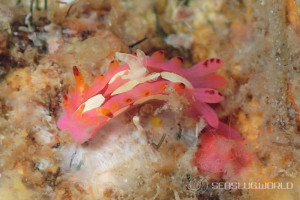
Photos of Cuthona divae


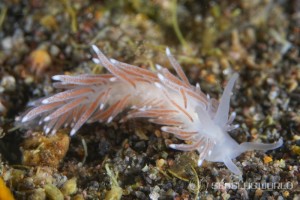

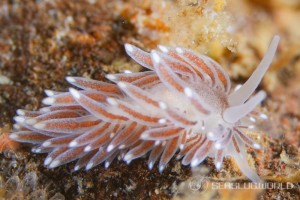
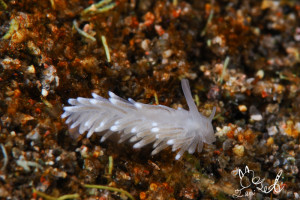

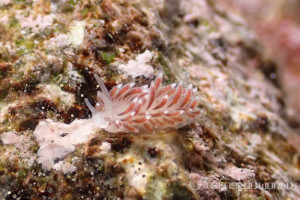




Same Genus Nudibranchs
Similar Colors Nudibranchs

Academic Database
Sea slug observation data is available in international marine biodiversity databases.