Sakuraeolis gerberina Y. Hirano, 1999
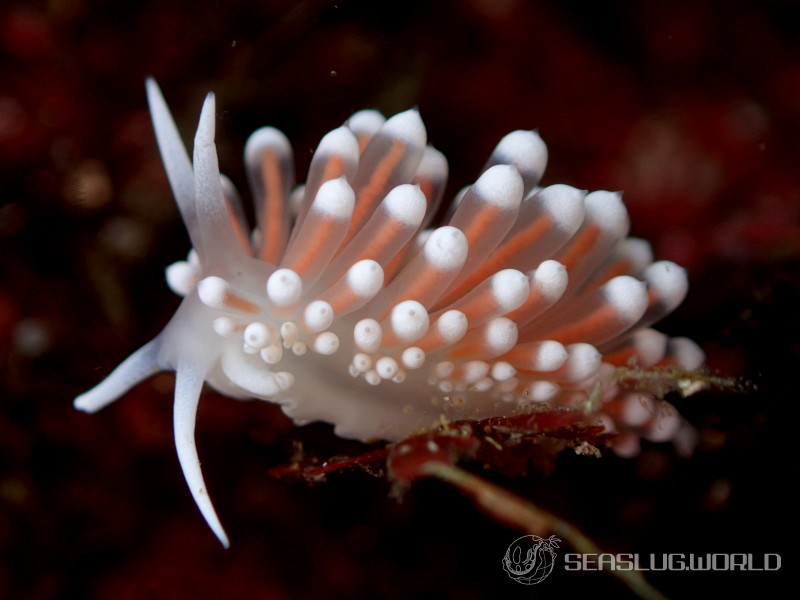
- Location
- Nodahama, Izu Oshima, Tokyo, Japan
- Date
- 2016/07/02
- Length
- 15mm
- Depth
- 8.0m
- Water temperature
- 21.0℃
Description
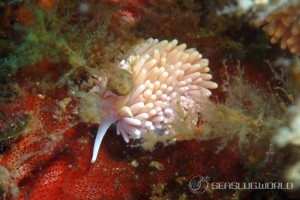
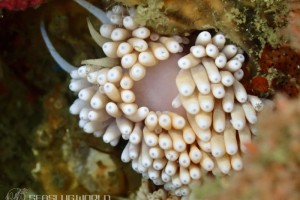
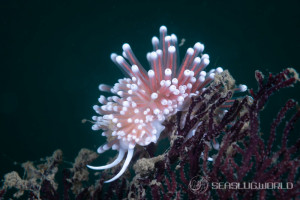
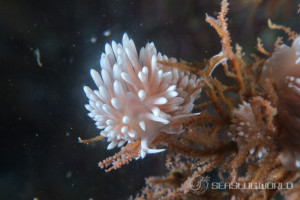
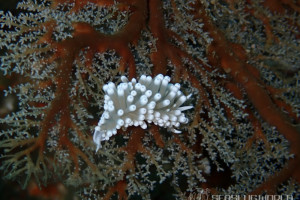
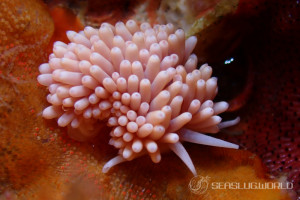
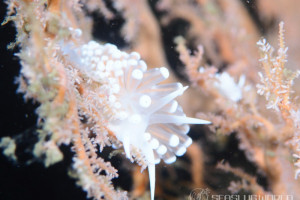
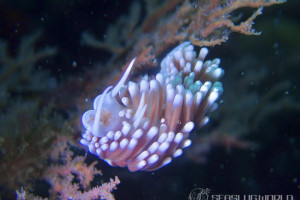
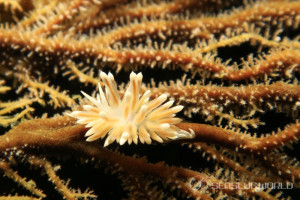
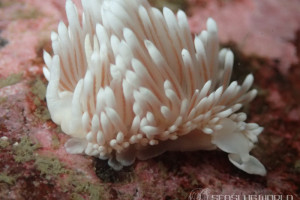
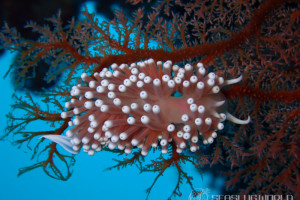
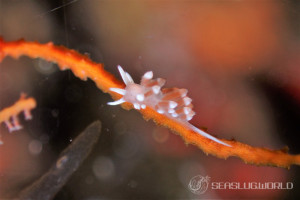
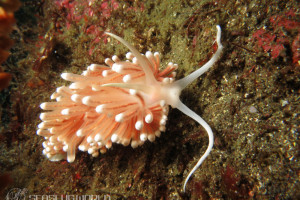
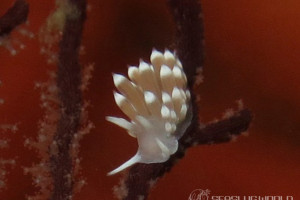
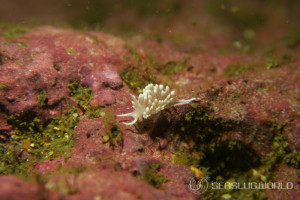
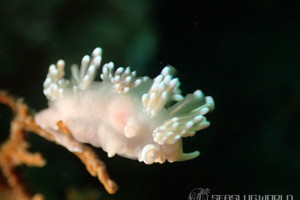
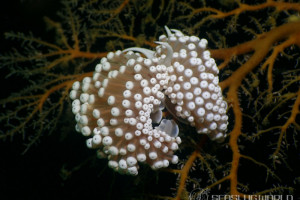
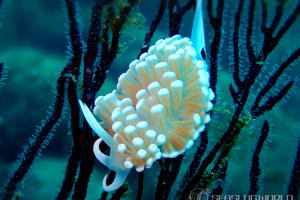
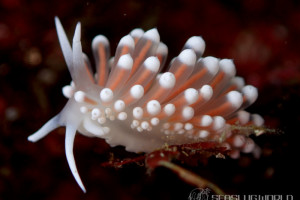
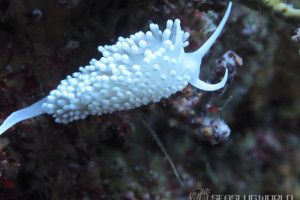
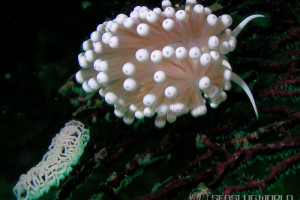
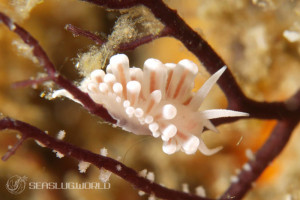
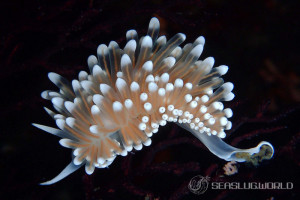
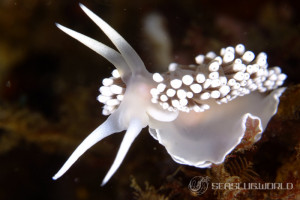
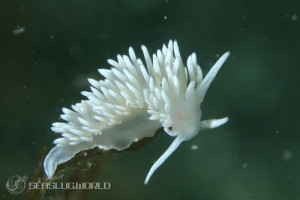
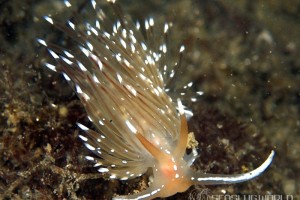
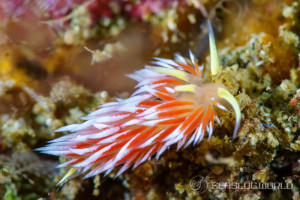
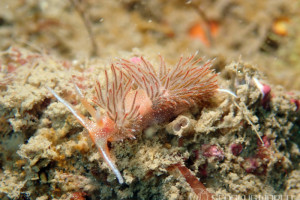
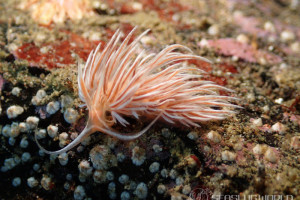
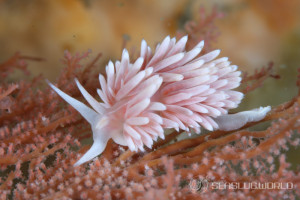
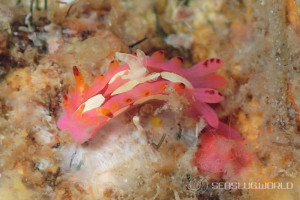
The general ground color is translucent white, with the pale-pink visceral mass clearly visible through the body wall. Oral tentacles and rhinophores are both smooth, with opaque-white distal tips; the oral tentacles are thicker and slightly longer than the rhinophores. The cerata are normally cylindrical with a small pointed tip when relaxed and become lanceolate when irritated. The digestive gland inside each ceras ranges from reddish orange to yellowish orange and shows through the translucent body wall. The most diagnostic feature is a wide subapical ring of opaque-white epidermal pigment capping each ceras. The reddish-orange jaws are visible through the translucent epidermis. Living animals reach 64 mm in length.Distribution
Known only from Japan. Type locality: Kominato (35°07′N, 140°11′E), Boso Peninsula, Chiba Prefecture. Additional records include Sagami Bay, Yoichi (Hokkaido), Otsuchi (Iwate), and Mukaishima (Inland Sea of Japan).Etymology
The specific epithet gerberina refers to the flower gerbera (family Asteraceae). The original description states only that the species is "named for the flower, gerbera."Remarks
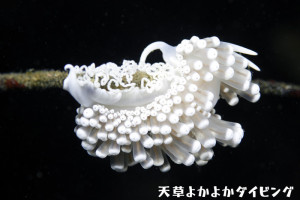
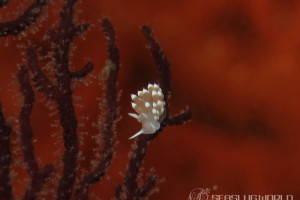
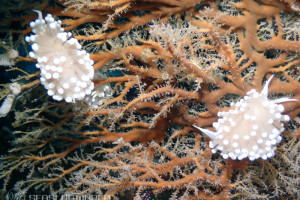
The species feeds on the hydroid Solanderia misakiensis, which grows in current-swept and wave-exposed habitats; Sakuraeolis gerberina consumes its polyps and lays its egg masses on the same colony. The egg mass is a thin, white, undulating coil with eggs 80–90 µm in diameter. The colour plate published by Baba 1949 (Plate 45, fig. 155) under the name Hervia japonica represents this species, and several later guidebooks identified it as Sakuraeolis modesta (Bergh, 1880). A 1999 paper re-examined 17 specimens kept under that label and found 15 to be S. gerberina and the remaining two to be the simultaneously described Sakuraeolis sakuracea; neither matches the original description of S. modesta. The Japanese vernacular name "ガーベラミノウミウシ", first proposed in Baba 1949, is retained.References
- ガーベラミノウミウシ(新稱), Baba K. (1949). Opisthobranchia of Sagami Bay collected by His Majesty the Emperor of Japan (相模湾産後鰓類図譜). Iwanami Shoten, Tokyo. 4+2+194+7 pp., pls. 1-50.
- Sakuraeolis gerberina n. sp. ガーベラミノウミウシ, Hirano Y.J. (1999). Two new species of Sakuraeolis (Aeolidacea, Facelinidae) from Japan. Venus, the Japanese Journal of Malacology. 58(4): 191-199.
A Kindle field guide by the site author
Kimoto N. (2026). Sea Slugs of Japan & the Indo-Pacific, 2nd Edition.
Kindle Edition
View on Amazon PR (Amazon Associates)Seasonality
Shooting Locations
Loading shooting locations...
Photos of Sakuraeolis gerberina
Tag:


























Same Genus Nudibranchs
Similar Colors Nudibranchs
Academic Database
Sea slug observation data is available in international marine biodiversity databases.