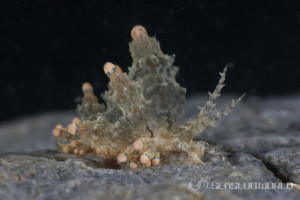
Sakuraeolis kirembosa Rudman, 1980
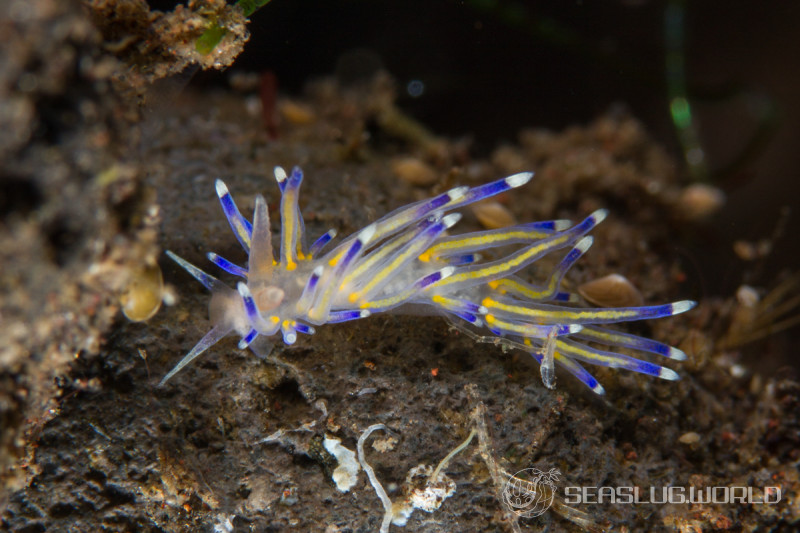
- Location
- Gerombong, Tulamben, Pulau Bali, Indonesia
- Date
- 2018/01/12
- Length
- 14mm
- Depth
- 25.0m
- Water temperature
- 29.0℃
Description
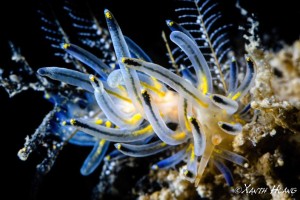
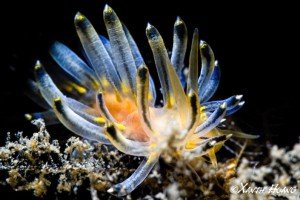
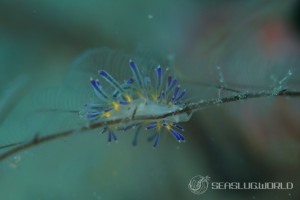
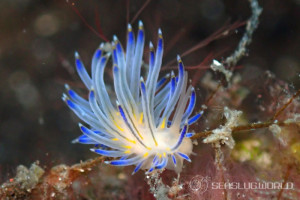
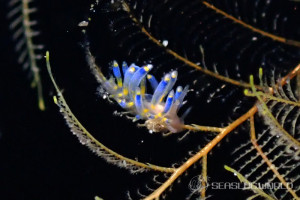
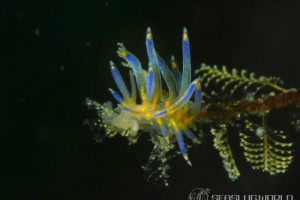
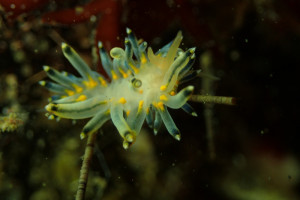
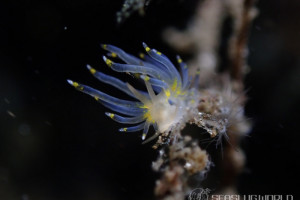
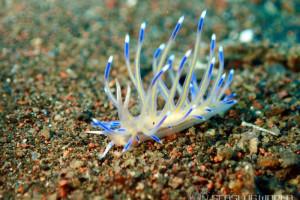
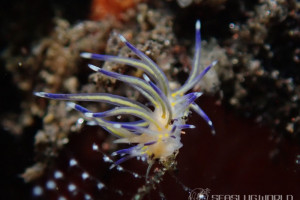
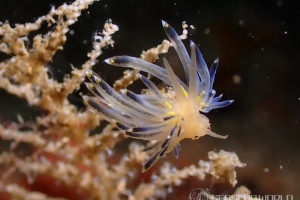
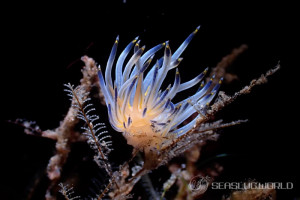
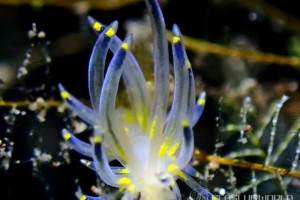
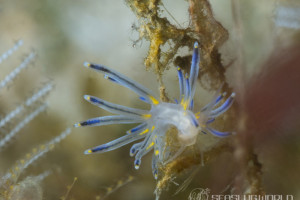
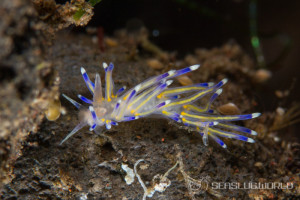
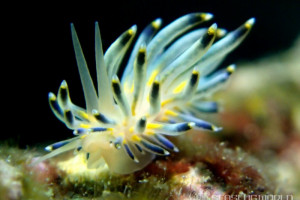
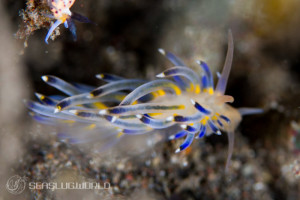
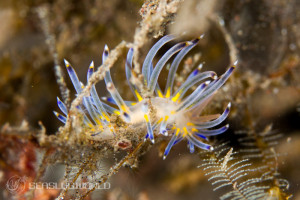
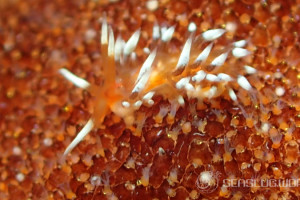
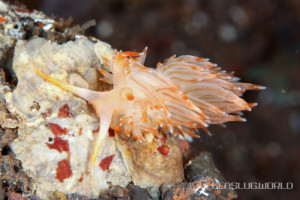
Body shape similar to that of Sakuraeolis nungunoides, but with shorter cerata about half the body length. Oral tentacles long and tapering; rhinophores about two-thirds their length, with scattered rounded bumps on the surface (a key diagnostic feature). Cerata arranged in six pairs of multi-rowed pads, plus an irregular posterior group; the sixth arch carries ten cerata per side. Body milky orange, becoming deeper orange posteriorly as the gonads show through. Basal half of the oral tentacles transparent, distal half milky orange; basal third of the rhinophores transparent, distal portion milky orange. Foot translucent with a median orange band running to the tail tip. Lower three-quarters of each ceras transparent with dense white speckling, then a clear region, with a milky-orange tip; the digestive gland is dull greenish-brown, becoming bright purple distally. Reaches 40 mm in body length.Distribution
Type locality is North Reef at the entrance to Dar es Salaam Harbour, Tanzania (September 1977, on the hydroid Eudendrium sp. cf. carneum growing on a sewage pipe). Originally known only from Dar es Salaam; subsequent records extend to the United Arab Emirates and Japan.Etymology
The specific epithet kirembosa is derived from kirembo, a Swahili word for beautiful, in allusion to the animal's colour (verbatim from the original description). The choice reflects the local language at the type locality, Dar es Salaam.Remarks
Feeds on the hydroid Eudendrium sp. cf. carneum. Externally distinguished from the sympatric Sakuraeolis nungunoides by (1) the rounded bumps scattered on the rhinophore surface (smooth in Sakuraeolis nungunoides) and (2) the dense white speckling on the cerata (absent in Sakuraeolis nungunoides).References
Featured in this book

Terrence Gosliner, Ángel Valdés and David Behrens. (2018). Nudibranch and Sea Slug Identification Indo-Pacific 2nd Edition. New World Pubns Inc.
New World Publications
This species, Sakuraeolis kirembosa, is included in the book.
View on Amazon PR (Amazon Associates)Seasonality
Shooting Locations
Loading shooting locations...
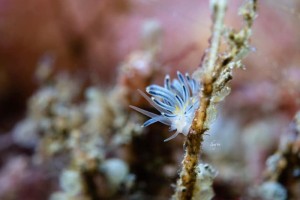
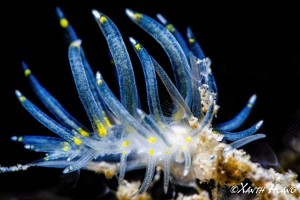
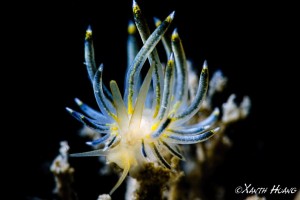
Photos of Sakuraeolis kirembosa












Same Genus Nudibranchs
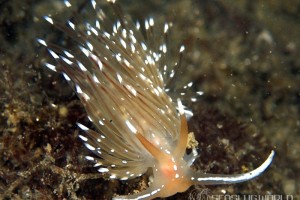
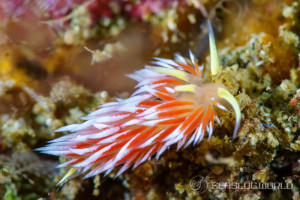
Similar Colors Nudibranchs
Academic Database
Sea slug observation data is available in international marine biodiversity databases.