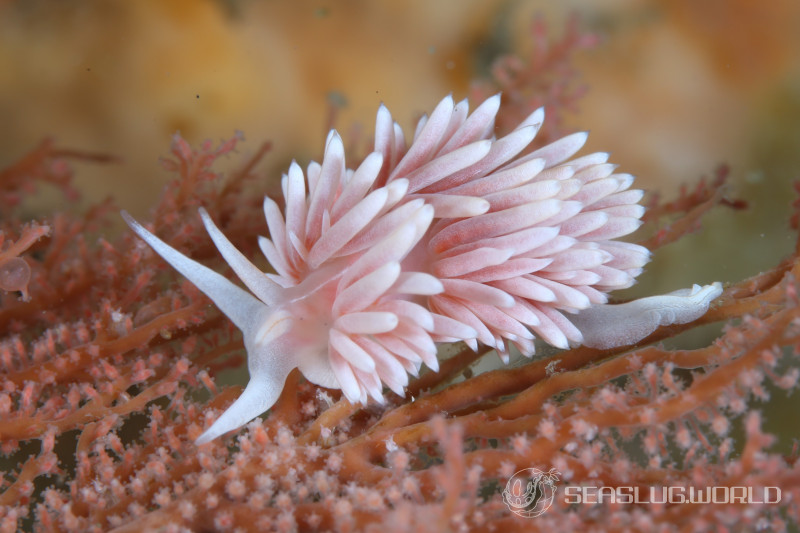
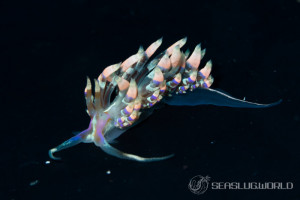
Sakuraeolis sakuracea Y. Hirano, 1999
- Location
- Gontarou Rock, Hayama, Kanagawa, Japan
- Date
- 2013/02/17
- Length
- 30mm
- Depth
- 10.0m
- Water temperature
- 18.0℃
Description
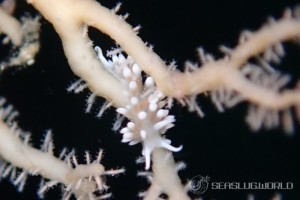
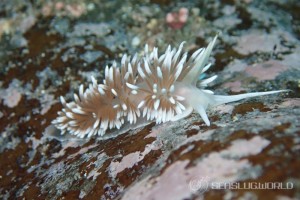
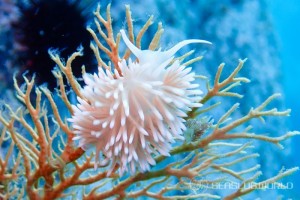
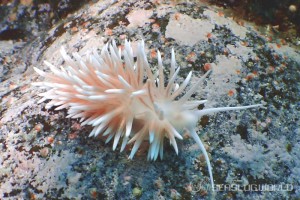
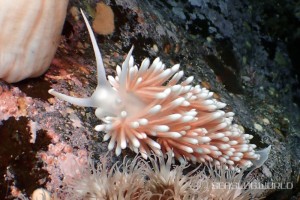
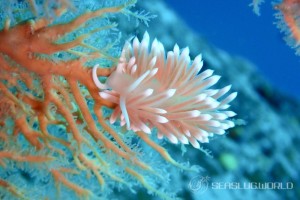
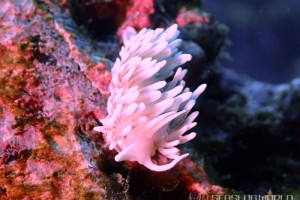
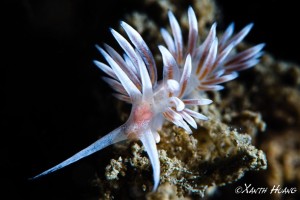
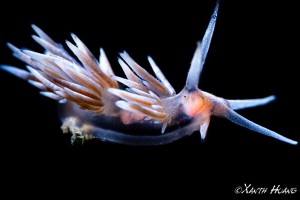
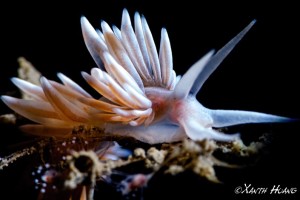
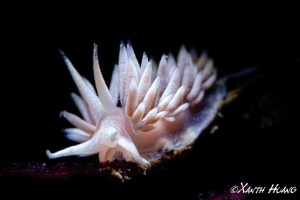
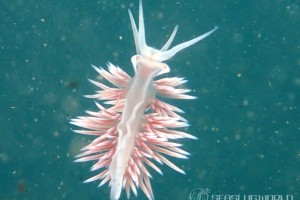
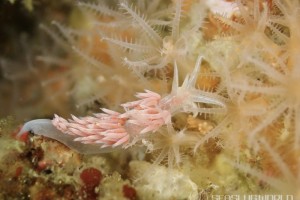
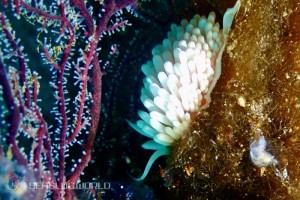
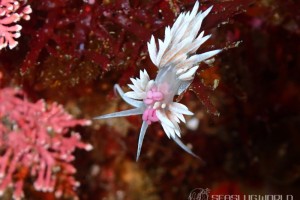
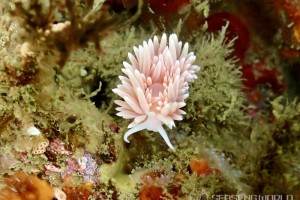
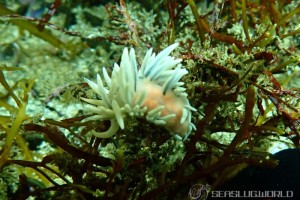
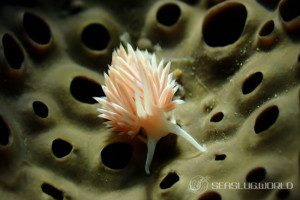
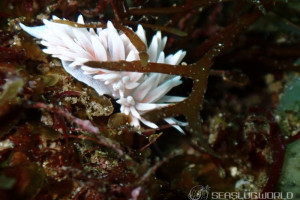
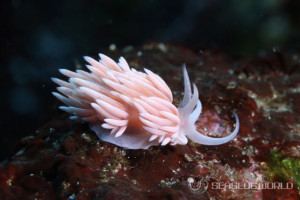
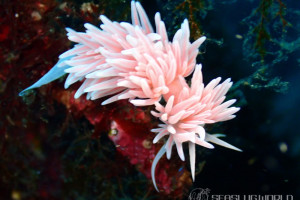
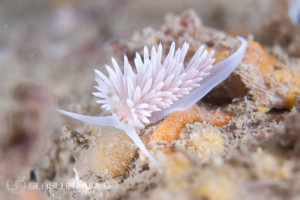
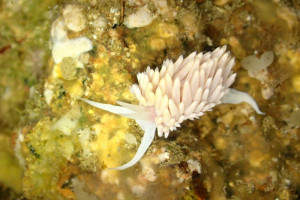
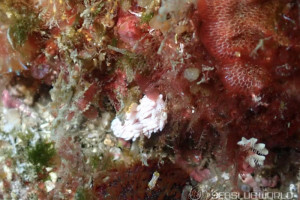
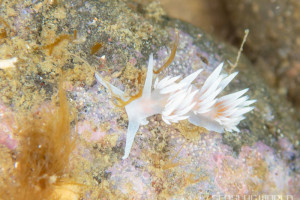
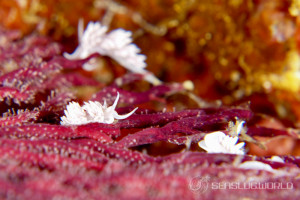
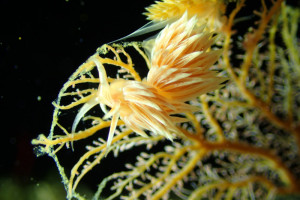
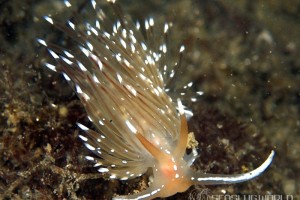
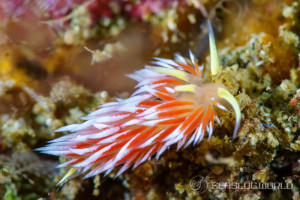
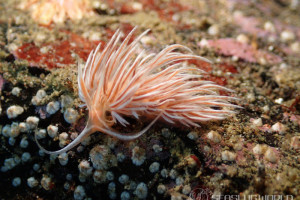
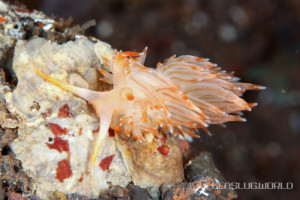
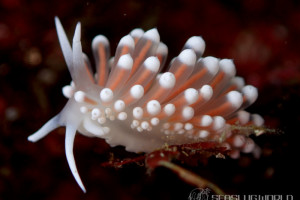
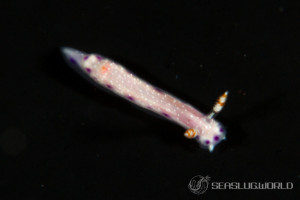
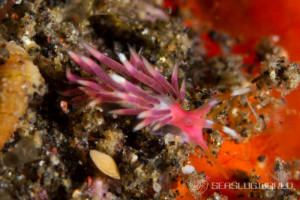
Body and the four head tentacles translucent white. The visceral mass is pink and clearly visible through the body surface. The cerata are opaque pinkish white, and the digestive gland lobes inside are barely visible from outside. The cerata are consistently lanceolate, arising from slightly elevated pads and arranged in horseshoe-shaped clusters: one precardial cluster with two or more rows and several postcardial clusters with rows decreasing posteriorly. A 45 mm specimen had 32, 26, 18, 10, 7, 4 cerata on the right side from the first to the sixth cluster. Oral tentacles and rhinophores are both smooth, the former somewhat longer. The jaws are reddish pink and visible through the translucent epidermis, and the inner surface of the groove on the anterior margin of the foot is reddish brown. The radula is uniseriate; each tooth has a long, wide central cusp flanked by 5-6 denticulations. Maximum recorded length 45 mm alive.Distribution
Recorded from Sagami Bay, Kominato on the Boso Peninsula (Chiba), and Mukaishima in the Inland Sea of Seto. The type locality is Kominato (Hirano, 1999).Etymology
The specific epithet sakuracea refers to the colour of the cerata, which resembles that of the cherry blossom. In the original description a 1999 paper notes that "as the Japanese name of cherry is sakura, Sakuraeolis sakuracea means the species which most resembles the cherry blossom." The Japanese vernacular name "Sakuraminoumiushi" likewise alludes to the cherry-pink body colour.Remarks
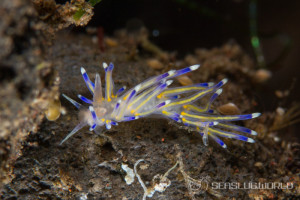
Like its congener Sakuraeolis gerberina, this species feeds on the hydroid Solanderia misakiensis and lays its egg masses on the host colony; the egg mass is a thin, white undulating coil (type B of Hurst, 1967). Of the 17 specimens (kept at the National Science Museum, Tsukuba) that Baba 1949 had figured under Hervia japonica (= Sakuraeolis modesta), only two were found to be this species; the remaining 15 belonged to S. gerberina described in the same paper. In life Sakuraeolis sakuracea is readily separable from the sympatric S. gerberina, in which the cerata bear a broad subapical ring of opaque white pigment and the orange-red to yellowish-orange digestive gland is conspicuous through the translucent ceras wall. In preserved specimens, however, the diagnostic colouration is lost and the reproductive system is identical between the two; the shape of the radular tooth base (rounded arch and almost as wide as the blade in S. sakuracea) is then the only reliable clue. Both species differ from S. modesta (Bergh, 1880), which has dark brown rings on the cerata.References
A Kindle field guide by the site author
Kimoto N. (2026). Sea Slugs of Japan & the Indo-Pacific, 2nd Edition.
Kindle Edition
View on Amazon PR (Amazon Associates)Seasonality
Shooting Locations
Loading shooting locations...
Photos of Sakuraeolis sakuracea
Tag:
















Same Genus Nudibranchs
Similar Colors Nudibranchs
Academic Database
Sea slug observation data is available in international marine biodiversity databases.