Sakuraeolis enosimensis (Baba, 1930)
Description
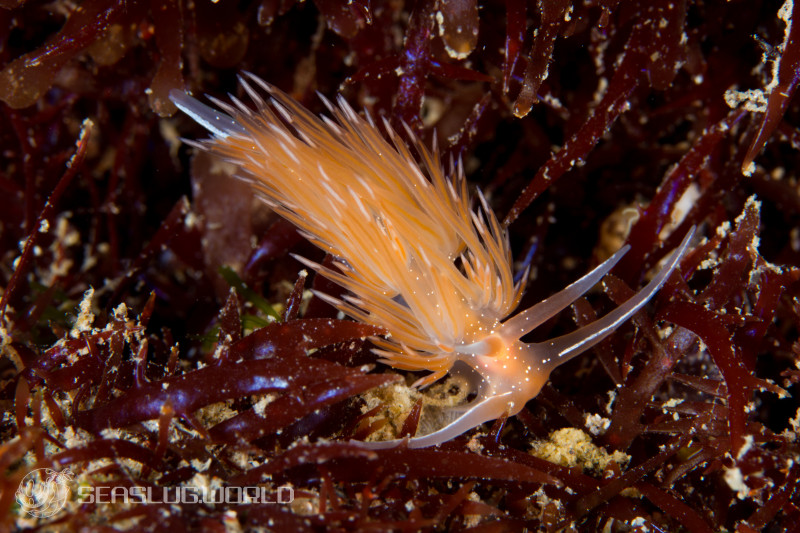
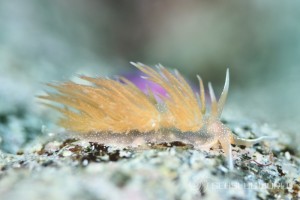
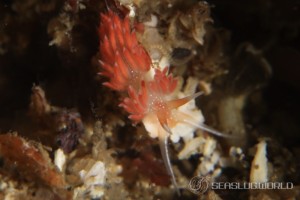
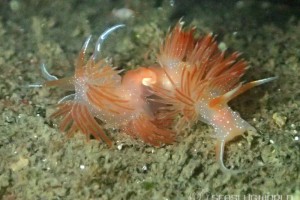
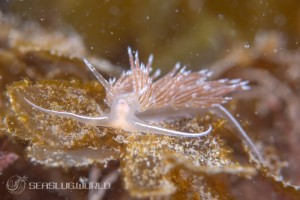
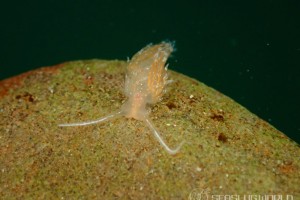
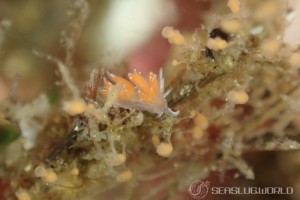
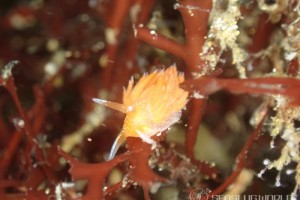
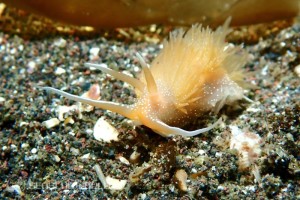
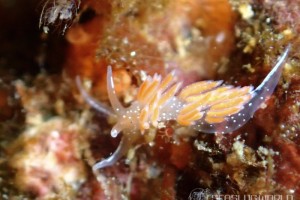
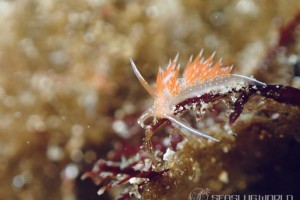
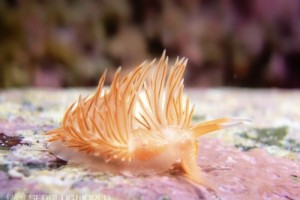
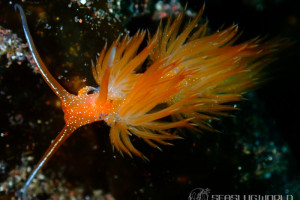
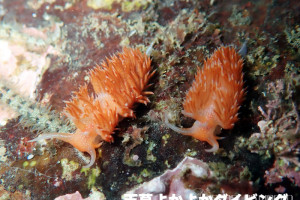
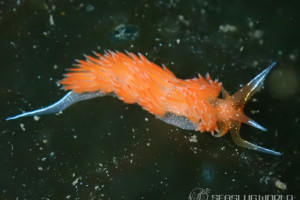
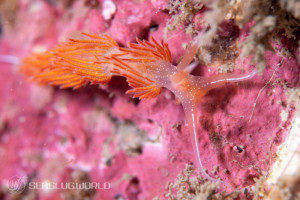
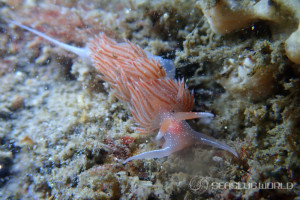
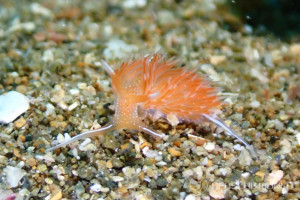
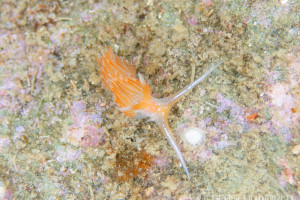
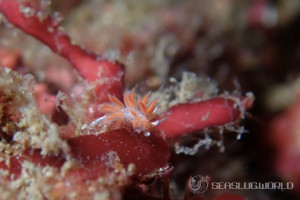
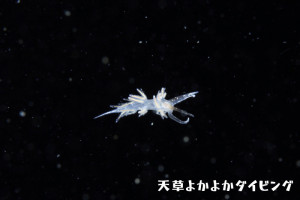
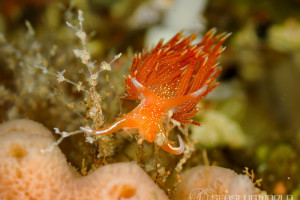
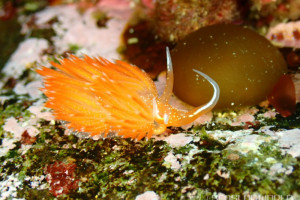
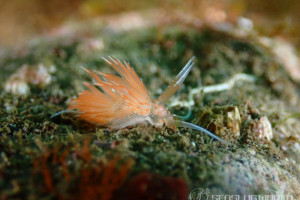
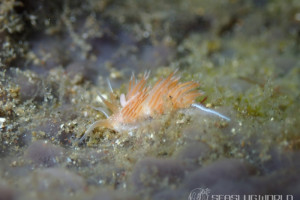
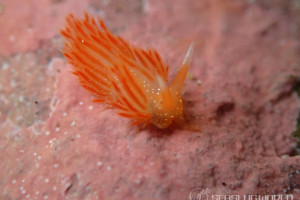
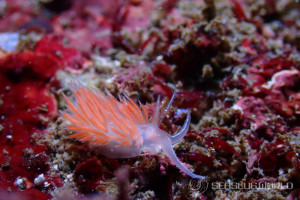
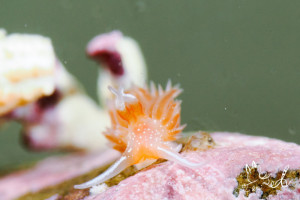
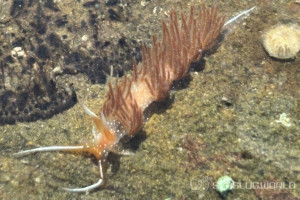
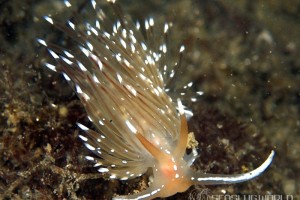
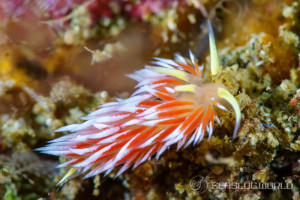
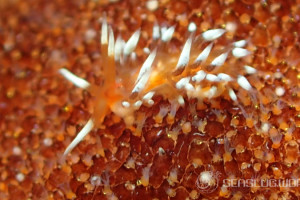
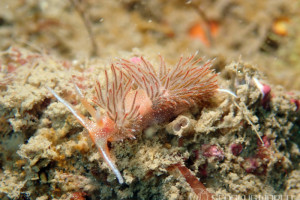
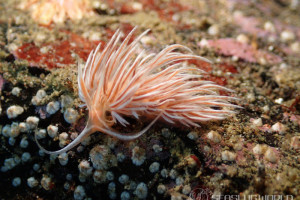
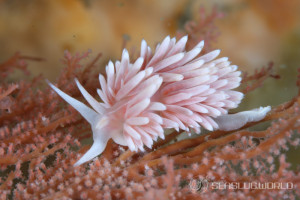
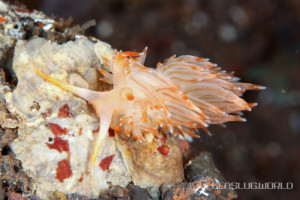
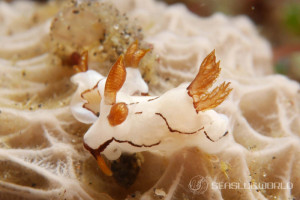
The original description is based on a single living specimen, 27 mm in length, from Enosima (Enoshima), Sagami Bay. The antero-lateral angles of the head are not produced; the oral tentacles and rhinophores are smooth, slender and nearly equal in length. Branchial papillae are arranged in 3 groups on each side: about 40 in the first, 25 in the second and 20 in the third group, each group seated on a horseshoe-shaped base. The anus opens at the centre of the second group, and the genital opening at the antero-lateral base of the second branchial group on the right side. The anterior margin of the foot is grooved transversely, with a median notch in the upper lip.Head and anterior margin of foot orange-yellow; oral tentacles and rhinophores the same colour as the head, with white tips. The rest of the body is translucent white, but the visceral organs show a dull orange-yellow through the skin. The branchial papillae are veined with reddish brown, and the entire dorsal surface (including papillae and rhinophores) is spotted with white. Later records show ground colour ranging from translucent yellow to orange-red, with body length up to 45 mm.
Distribution
Type locality: Enosima (Enoshima), Sagami Bay (Kanagawa Pref., Japan). Subsequently recorded from Mutsu Bay, Sagami Bay, Suruga Bay, Shima, Seto (Kii), Osaka Bay, the Inland Sea of Seto, Saeki Bay, and Amakusa on the Pacific coast, and from Sado and Toyama Bay on the Japan Sea side.Etymology
The specific epithet enosimensis is a toponymic adjective derived from the type locality (Enoshima, Sagami Bay).Remarks
The original description compared this single specimen with Rizzolia modesta (also from Enoshima) and noted that the two agree in the horseshoe-shaped branchial-group bases but differ in the number of branchial groups and the colour pattern of the papillae. The genus Sakuraeolis was later erected with this species as its type.References
- アカエラミノウミウシ(新称), Baba, K. 1930c. Studies on Japanese nudibranchs (3). A. Phyllidiidae. B. Aeolididae. Venus 2(3): 117-122.
- セイロンミノウミウシ, Baba K. (1949). Opisthobranchia of Sagami Bay collected by His Majesty the Emperor of Japan (相模湾産後鰓類図譜). Iwanami Shoten, Tokyo. 4+2+194+7 pp., pls. 1-50.
- Hervia ceylonica Farran Seiron-minoumiushi, Baba, K. 1957. A revised list of the species of Opisthobranchia from the northern part of Japan, with some additional descriptions. J. Fac. Sci., Hokkaido Univ.,ser. 6, Zool. 13(1-4):8-14.
- Sakuraeolis Baba & Hamatani, 1965 (n. gen.; type Hervia enosimensis Baba, 1930), Baba K. & Hamatani I. (1965). The anatomy of Sakuraeolis enosimensis (Baba, 1930), n. g. (=Hervia ceylonica (?) Eliot, 1913) (Nudibranchia: Eolidoidea). Publications of the Seto Marine Biological Laboratory. 13(2): 103-113.
- アカエラミノウミウシ, 鈴木敬宇. (2000). ウミウシガイドブック〈2〉. TBSブリタニカ.
- 高岡生物研究会. (2002). 日本海のウミウシ. 第2版.
- アカエラミノウミウシ, 中野理枝. (2004). 本州のウミウシ. ラトルズ.
- アカエラミノウミウシ, 小野篤司 & 加藤昌一. (2009). ウミウシ. 誠文堂新光社.
A Kindle field guide by the site author
Kimoto N. (2026). Sea Slugs of Japan & the Indo-Pacific, 2nd Edition.
Kindle Edition
View on Amazon PR (Amazon Associates)Seasonality
Shooting Locations
Loading shooting locations...
Photos of Sakuraeolis enosimensis
Tag:

















Same Genus Nudibranchs
Similar Colors Nudibranchs

Academic Database
Sea slug observation data is available in international marine biodiversity databases.