Sakuraeolis nungunoides Rudman, 1980
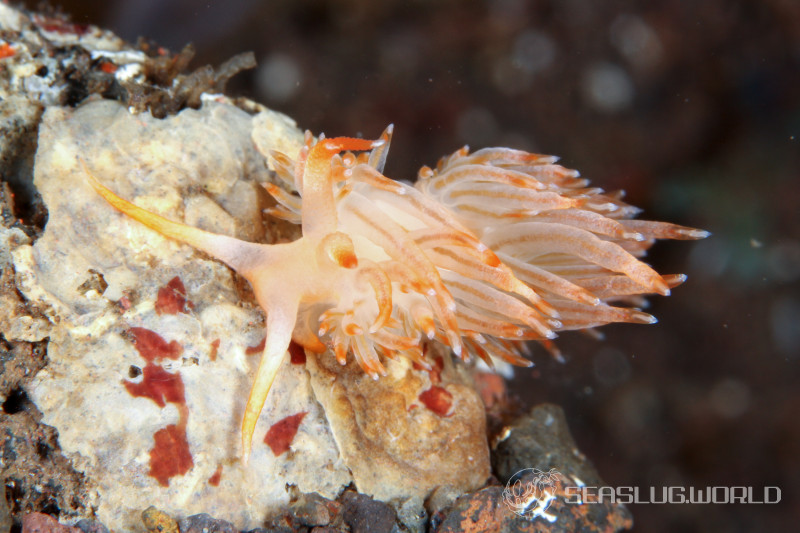
- Location
- Pura segara, Tulamben, Pulau Bali, Indonesia
- Date
- 2014/01/15
- Length
- 30mm
- Depth
- ??m
- Water temperature
- 29.7℃
Description
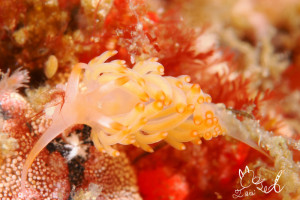
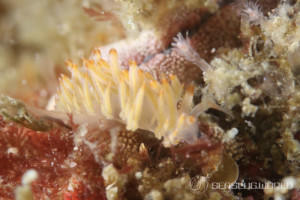
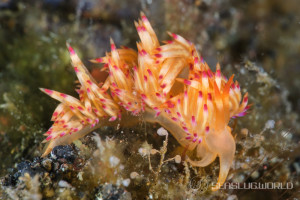
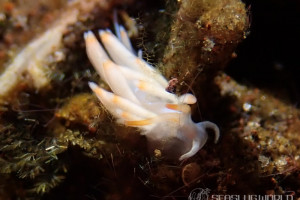
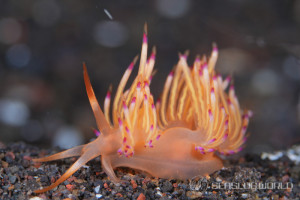
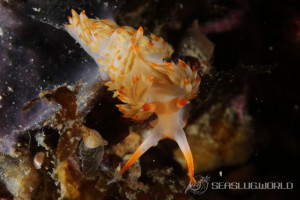
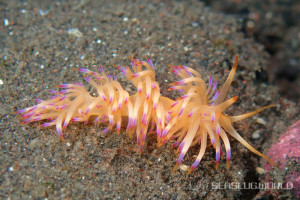
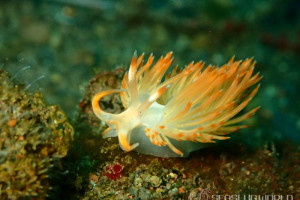
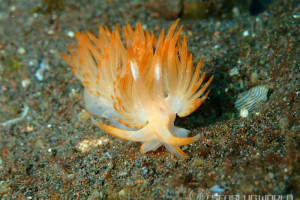
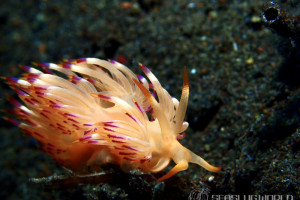
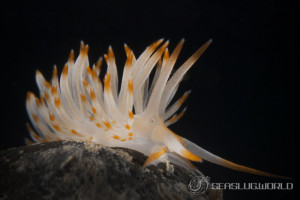
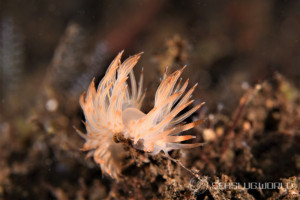
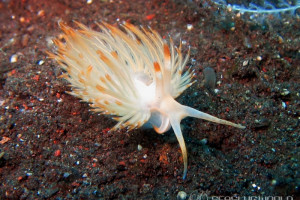
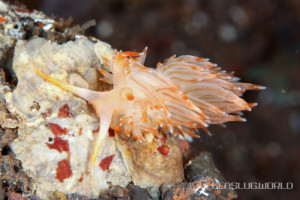
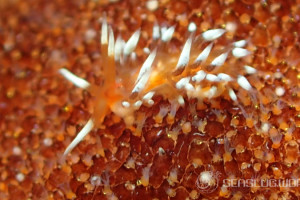
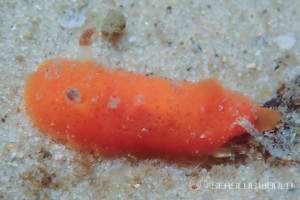
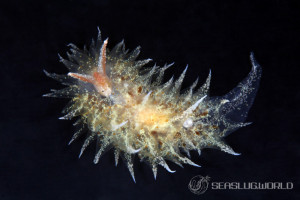
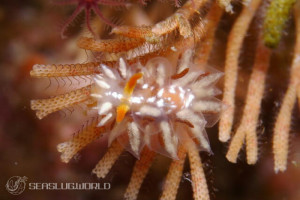
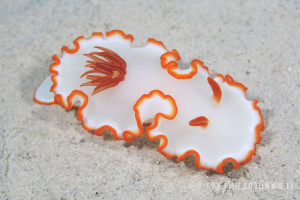
The largest member of the genus, reaching 40 mm in body length. The most distinctive feature is the extremely long cerata, which reach about two-thirds of the body length. Body elongate and fairly high, with a short tail. Oral tentacles long and tapering; rhinophores about two-thirds their length, sometimes with indistinct wrinkling but generally smooth. Body pale translucent white, sometimes with an orange tinge. The head, from the base of the oral tentacles back to the rhinophores, is bright orange; the sides of the head and the rest of the body are translucent white. Basal third of the rhinophores and oral tentacles translucent, upper two-thirds bright orange. The entire anterior edge of the foot, both foot corners, and the tail tip are bright orange. Lower two-thirds of each ceras transparent, then a broad bright orange band with white patching, and a transparent tip; the digestive gland inside is dark brown. When alarmed, the animal holds its cerata stiffly erect — the basis for the Japanese name yama-arashi ("porcupine").Distribution
Type locality is North Reef at the entrance to Dar es Salaam Harbour, Tanzania (August 1973, on hydroids growing on the wooden piles supporting a sewage outflow pipe). Originally known only from Tanzania; subsequent records extend to New Caledonia, Singapore, Malaysia, and the Philippines.Etymology
The specific epithet nungunoides is derived from nungunungu, the Swahili word for porcupine, in allusion to the animal's behaviour of erecting its cerata when startled (verbatim from the original description).Remarks
Feeds on the hydroids Salacia tetracythara and Eudendrium sp. cf. carneum. Distinguished from Sakuraeolis enosimensis (Baba, 1930) and Sakuraeolis modesta (Bergh, 1880) in colour and radular tooth shape; from the sympatric Sakuraeolis kirembosa by the absence of dense white speckling on the cerata (present in Sakuraeolis kirembosa) and by the smooth rhinophores (Sakuraeolis kirembosa has scattered rounded bumps on the rhinophore surface).References
- ヤマアラシミノウミウシ(新称), 中野理枝. (2018). 日本のウミウシ. 文一総合出版.
Featured in this book
中野理枝. (2019). 日本のウミウシ. 第二版. 文一総合出版.
文一総合出版
This species, Sakuraeolis nungunoides, is included in the book.
View on Amazon PR (Amazon Associates)Seasonality
Shooting Locations
Loading shooting locations...
Photos of Sakuraeolis nungunoides
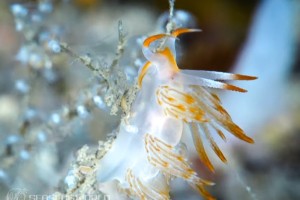

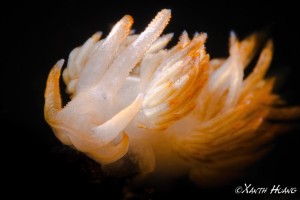













Same Genus Nudibranchs
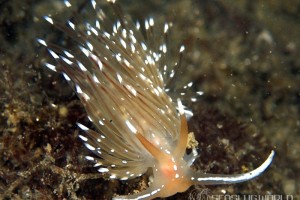
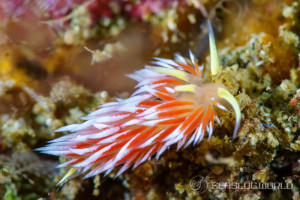
Similar Colors Nudibranchs
Academic Database
Sea slug observation data is available in international marine biodiversity databases.