Ardeadoris averni (Rudman, 1985)
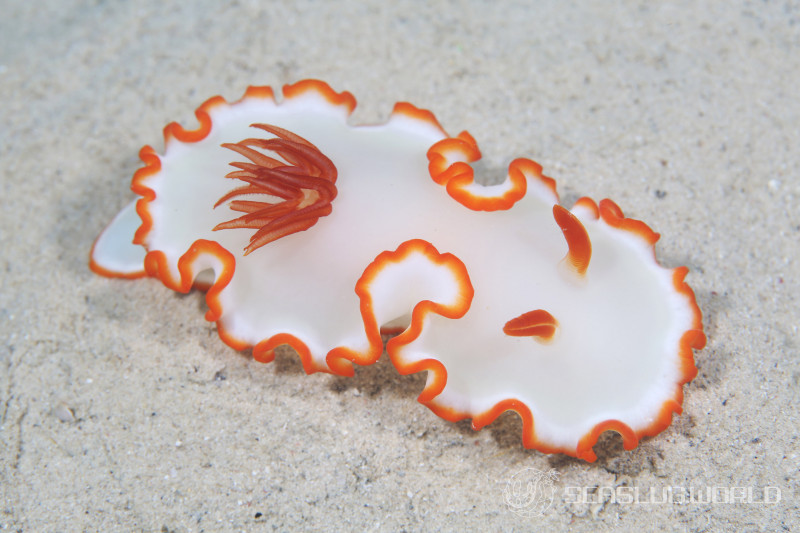
- Location
- Yamakawa Beach, Okinawa Island (Motobu and Northern area), Okinawa, Japan
- Date
- 2015/04/27
- Length
- 70mm
- Depth
- 10.0m
- Water temperature
- 23.0℃
Description
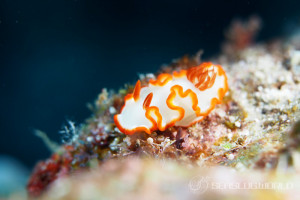
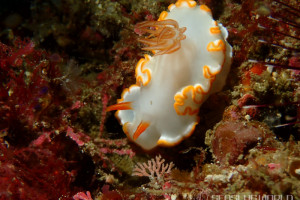
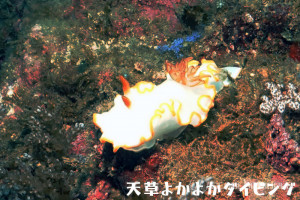
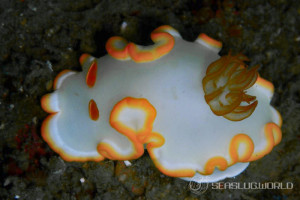
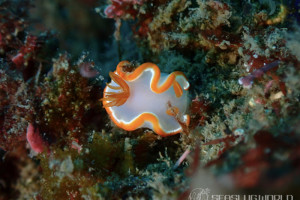
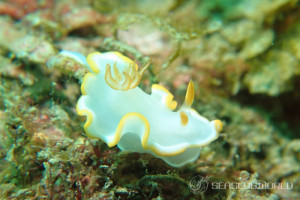
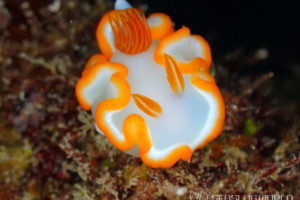
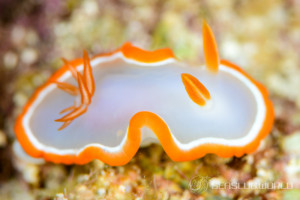
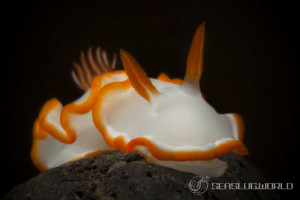
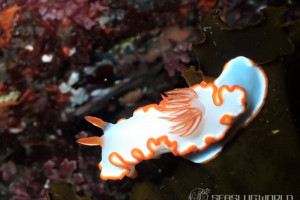
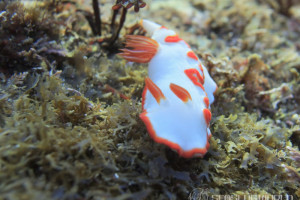
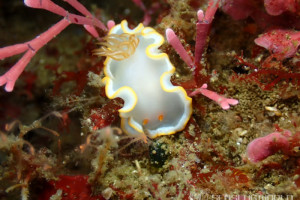
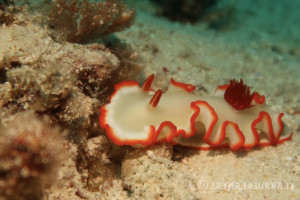
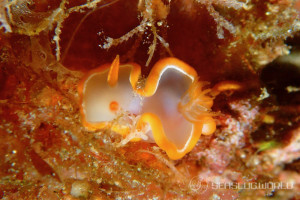
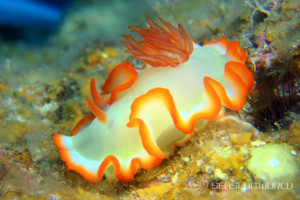
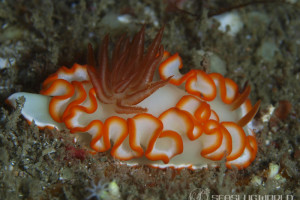
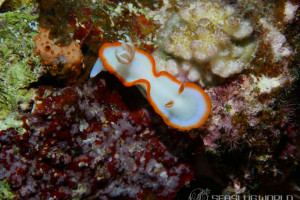
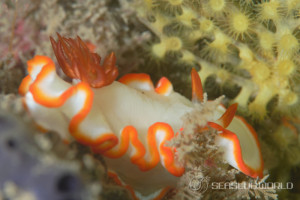
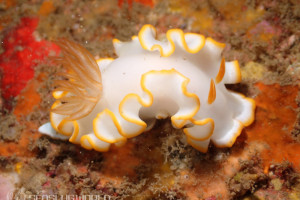
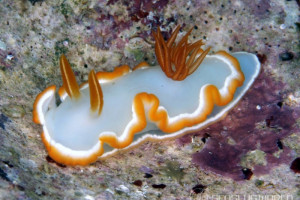
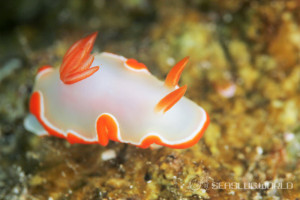
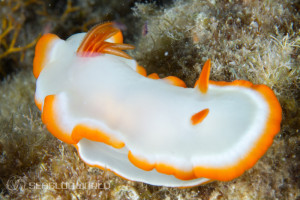
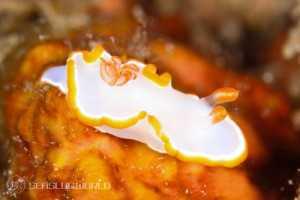
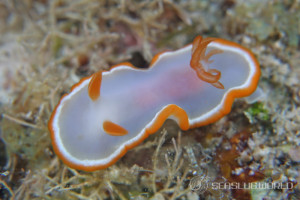
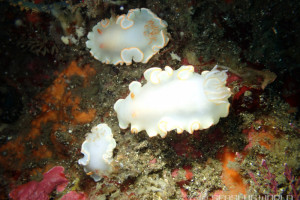
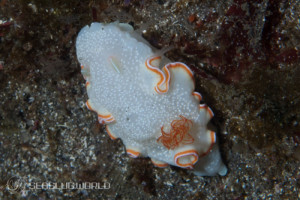
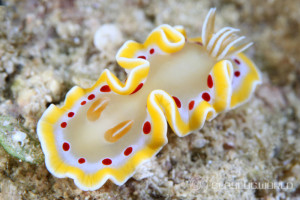
Mantle elongately ovate with a broad overlap, folded with a particularly prominent fold on each side midway down the body. Ground colour translucent creamy white with a broad red to reddish-orange marginal border. Just inside the red band is a distinct opaque-white band formed by the underlying mantle glands. Rhinophore stalks transparent; clubs white with white anterior and posterior midlines (in some specimens the midlines are overlain with orange pigment to form bright orange streaks). Gills sub-quadrangular with a whitish core, translucent white lamellae, brown edges, and pale brown inner and outer flat faces. Underside white, except that the orange or red mantle border continues onto the ventral surface and a paler border runs along the foot edge. Reaches 74 mm in body length alive — a relatively large chromodorid.Distribution
Type locality is Wistari Reef in the Capricorn Group, Great Barrier Reef, Queensland, Australia (10 m, December 1981). Originally recorded in 1985 from the Great Barrier Reef (Wistari Reef, Coral Gardens at Heron Island) and Papua New Guinea (Normanby Island). Subsequent records extend to Indonesia, the Philippines, and Japan.Etymology
The specific epithet averni honours Mr G. Avern, the describing author's research assistant, who collected the first specimen of the species and provided many valuable specimens to museum collections (verbatim from the original description). Avern later became co-author with Rudman of the 1989 Rostanga revision.Remarks
Originally described as Glossodoris averni and later transferred to Ardeadoris. The broad orange to reddish-orange mantle border distinguishes the species from other white Ardeadoris. Glossodoris pallida and Glossodoris undaurum, also described in the same 1985 paper, differ in colour-pattern detail and radular morphology.References
- グロッソドリス・アヴェルニ, 殿塚孝昌. (2003). ウミウシガイドブック〈3〉. TBSブリタニカ.
- フチベニイロウミウシ(新称), 小野篤司. (2004). 沖縄のウミウシ. ラトルズ.
- Ardeadoris averni, Johnson R.F. & Gosliner T.M. (2012). Traditional taxonomic groupings mask evolutionary history: a molecular phylogeny and new classification of the chromodorid nudibranchs. PLoS ONE 7(4): e33479.
A Kindle field guide by the site author
Kimoto N. (2026). Sea Slugs of Japan & the Indo-Pacific, 2nd Edition.
Kindle Edition
View on Amazon PR (Amazon Associates)Seasonality
Shooting Locations
Loading shooting locations...
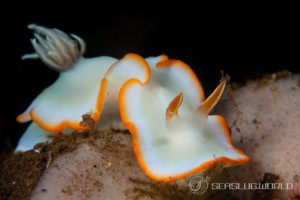
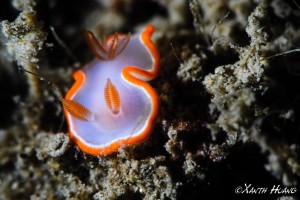
Photos of Ardeadoris averni











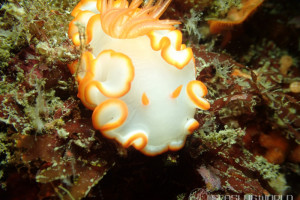

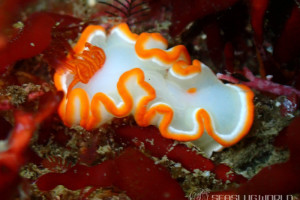

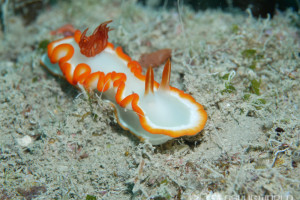

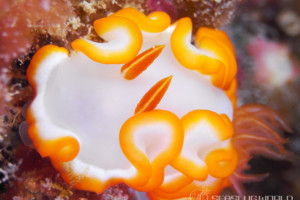










Same Genus Nudibranchs
Similar Colors Nudibranchs
Academic Database
Sea slug observation data is available in international marine biodiversity databases.