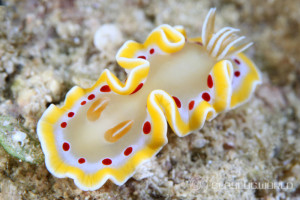
Ardeadoris egretta Rudman, 1984
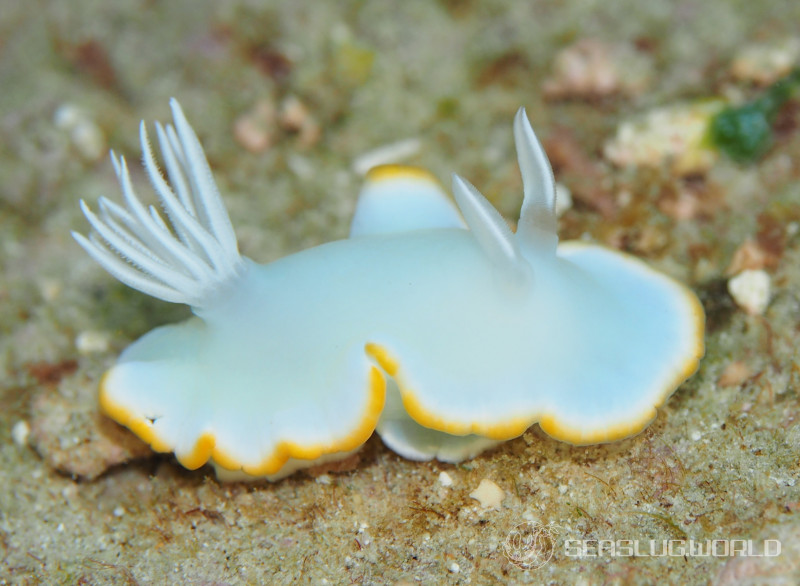
- Location
- Minigurotto, Miyakojima, Okinawa, Japan
- Date
- 2017/11/24
- Length
- 35mm
- Depth
- 13.0m
- Water temperature
- 24.7℃
Description
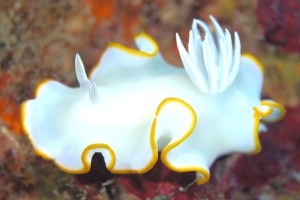
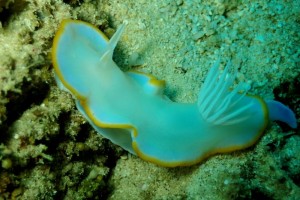
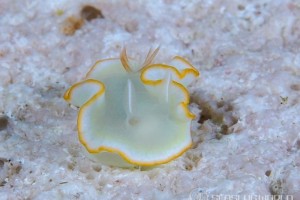
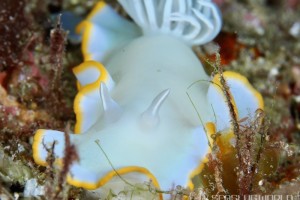
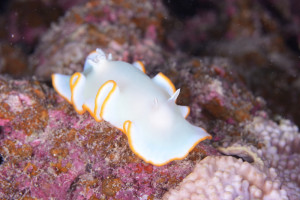
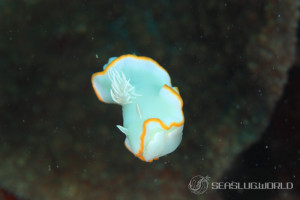
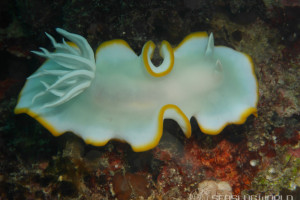
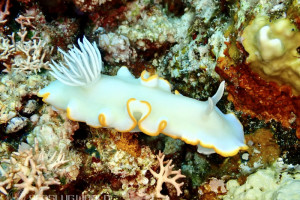
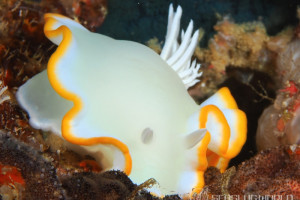
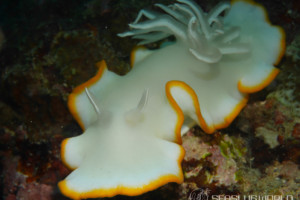
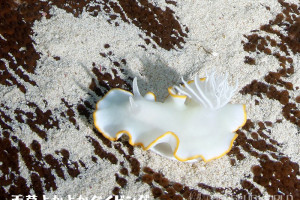
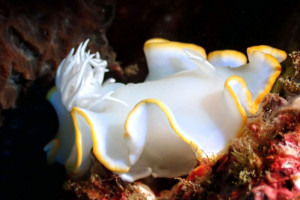
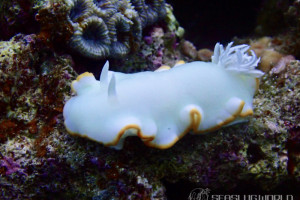
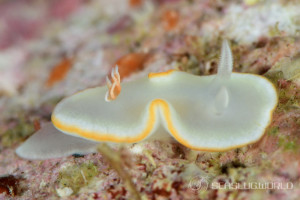
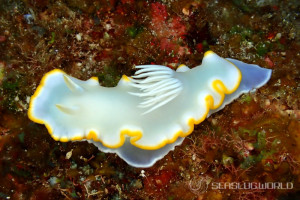
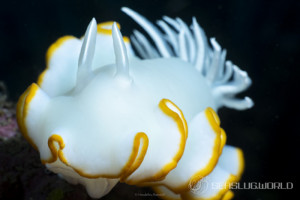
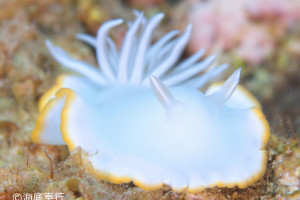
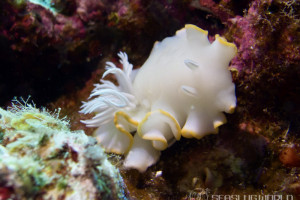
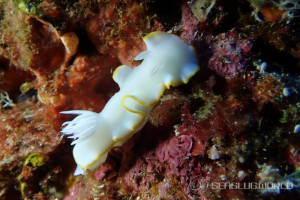
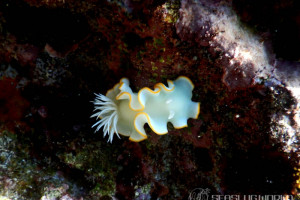
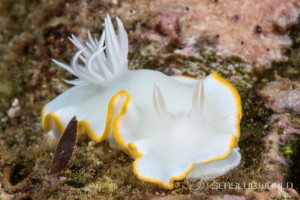
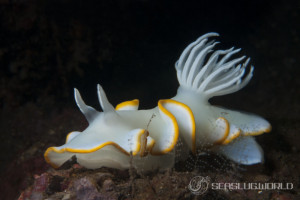
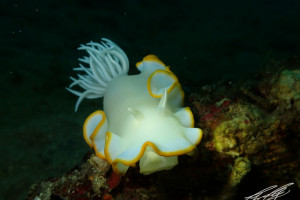
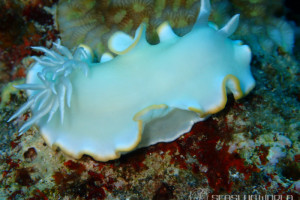
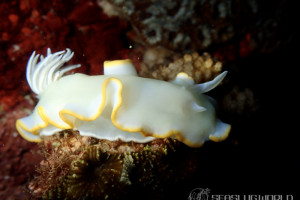
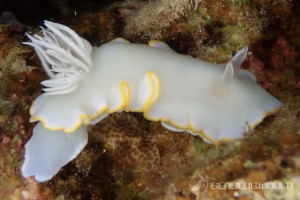
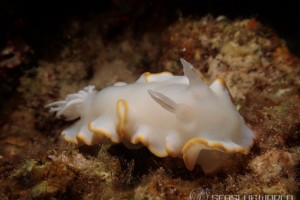
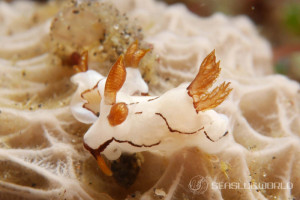
A simple, beautifully white, relatively large chromodorid. The mantle has a wide overlap, with the edge typically thrown into a series of undulations. Small ramifying mantle glands form a broad opaque-white band just inside the mantle edge, with a bright orange-gold border at the very edge. Rhinophores translucent white with white longitudinal lines along the anterior and posterior midlines of the club. Gills long, tapering to a slender point, somewhat rounded in cross section with lamellae restricted to the lateral edges; arranged in an arc around the anus, open posteriorly, with the ends of the arc coiled inwards into spirals. Preserved paratypes 22-53 mm; live specimens often exceed 70 mm, with one record of 120 mm.Distribution
Type locality: southern part of Escape Reef, North Queensland, Australia. Originally recorded from North Queensland (including the Capricorn Group around Heron Island, the type locality reference for the genus name) and from NSW; subsequent records extend to Indonesia, Papua New Guinea, the Philippines, and Japan.Etymology
The specific epithet egretta refers to the similarity in colour between this nudibranch (white and yellow) and the white colour form of the Pacific Reef Heron Egretta sacra, which is common at Heron Island in the Capricorn Group of the Great Barrier Reef. The genus name Ardeadoris (Latin ardea, heron + Doris) is also named after Heron Island, forming a single heron-themed naming cluster — a relatively rare construction in nudibranch nomenclature.Remarks
Erected as the type species of the new genus Ardeadoris. Although its external colour pattern (white with a yellow margin) closely resembles that of Glossodoris pallida, Chromodoris aureomarginata and Noumea nivalis, internally it is clearly distinct.References
- メレンゲウミウシ, 益田一. (1999). 海洋生物ガイドブック. 第2刷. 東海大学出版会.
- エグレッタ, 小野篤司. (1999). ウミウシガイドブック. TBSブリタニカ.
- メレンゲウミウシ, 小野篤司. (2000). ウミウシガイドブック. 第2版. TBSブリタニカ.
- メレンゲウミウシ, 小野篤司. (2004). 沖縄のウミウシ. ラトルズ.
- Ardeadoris egretta, Johnson R.F. & Gosliner T.M. (2012). Traditional taxonomic groupings mask evolutionary history: a molecular phylogeny and new classification of the chromodorid nudibranchs. PLoS ONE 7(4): e33479.
A Kindle field guide by the site author
Kimoto N. (2026). Sea Slugs of Japan & the Indo-Pacific, 2nd Edition.
Kindle Edition
View on Amazon PR (Amazon Associates)Seasonality
Shooting Locations
Loading shooting locations...
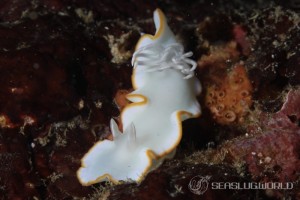
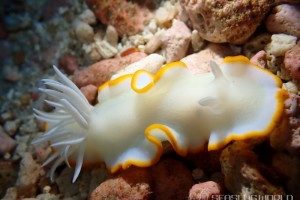
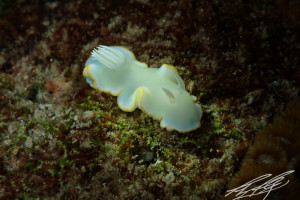
Photos of Ardeadoris egretta
Tag:























Same Genus Nudibranchs
Similar Colors Nudibranchs

Academic Database
Sea slug observation data is available in international marine biodiversity databases.