Ardeadoris angustolutea (Rudman, 1990)
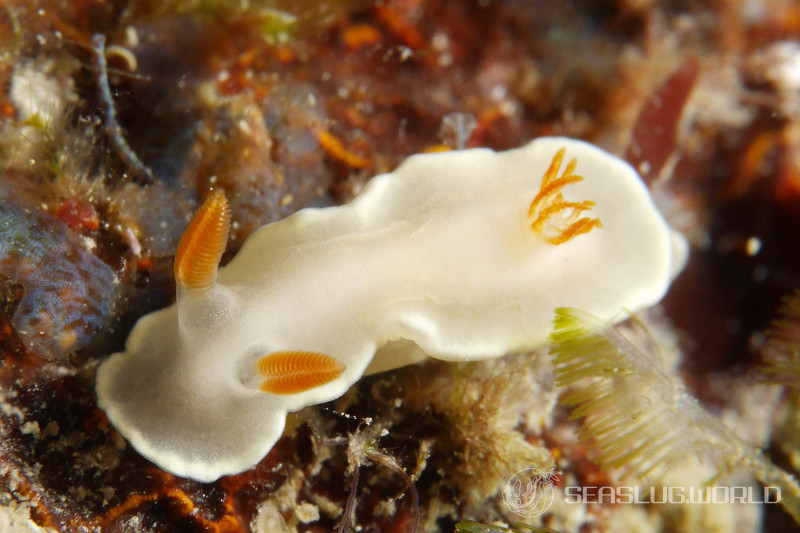
- Location
- Sunabe Water Treatment Plants, Okinawa Island (Chatan and Southern area), Okinawa, Japan
- Date
- 2016/12/20
- Length
- 10mm
- Depth
- 7.0m
- Water temperature
- 24.0℃
Description
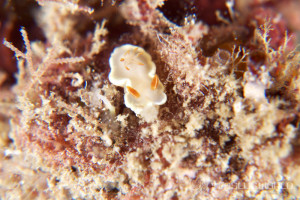
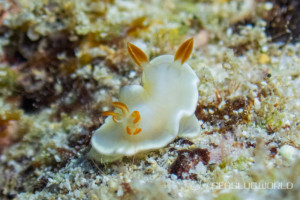
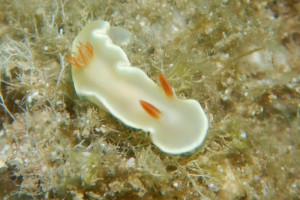
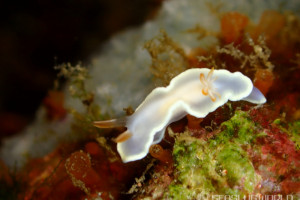
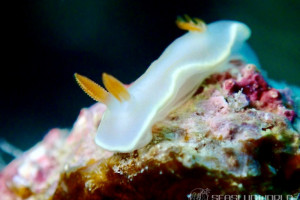
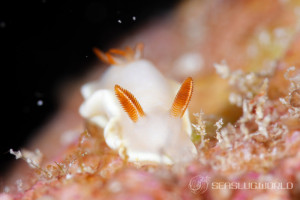
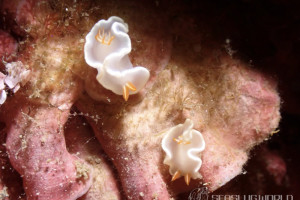
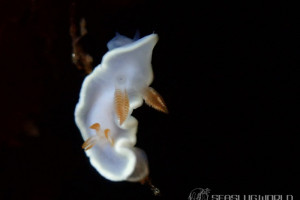
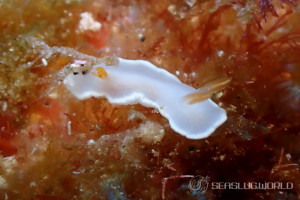
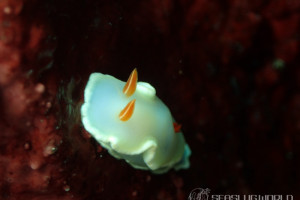
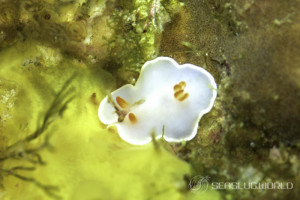
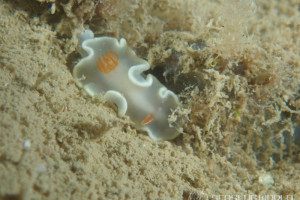
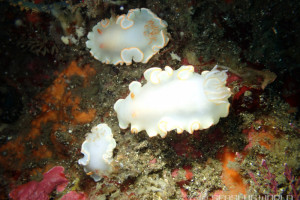
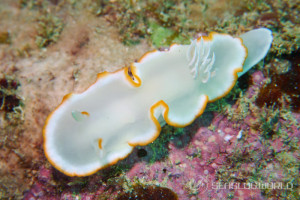
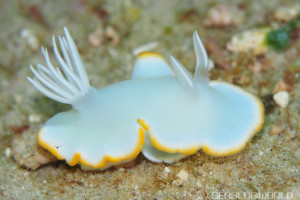
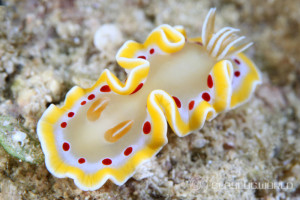
Mantle elongately ovate with a broad overlap, and a large fold on each side midway between the gills and the rhinophores. Rhinophore clubs long and tapering, set in raised pockets. Simple gills form an arc that opens posteriorly around the anal papilla, with a fast flickering motion. Mantle translucent creamy white with an opaque-white midline band over the viscera (running from in front of the rhinophores to just behind the gills) and another opaque-white band around the margin, with a thin orange-yellow line right at the edge. Foot translucent white with a yellowish tinge and an opaque-white marginal band. Rhinophore stalks transparent or translucent white; lamellae light brown to orange-red, with white anterior and posterior midline bands on the club. Gills translucent with the lower half opaque white; lamellae brown to orange-red, giving the upper half of each gill a reddish-brown appearance. Reaches about 25 mm in body length.Distribution
Type locality is the north-west side of Ruby Reef on the Great Barrier Reef, Queensland, Australia (15°44′S, 145°47′E; 10 m depth, December 1984, on a purple sponge). A western-Pacific tropical species recorded from the Great Barrier Reef, the Marshall Islands (Enewetak Atoll), and the Philippines (Palawan). Subsequent records extend to Papua New Guinea, Thailand, Samoa, and Japan.Etymology
The specific epithet angustolutea is a Latin compound of angustus (narrow) and luteus (orange-yellow), referring to the narrow orange-yellow line at the mantle margin (verbatim from the original description).Remarks
Originally described as Noumea angustolutea and later transferred to Ardeadoris. Among species of the Chromodoris aureomarginata colour group, this one is distinguished by its thin orange-yellow mantle line and brownish-tinged rhinophores and gills. Feeds on purple sponges.References
A Kindle field guide by the site author
Kimoto N. (2026). Sea Slugs of Japan & the Indo-Pacific, 2nd Edition.
Kindle Edition
View on Amazon PR (Amazon Associates)Seasonality
Shooting Locations
Loading shooting locations...
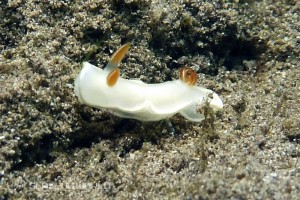
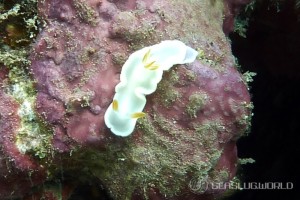
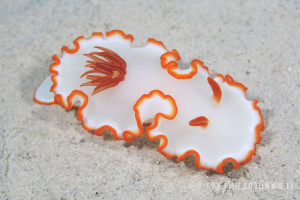
Photos of Ardeadoris angustolutea

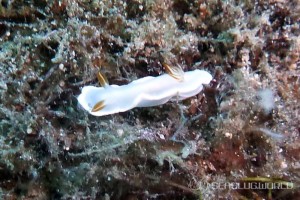
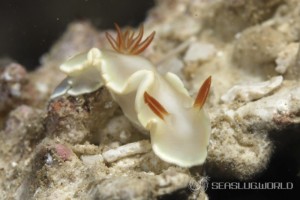

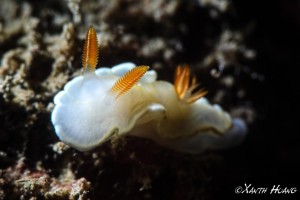

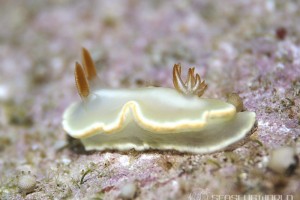

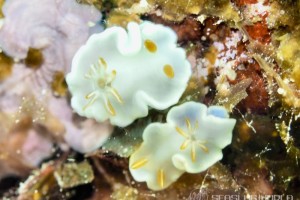

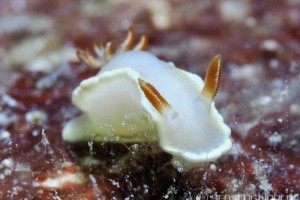
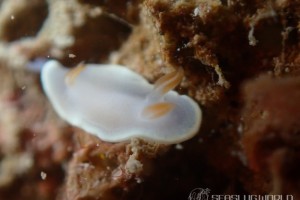

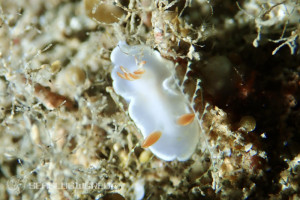




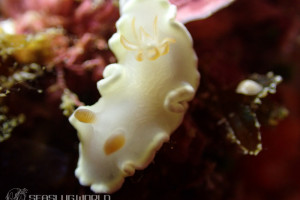

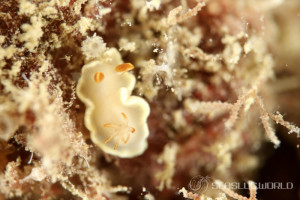

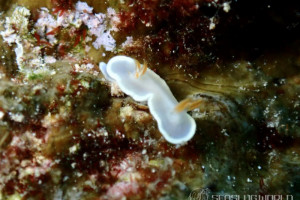
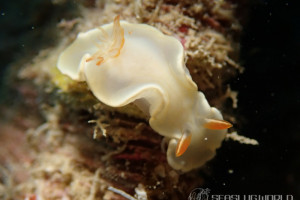





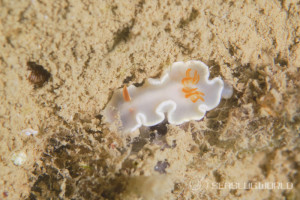

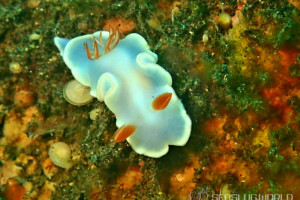

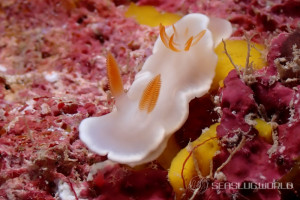

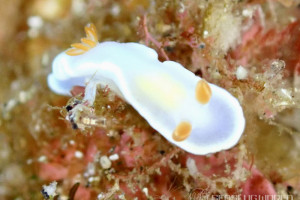


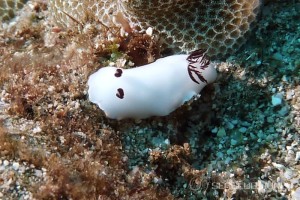
Same Genus Nudibranchs
Academic Database
Sea slug observation data is available in international marine biodiversity databases.