Ardeadoris symmetrica (Rudman, 1990)
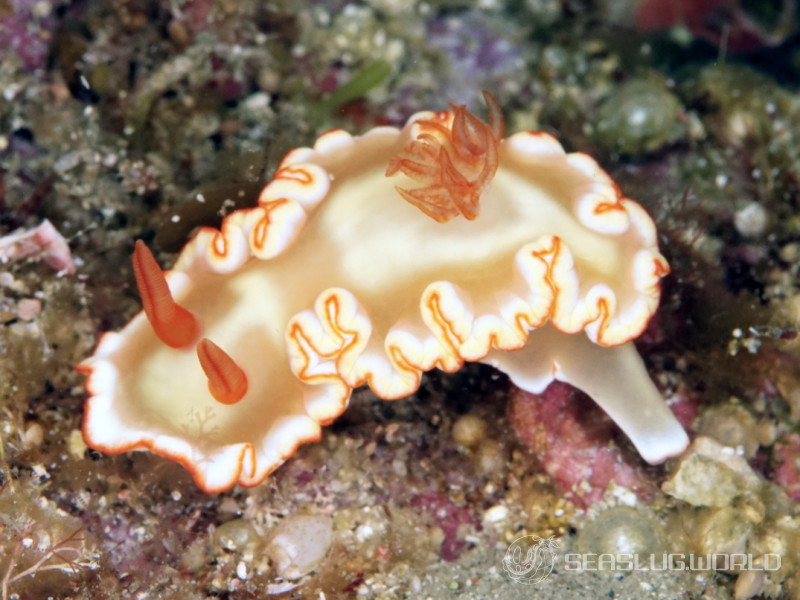
- Location
- Dessyo, Amami Oshima, Kagoshima, Japan
- Date
- 2016/04/24
- Length
- 20mm
- Depth
- 10.0m
- Water temperature
- 23.0℃
Description
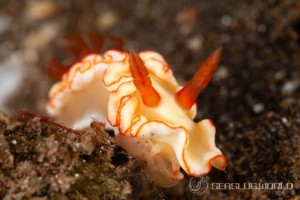
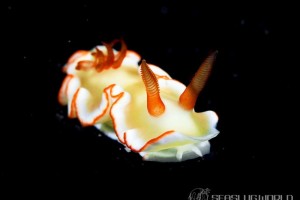
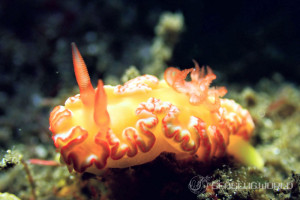
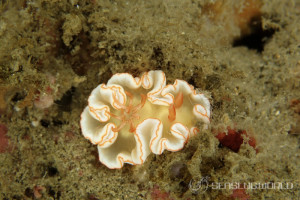
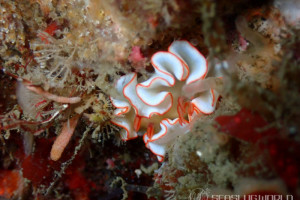
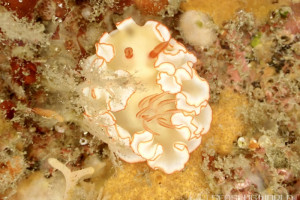
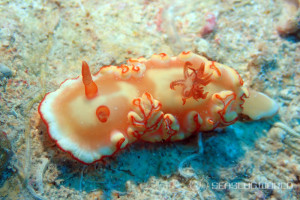
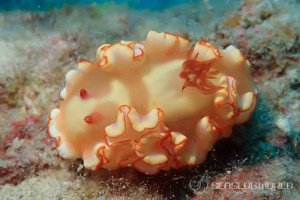
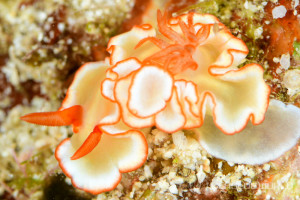
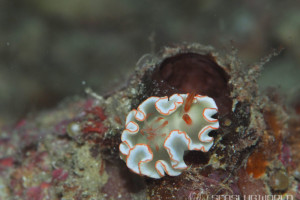
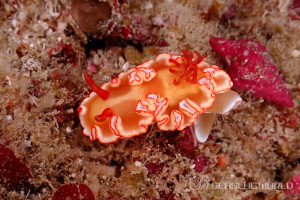
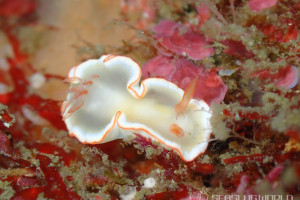
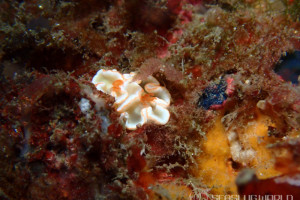
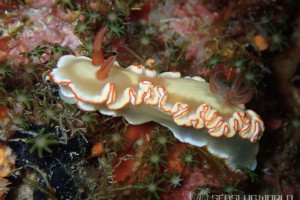
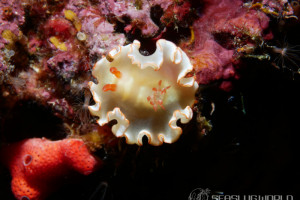
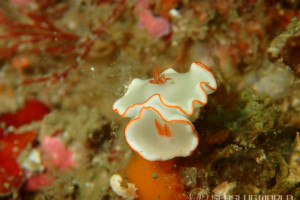
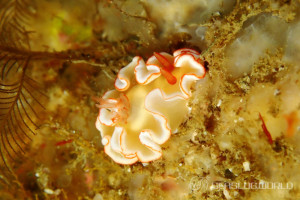
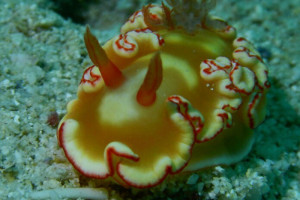
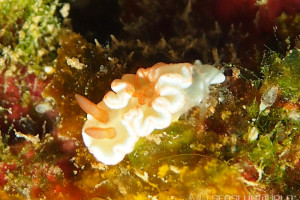
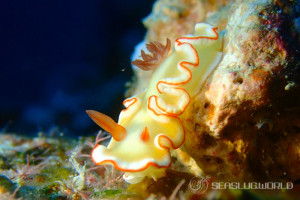
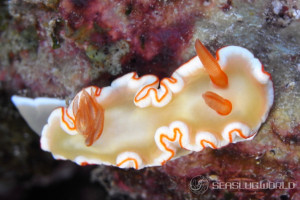
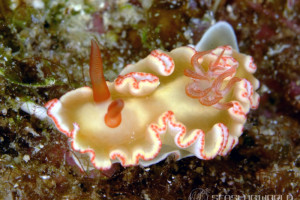
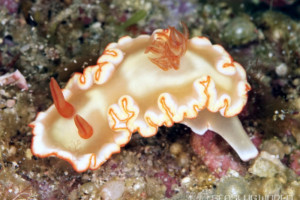
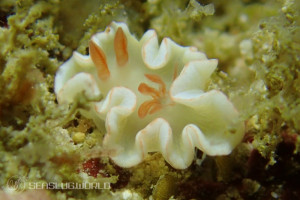
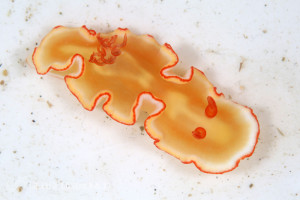
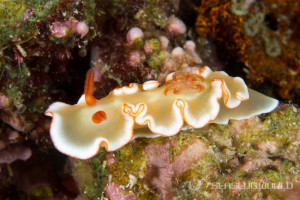
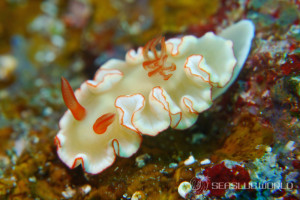
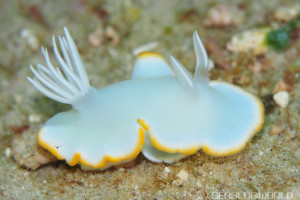
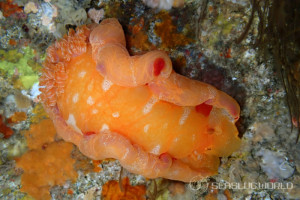
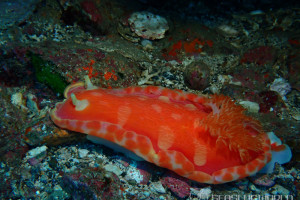
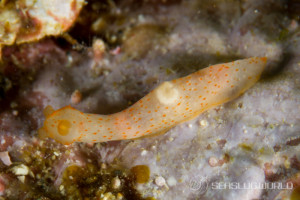
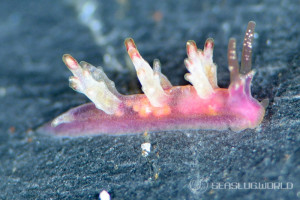
Mantle ovate with a relatively wide skirt, bearing one major fold midway down each side and many secondary folds. Gills form an arc around the anal papilla, with the two ends spiralling inward to produce a secondary coil on each side; they vibrate rhythmically. Mantle translucent white with a broad opaque-white marginal band, plus an opaque-white median band running from in front of the rhinophores to behind the gills (sometimes broken into anterior and posterior sections) — the symmetrical white pattern that gives the species its name. A bright red to deep orange-red line runs along the very edge of the mantle (not on the foot). Rhinophore stalks translucent and heavily dusted with red; clubs translucent, tinged with orange-red, with vertical red bands up the anterior and posterior midlines. Gills translucent white edged with orange-red, the lamellae also tipped orange-red. The largest specimens are deeply tinged yellow over the body. Reaches about 29 mm in body length.Distribution
Type locality is St Gilles Reef, Réunion Island, Indian Ocean (0-30 m depth, January 1974). A widely distributed Indo-West Pacific species, recorded from Réunion (Indian Ocean), Papua New Guinea (Madang), and the Marshall Islands (Enewetak Atoll).Etymology
The specific epithet symmetrica refers to the symmetrical white patch (or patches) running down the midline of the mantle (verbatim from the original description). Rudman originally spelled the name symmetricus (masculine) in 1990; the form was corrected to symmetrica when the species was transferred to Ardeadoris.Remarks
Originally described as Glossodoris symmetricus and later transferred to Ardeadoris (with the spelling corrected). Externally close to Glossodoris pallida, but distinguished by (1) an orange-red (not yellow) mantle border and (2) the absence of a coloured foot border. Placed within the Glossodoris sedna subgroup.References
- グロッソドーリス・シンメトリクス, 小野篤司. (2004). 沖縄のウミウシ. ラトルズ.
- グロッソドーリス・シンメトリクス, 中野理枝. (2004). 本州のウミウシ. ラトルズ.
- Ardeadoris symmetrica, Johnson R.F. & Gosliner T.M. (2012). Traditional taxonomic groupings mask evolutionary history: a molecular phylogeny and new classification of the chromodorid nudibranchs. PLoS ONE 7(4): e33479.
- Ardeadoris symmetrica, Terrence Gosliner, Ángel Valdés and David Behrens. (2015). Nudibranch and Sea Slug Identification Indo-Pacific. New World Pubns Inc.
- アカネサスウミウシ(新称), 中野理枝, 朝倉知子, 池田紫, 石川雅教, 今本淳, 岩瀬南美, 西田和記, 堀江諒, 山田久子 & 渡井久美. (2017). 奄美大島北部海域における後鰓類相の調査報告. Kuroshio Biosphere. 13: 1-18 + 6 pls.
Featured in this book

Terrence Gosliner, Ángel Valdés and David Behrens. (2018). Nudibranch and Sea Slug Identification Indo-Pacific 2nd Edition. New World Pubns Inc.
New World Publications
This species, Ardeadoris symmetrica, is included in the book.
View on Amazon PR (Amazon Associates)Seasonality
Shooting Locations
Loading shooting locations...
Photos of Ardeadoris symmetrica
Tag:





















Same Genus Nudibranchs
Similar Colors Nudibranchs
Academic Database
Sea slug observation data is available in international marine biodiversity databases.