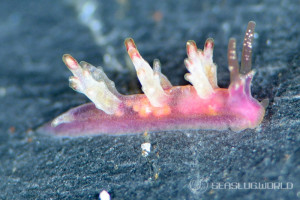
Gymnodoris bicolor (Alder & Hancock, 1864)
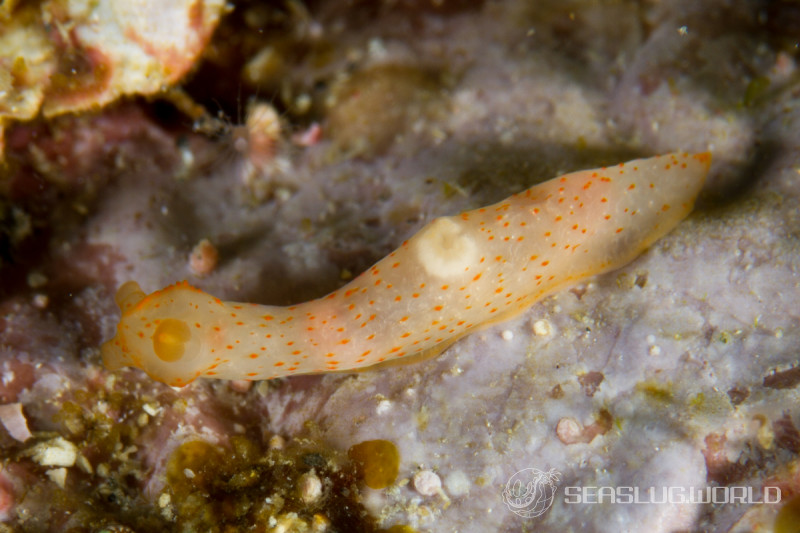
- Location
- Sokodo(Sanmata), Hachijo Island, Tokyo, Japan
- Date
- 2016/07/12
- Length
- 10mm
- Depth
- 5.0m
- Water temperature
- 22.0℃
Description
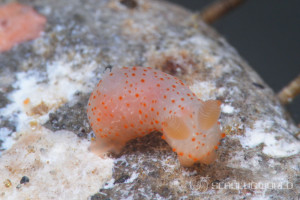
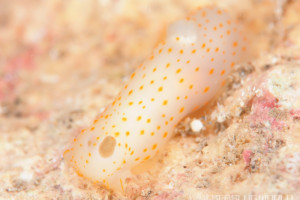
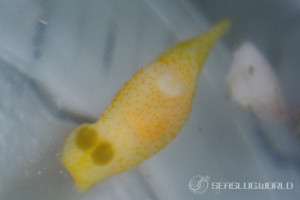
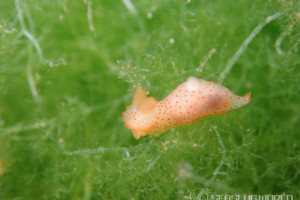
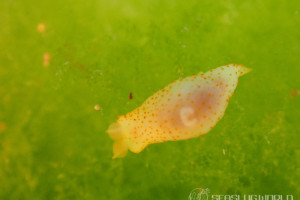
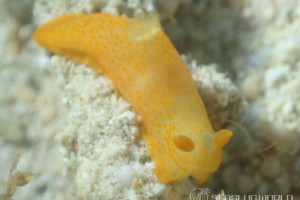
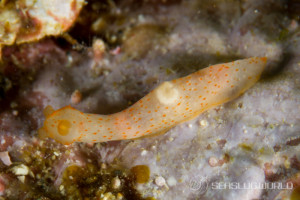
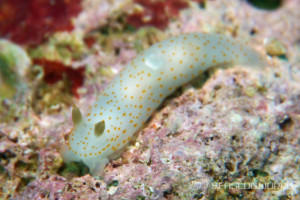
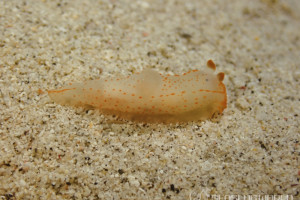
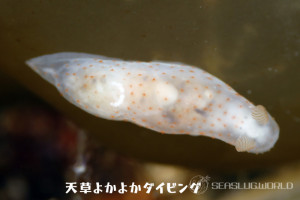
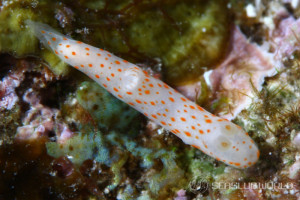
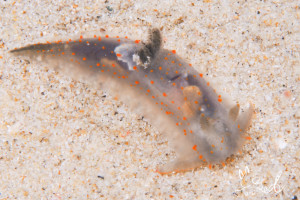
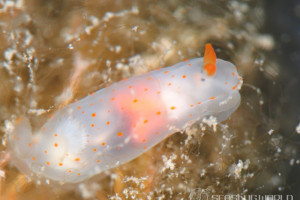
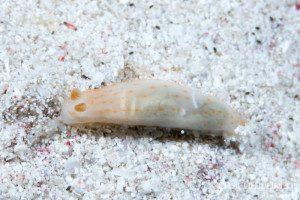
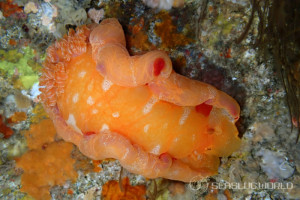
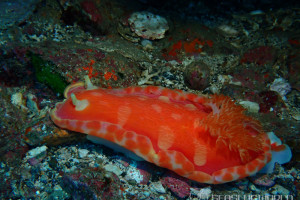
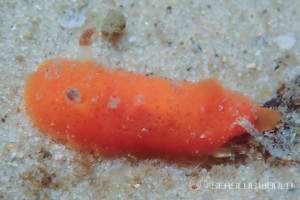
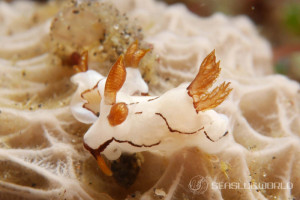
A small to medium-sized gymnodorid reaching about 30 mm in body length, with a slender oval, slightly depressed body. Ground colour is a translucent orange to yellow, overlaid with a fine network of vermilion to orange-red lines forming the characteristic two-tone (bicolor) pattern.The rhinophores are orange and lamellate, paler towards the base. The gill consists of about six translucent white to pale orange plumes arranged in a horseshoe on the posterior dorsum, often surrounded by a denser concentration of the orange dorsal spots.
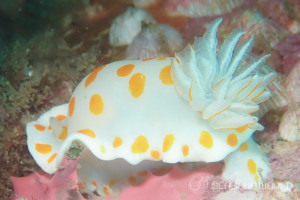
It resembles Gymnodoris citrina in general appearance but is distinguished by its more open horseshoe-shaped gill, and a generally more orange ground colour with a denser reticulate pattern.
Distribution
Widespread in the western and central Pacific. Recorded from southern Japan, Taiwan, the Philippines, Indonesia, the eastern coast of Australia and Hawaii. It inhabits shallow to moderately deep coral and rocky reefs.Etymology
The specific epithet bicolor combines the Latin bi- ("two") and color ("colour"), referring to the contrasting two-tone pattern of translucent ground and vermilion reticulation.Remarks
Members of Gymnodoris Stimpson, 1855 are predatory dorids that feed on other heterobranch sea slugs. Like its congeners, this species is presumed to seize and swallow other sea slugs (often sacoglossans) whole.References
- Gymnodoris bicolor, Kelaart E.F. (1858). Description of new and little-known species of Ceylon nudibranchiate molluscs and zoophytes. Journal of the Ceylon Branch of the Royal Asiatic Society. 3(9): 84-139.
- 高岡生物研究会. (2002). 日本海のウミウシ. 第2版.
- Gymnodoris bicolor, Terrence Gosliner, Ángel Valdés and David Behrens. (2018). Nudibranch and Sea Slug Identification Indo-Pacific 2nd Edition. New World Pubns Inc.
Featured in this book
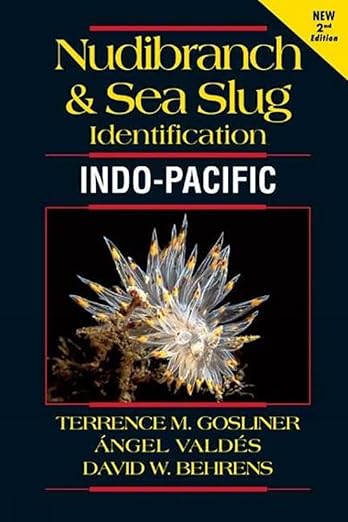
Terrence Gosliner, Ángel Valdés and David Behrens. (2018). Nudibranch and Sea Slug Identification Indo-Pacific 2nd Edition. New World Pubns Inc.
New World Publications
This species, Gymnodoris bicolor, is included in the book.
View on Amazon PR (Amazon Associates)Seasonality
Shooting Locations
Loading shooting locations...
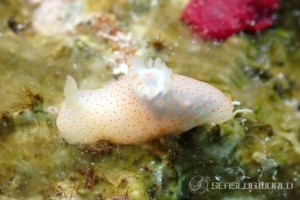
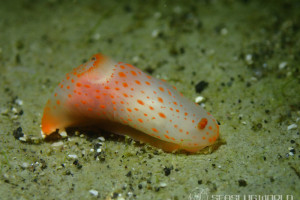
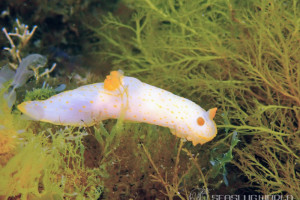
Photos of Gymnodoris bicolor








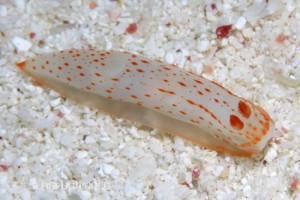
Same Genus Nudibranchs

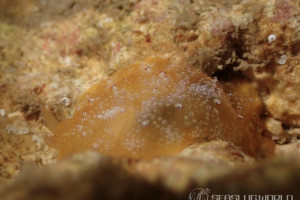
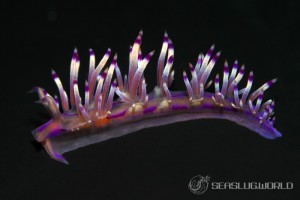
Similar Colors Nudibranchs
Academic Database
Sea slug observation data is available in international marine biodiversity databases.