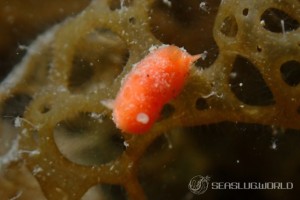
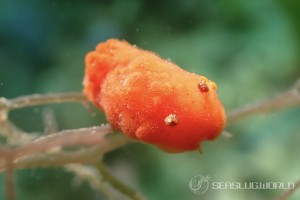
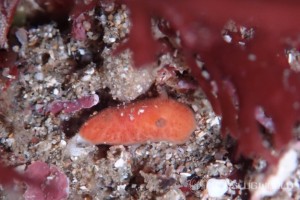
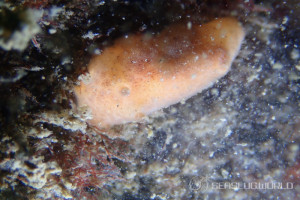
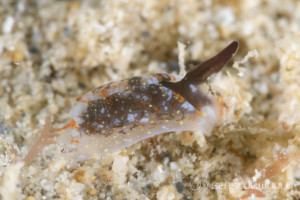
Rostanga orientalis Rudman & Avern, 1989
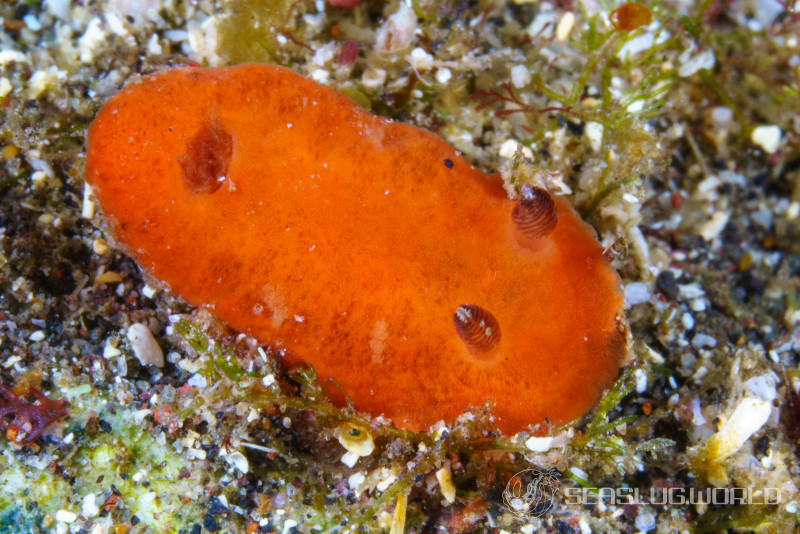
- Location
- Yaene, Hachijo Island, Tokyo, Japan
- Date
- 2021/11/28
- Length
- 12mm
- Depth
- 8.0m
- Water temperature
- 21.0℃
Description
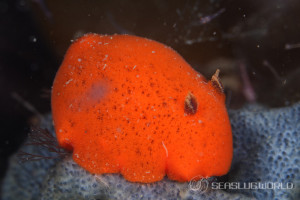
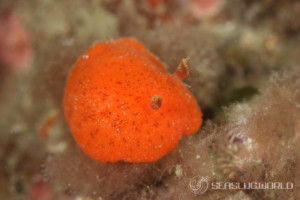
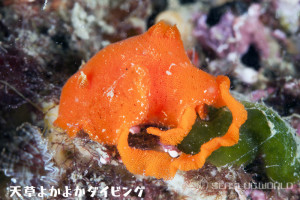
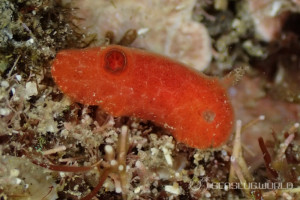
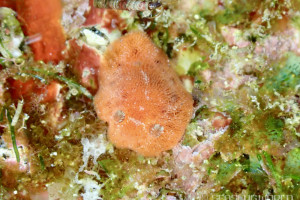
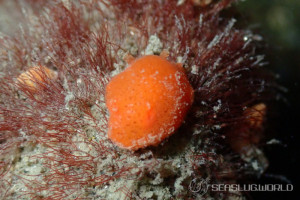
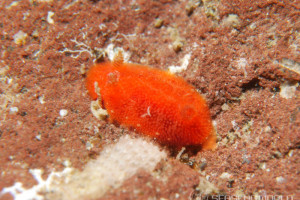
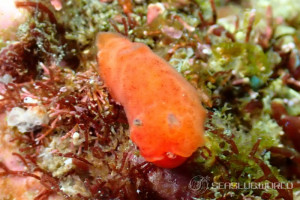
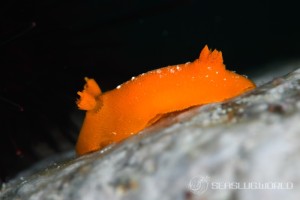
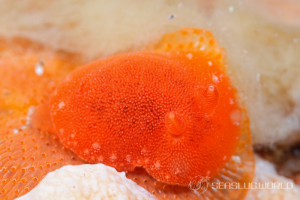
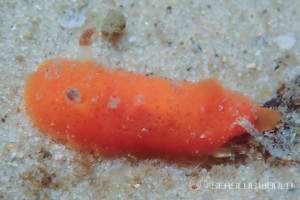
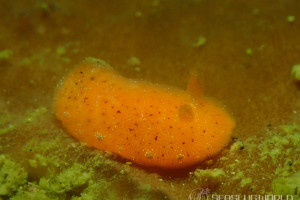
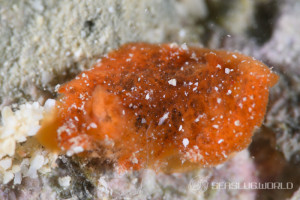
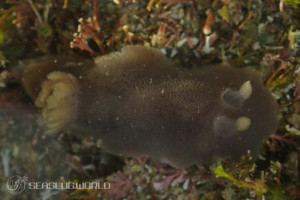
Body reddish orange with small scattered brown specks on the mantle epithelium. The dorsum is densely covered with caryophyllidia (papillate dorsal protrusions), with white specks concentrated mainly on their tips. Rhinophore stalk transparent; club with vertical lamellae, translucent brown above, with white edging and a stalked terminal knob on the posterior midline. Gills translucent orange with scattered white specks and a thin white line near each gill tip. A black colour form is known from Japan (Baba, 1937) in addition to the orange form. Body length 22 mm preserved (holotype); the largest paratype is 27 mm.Distribution
Type locality is Pak Ma Tsui, Mirs Bay, Hong Kong (7 m depth, April 1983; holotype AM C151978). Originally recorded from Hong Kong (Mirs Bay localities: Gau Tau, Hoi Ha/Flynn Pt., Pak Ma Tsui, Kat O Chau) and from Japan (records by Eliot, 1913 and Baba, 1935 as Rostanga muscula, and by Baba, 1937, 1949 and Abe, 1964 as Rostanga arbutus). Subsequent records extend to Korea and the Chinese coast — an East Asian temperate to subtropical species.Etymology
The specific epithet orientalis is Latin for eastern, referring to the species' known distribution in Japan and China (verbatim from the original description).Remarks
Externally difficult to separate from other red Rostanga species; internally distinguished by a very elongate innermost lateral tooth bearing many short denticles and by relatively large jaw plates. Japanese specimens were long misidentified as Rostanga arbutus or Rostanga muscula until Rudman & Avern 1989 reassigned them to this species. Baba 1937 recorded both a black and an orange colour form, the former feeding on the black sponge Reniera okadai and the latter on the orange sponge Reniera japonica. Baba's 1957 records from Mutsu Bay, Oshoro, Shikiseinai, and Muroran (figured as R. arbutus) refer to this species.References
- Rostanga arbutus, Baba, K. 1937f. Note on the colour variation of a dorid, Rostanga arbutus (Angas, 1864). Venus 7(1):1-4.
- イソウミウシ, Baba K. (1949). Opisthobranchia of Sagami Bay collected by His Majesty the Emperor of Japan (相模湾産後鰓類図譜). Iwanami Shoten, Tokyo. 4+2+194+7 pp., pls. 1-50.
- Rostanga arbutus (Angas) Iso-umiushi, Baba, K. 1957. A revised list of the species of Opisthobranchia from the northern part of Japan, with some additional descriptions. J. Fac. Sci., Hokkaido Univ.,ser. 6, Zool. 13(1-4):8-14.
- Rostanga orientalis sp. nov., Rudman, W. B. & Avern, G. J. (1989). The genus Rostanga Bergh, 1879 (Nudibranchia: Dorididae) in the Indo-West Pacific. Zoological Journal of the Linnean Society, 96(3): 281-338.
- イソウミウシ属 Rostanga, 馬場菊太郎. (1991). 日本産イソウミウシ属の再検討及び1新種の記載 (Review of the Genus Rostanga of Japan with the Description of a New Species, Nudibranchia: Dorididae). Venus (Jap. Jour. Malac.). 50(1): 43-54.
- イソウミウシ, 鈴木敬宇. (2000). ウミウシガイドブック〈2〉. TBSブリタニカ.
- 高岡生物研究会. (2002). 日本海のウミウシ. 第2版.
- イソウミウシ, 中野理枝. (2004). 本州のウミウシ. ラトルズ.
A Kindle field guide by the site author
Kimoto N. (2026). Sea Slugs of Japan & the Indo-Pacific, 2nd Edition.
Kindle Edition
View on Amazon PR (Amazon Associates)Seasonality
Shooting Locations
Loading shooting locations...
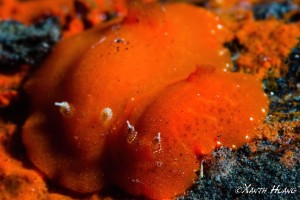
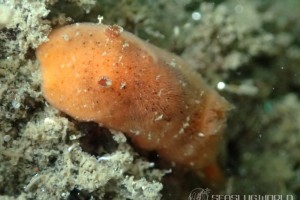
Photos of Rostanga orientalis




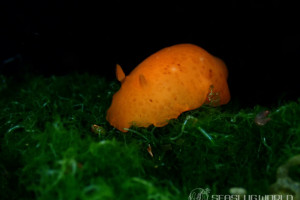

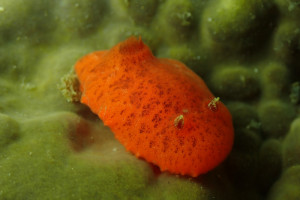

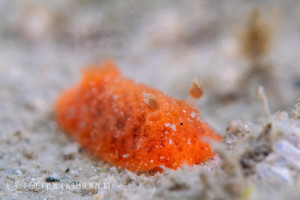

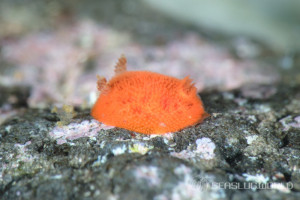

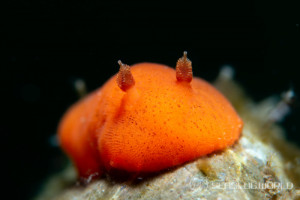
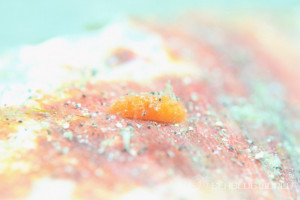

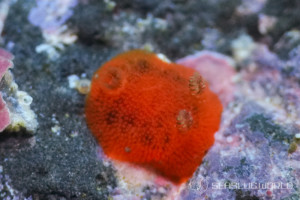

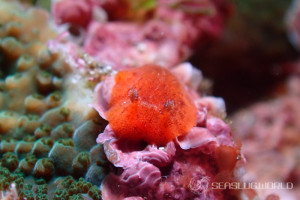








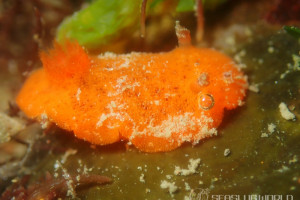

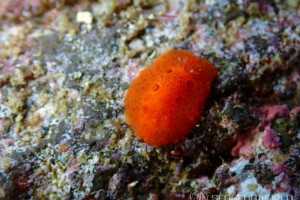
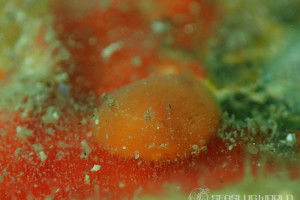
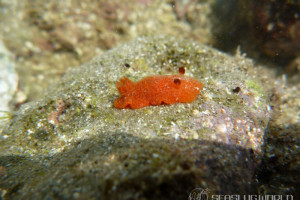
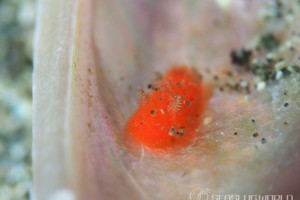

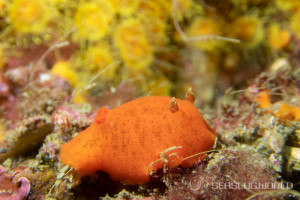

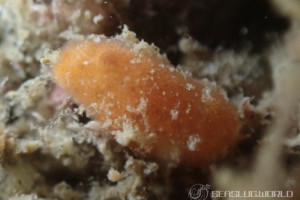
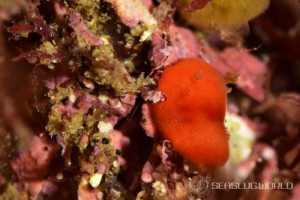

Same Genus Nudibranchs
Similar Colors Nudibranchs
Academic Database
Sea slug observation data is available in international marine biodiversity databases.