Rostanga cf. bifurcata Rudman & Avern, 1989
Description
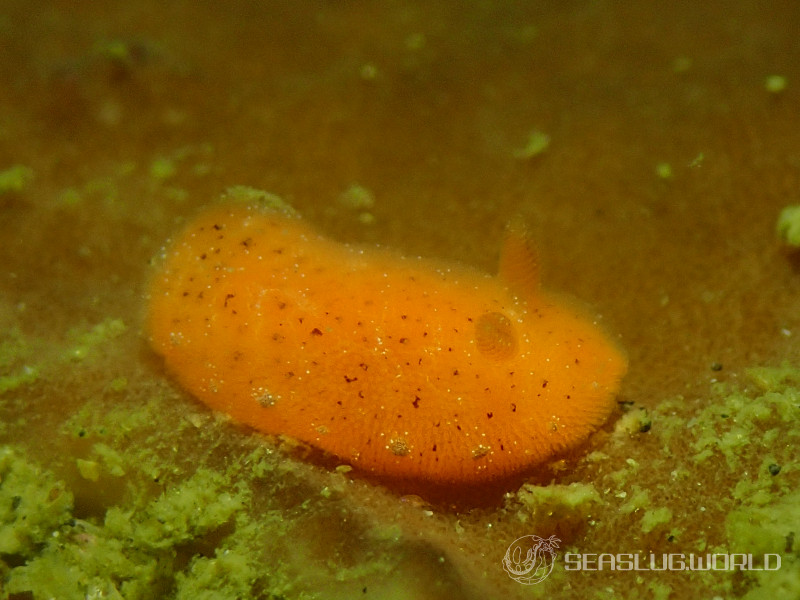
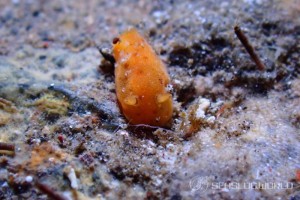
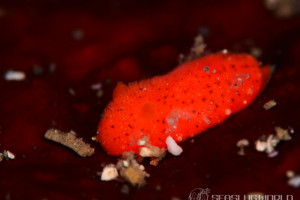
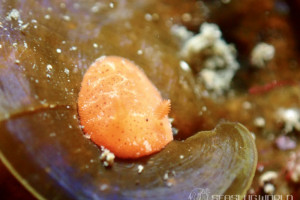
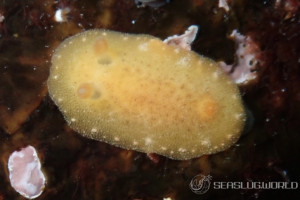
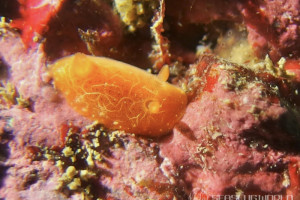
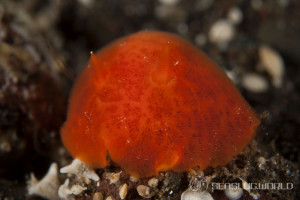
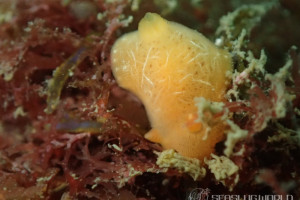
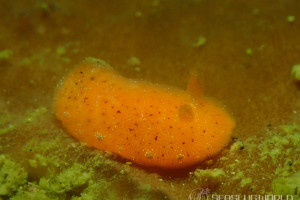
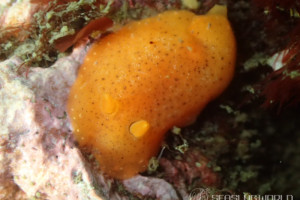
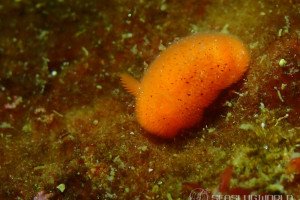
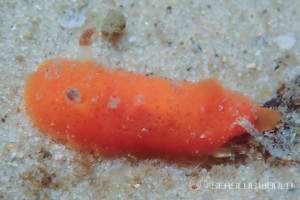
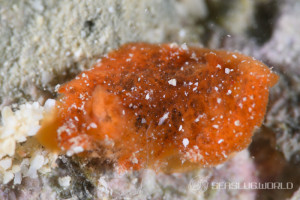
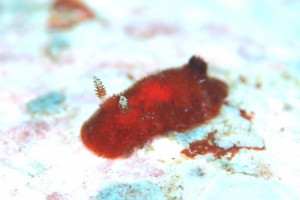
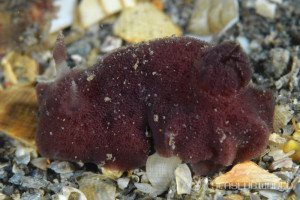
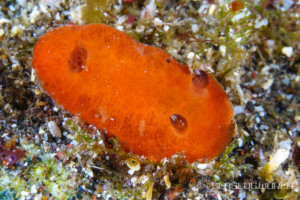
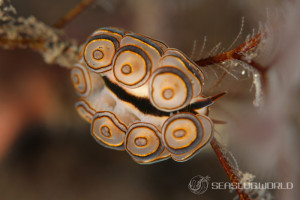
Mantle and body usually bright red, densely covered with red caryophyllidia. Substantial geographic and individual variation: some Sydney specimens have brown speck patches on the mantle epithelium or white patches/irregular white lines; southern NSW specimens have a pale reddish-orange ground with distinct brown patches; bright red Great Barrier Reef specimens show irregular white streaking; Tanzanian and Hong Kong specimens have small brown specks scattered over the mantle. In all specimens mantle glands are restricted to a broad band of small white specks at the mantle edge. The rhinophore stalk is translucent; the club is typically the same red as the mantle but with the upper third white or white-patched, plus brown dusting on the lamellae. The diagnostic external character is the rhinophore club, with the lamellae lying almost horizontally and sloping downwards posteriorly, surmounted by a slender stalked terminal knob. Seven to ten tripinnate gills in an upright circle; the main gill blood vessel is often white. Reaches 32 mm alive.Distribution
Type locality: Inscription Point, Kurnell, Sydney, NSW, Australia. Distributed across the Indo-West Pacific (NSW, Queensland, Western Australia, Singapore, Malaysia, Hong Kong, Tanzania).Etymology
The name bifurcata refers to the bifid outer lateral teeth in the radula.Remarks
The reduced rhinophore club with a few horizontal lamellae is unique to this species. External separation from the Mediterranean / Atlantic type species R. rubra (which has vertical rhinophore-club lamellae) and from other red Rostanga species is difficult; Japanese specimens that cannot be confirmed as the Australian taxon are treated here as Rostanga cf. bifurcata. Sublittoral specimens from Sydney Harbour and Botany Bay feed and lay egg masses on the large erect plate-like poecilosclerid sponge Antho (Isopenectya) chartacea.A Kindle field guide by the site author
Kimoto N. (2026). Sea Slugs of Japan & the Indo-Pacific, 2nd Edition.
Kindle Edition
View on Amazon PR (Amazon Associates)Seasonality
Shooting Locations
Loading shooting locations...
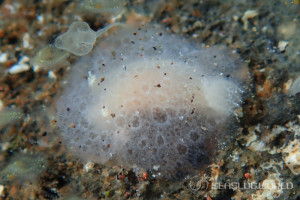
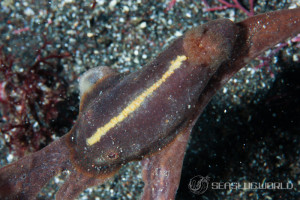
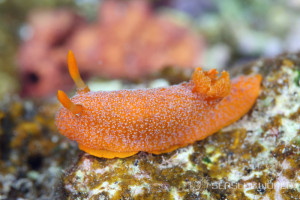
Photos of Rostanga cf. bifurcata











Same Genus Nudibranchs
Similar Colors Nudibranchs
Academic Database
Sea slug observation data is available in international marine biodiversity databases.